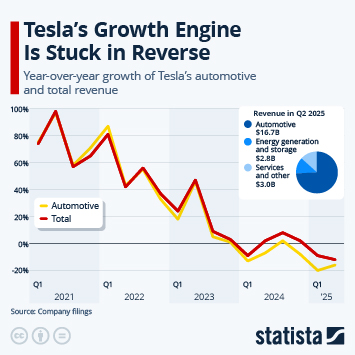
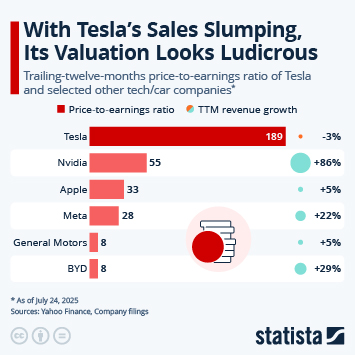
While Elon Musk made waves as a disruptive force tearing through U.S. government agencies last year, his company Tesla was forced to navigate rough seas. In response to Musk’s prominent role in the Trump administration, people protested outside of Tesla showrooms, got rid of their cars or simply stopped buying them. The latter option was particularly popular across Europe, as registration figures published by the European Automobile Manufacturers’ Association show.
Tesla sales across Europe, i.e. in the EU, Norway, Switzerland, Iceland and the UK, dropped 28 percent in the first 11 months of 2025, with things looking even bleaker in the EU alone, where Tesla registrations fell almost 40 percent compared to the previous year. And it's not like Europeans just stopped buying electric cars. Quite the opposite, in fact: According to the ACEA, electric vehicle sales in Europe increased 27 percent in the first 11 months of 2025, making Tesla's significant sales decline even more remarkable. While EU tariffs on EVs imported from China, where Tesla builds cars destined for Europe in its Shanghai factory, may have contributed to the company's lackluster sales, Chinese competitors such as BYD, who face a higher tariff rate, have done much better in Europe, suggesting that the sales decline is related to the reputational damage that Elon Musk has inflicted on Tesla's brand. Once a symbol of forward thinking and a progressive lifestyle, Tesla is now widely associated with its controversial CEO, which is why stickers saying "I bought this before Elon went crazy" can be seen on many Teslas in countries like Germany, where Musk is particularly unpopular.
Looking beyond 2025, registration figures suggest that Tesla has been falling behind in the European market for a while, as its aging fleet is competing with an ever-growing selection of electric vehicles from legacy car makers and upcoming Chinese brands. Tesla has underperformed the European BEV market in terms of growth in seven of the past eight quarters, seeing its market share drop from 18.2 percent in 2023 to 16.6 percent in 2024 and just 8.9 percent in 2025.