Questions surrounding the issue of gerrymandering in the United States have risen once more after dozens of Democratic lawmakers left Texas in an attempt to block a plan for the state to redraw its district lines. More than 50 Democratic lawmakers fled the state, meaning that a vote on the move could not take place due to too few of the legislative body being present. If the bill were to pass, it would see five more Republican-leaning seats in the U.S. House of Representatives in Washington DC.
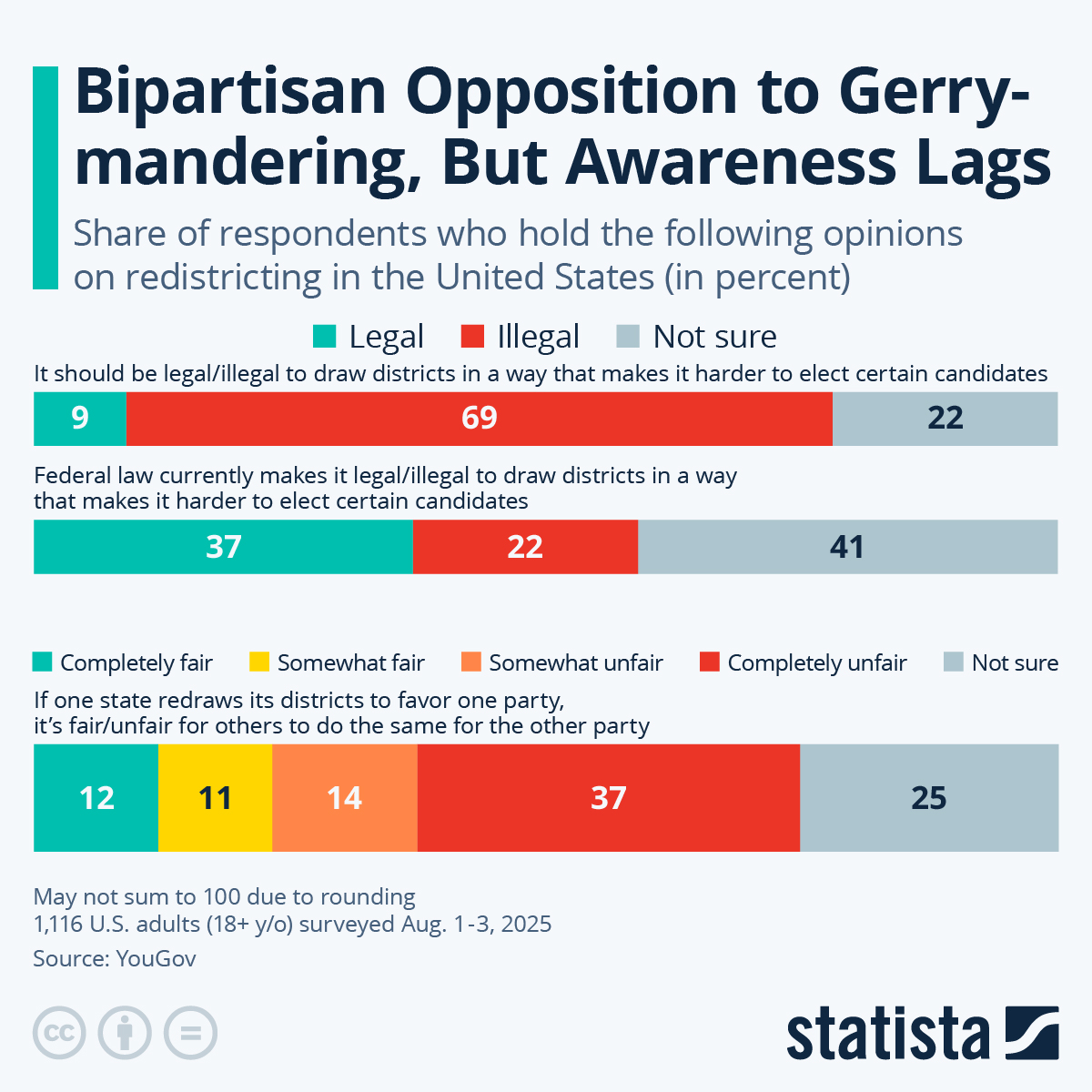
Gerrymandering, the colloquial name for redrawing state district lines in order to benefit a political party, is a practice that has been carried out over the years by both Democrats and Republicans. According to a recent survey by YouGov, opposition against the practice is high in the U.S., with nearly seven in ten adults saying they think it should be illegal. The general topic is unclear for many, however, with only 37 percent correctly identifying that it is currently legal in large parts of the U.S.
Less than one in four U.S. adults agreed with the idea that if one state redraws its districts to favor one party, other states should be able to do the same for the other party. By contrast, 51 percent said they thought it was unfair and another quarter (25 percent) said they were not sure.
Two thirds (67 percent) of respondents said that they would prefer for the districts in their state to be drawn in a way that does not give an advantage to any party.