Blue carbon ecosystems, which are made up of seagrass meadows, tidal marshes and mangroves, are among the most intensive carbon sinks in the biosphere and are increasingly being recognised for their role in mitigating climate change, according to UNESCO.
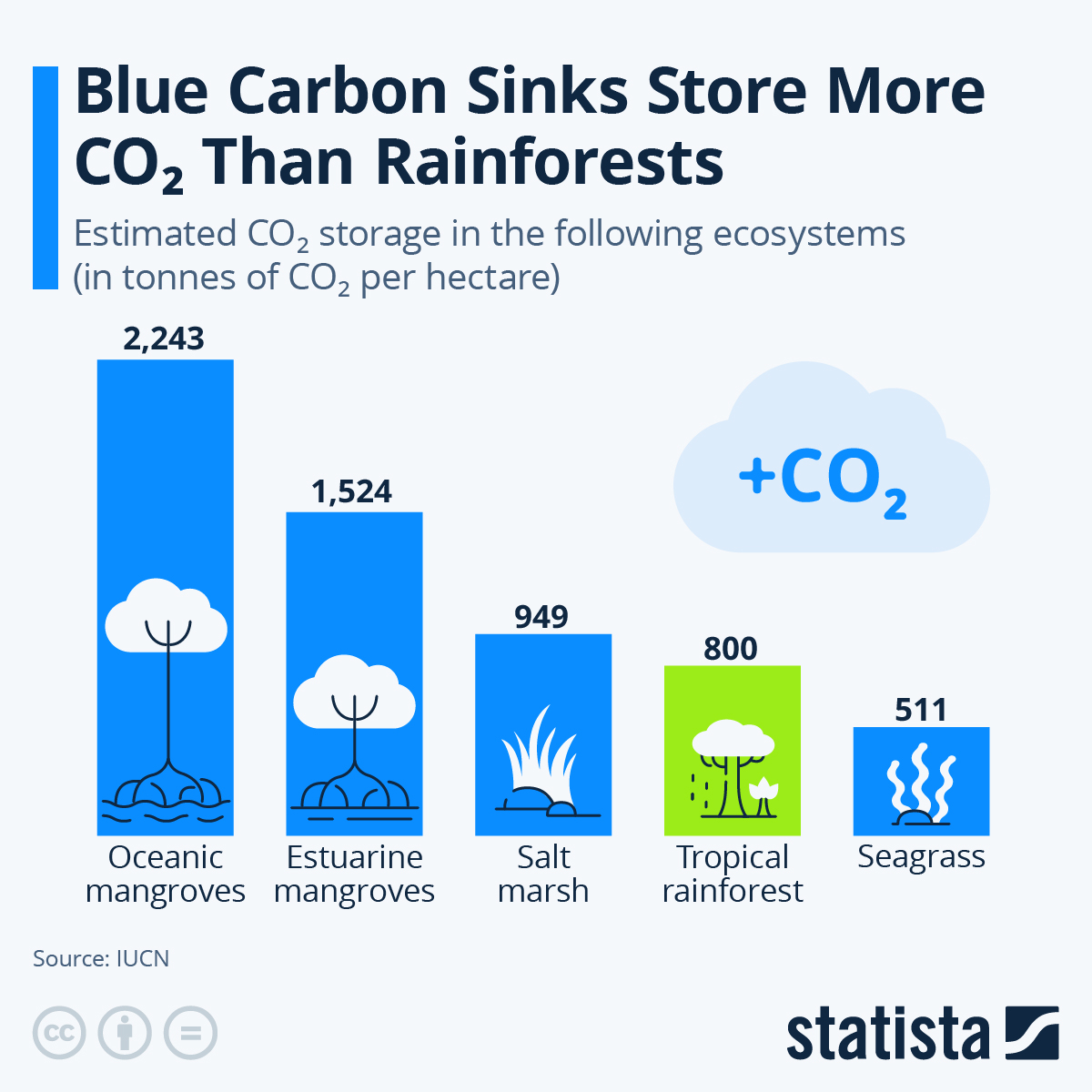
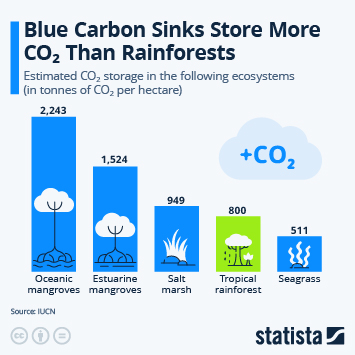
An analysis published by the International Union for Conservation of Nature (IUCN) shows that oceanic and estuarine mangroves as well as tidal marshes sequester and store more carbon per hectare than terrestrial forests, while seagrass stores less. Where tropical forests store most of the carbon as living biomass, blue carbon stocks are largely stored in soil.
IUCN analysts explain that if ecosystems are degraded or damaged, their carbon sink capacity is lost or adversely affected. Such disruption can also lead to the release of billions of tons of emissions into the ocean and atmosphere, contributing to global warming.