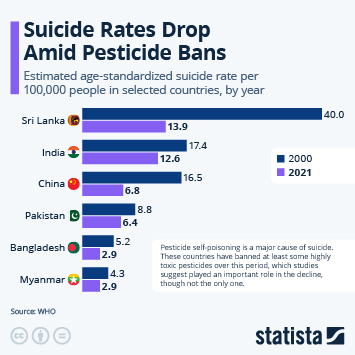
Suicide claimed the lives of 727,000 people worldwide in 2021, according to the World Health Organization (WHO). Some 73 percent of these cases were in low- and middle-income countries, where most of the global population lives and mental health resources remain limited. Recognizing this, the WHO has made suicide prevention a key priority, setting the goal to reduce the global age-standardized suicide rate by one third by 2030. Although suicide rates have declined since 2000, the current pace of progress is too slow to reach this target.
The WHO explains that suicide is associated with a combination of risk factors beyond mental health conditions, including chronic pain, acute emotional distress and access to means of suicide. The organization therefore calls for comprehensive national prevention strategies spanning multiple sectors, from healthcare to media.
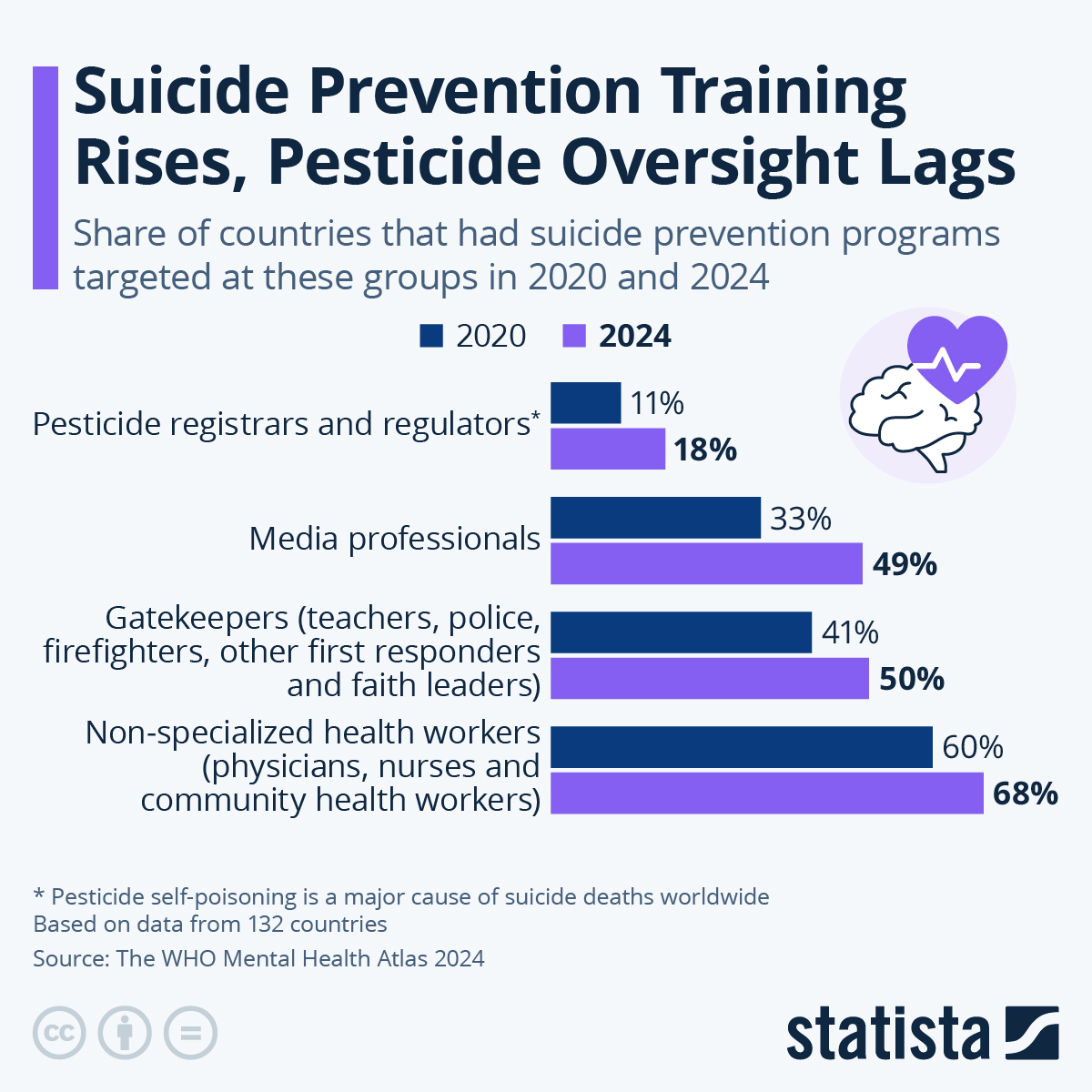
Recent data from the WHO’s Mental Health Atlas 2024 show that many countries have made strides in suicide prevention training. Of the 132 countries surveyed, 68 percent reported having suicide prevention training programs for non-specialized health workers such as physicians, nurses and community health workers. However, fewer countries reported similar programs targeting “gatekeepers”, here referring to teachers, police, firefighters, other first responders and faith workers, at 50 percent, as well as media professionals at 49 percent and pesticide registrars and regulators at just 18 percent.
When analyzed by World Bank income groups, higher-income countries had the highest coverage of training programs for media professionals (71 percent) and gatekeepers (65 percent). Upper-middle income countries led in training pesticide registrars and regulators (26 percent) and non-specialized health workers (80 percent). Training pesticide workers is particulalry important, as pesticides are a leading means of suicide in agricultural areas of low- and middle-income countries. According to the WHO, nearly 20 percent of global suicides in 2021 were due to pesticide self-poisoning.
If you are feeling overwhelmed, anxious or depressed, please reach out to your family or friends, a mental health professional or contact a crisis line in your area. You are not alone, help is available.