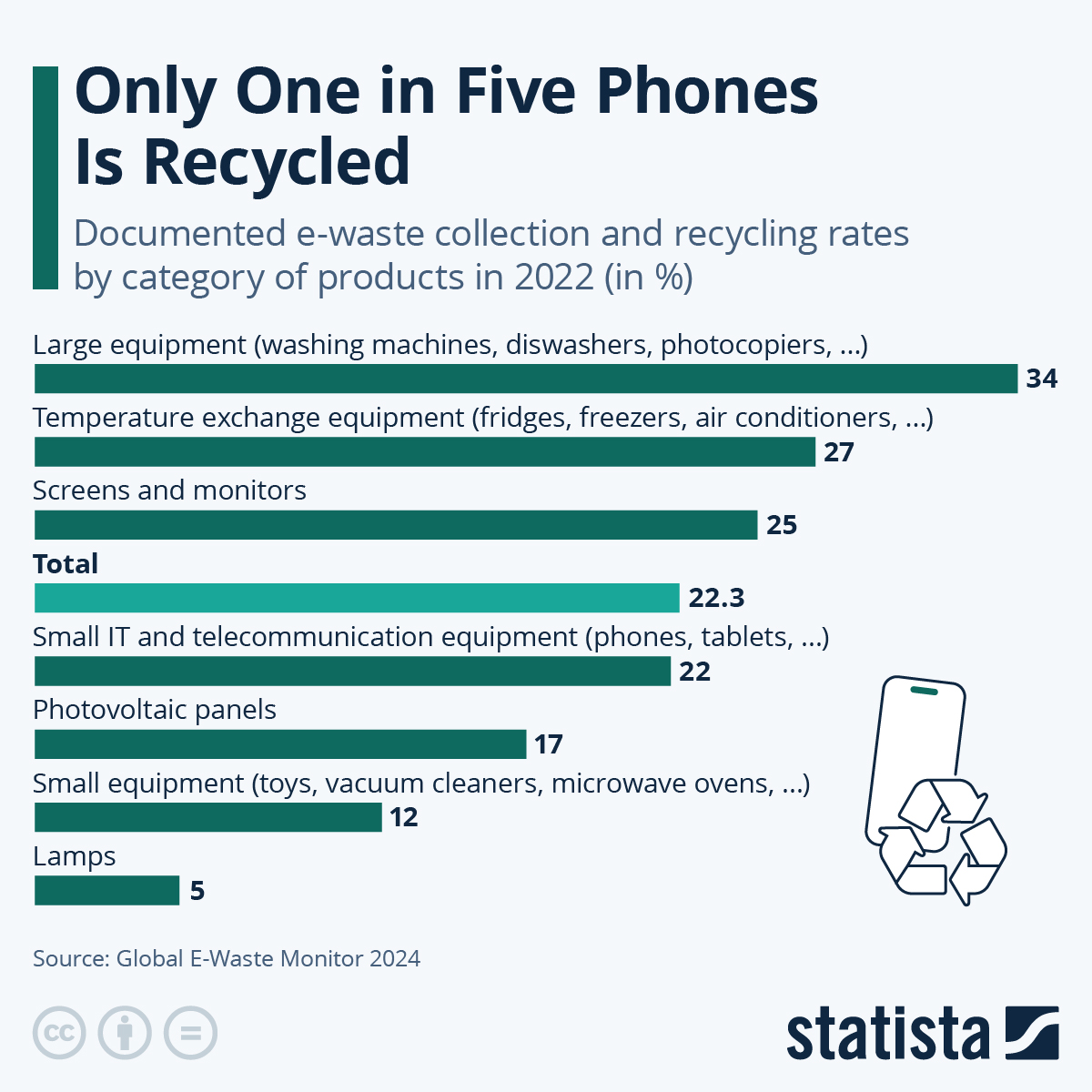
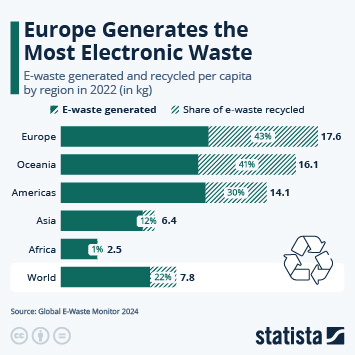
According to data from the Global E-Waste Monitor, the world generated 62 billion kg of e-waste, or an average of 7.8kg per capita ; that amount has increased by 2.3 billion kg a year on average since 2010. Of the e-waste generated in 2022, only 22.3 percent (or 13.8 billion kg) was documented as properly collected and recycled.
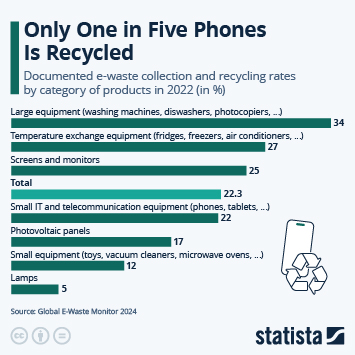
As our infographic shows, the recycling rates of e-waste vary a lot depending on the category of products. The Global E-Waste Monitor points out that bigger and heavier equipment, such as washing machines, dishwashers and temperature exchange equipment (fridges, freezers, heat pumps, air conditioners, ...) are collected and recycled at a higher rate than smaller electronic equipment: over a third (34 percent) of the large equipment and 27 percent of the temperature exchange equipment thrown out in 2022 were collected and recycled. On the other hand, lamps (which include lightbulbs and LED lights) were only collected and recycled at a rate of 5 percent in 2022. Only 22 percent of the small IT and telecommunication equipment, such as phones, was collected and recycled.