Next week, on February 4, the New Strategic Arms Reduction Treaty (New START) between Russia and the United States is due to expire. This means that, unless a new treaty is signed, there will be no legally binding regulation to stop the two powers from endlessly deploying new nuclear warheads. It will mark the first time in over 50 years that this has happened without another agreement in the pipelines. Experts at Chatham House warn that this would signal a departure from nuclear restraint, with strategic planning on both sides more likely to be driven by “uncertainty and worse-case assessments” and could set a new precedent for other nuclear powers around the world.
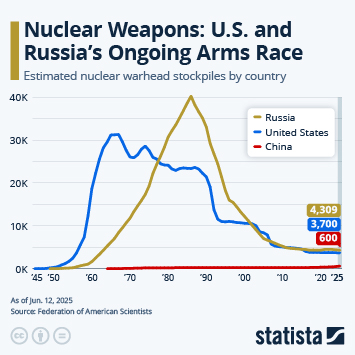
This latter point is in reference largely to China, which the Federation of American Scientists (FAS) estimates had 600 warheads as of 2025 - far short of Russia, which was estimated to have 4,309, and the United States with an estimated 3,700. The six other nuclear powers beyond the United States, Russia and China to have arsenals are France, the United Kingdom, India, Pakistan, Israel and North Korea - all with far lower estimates of weapons.
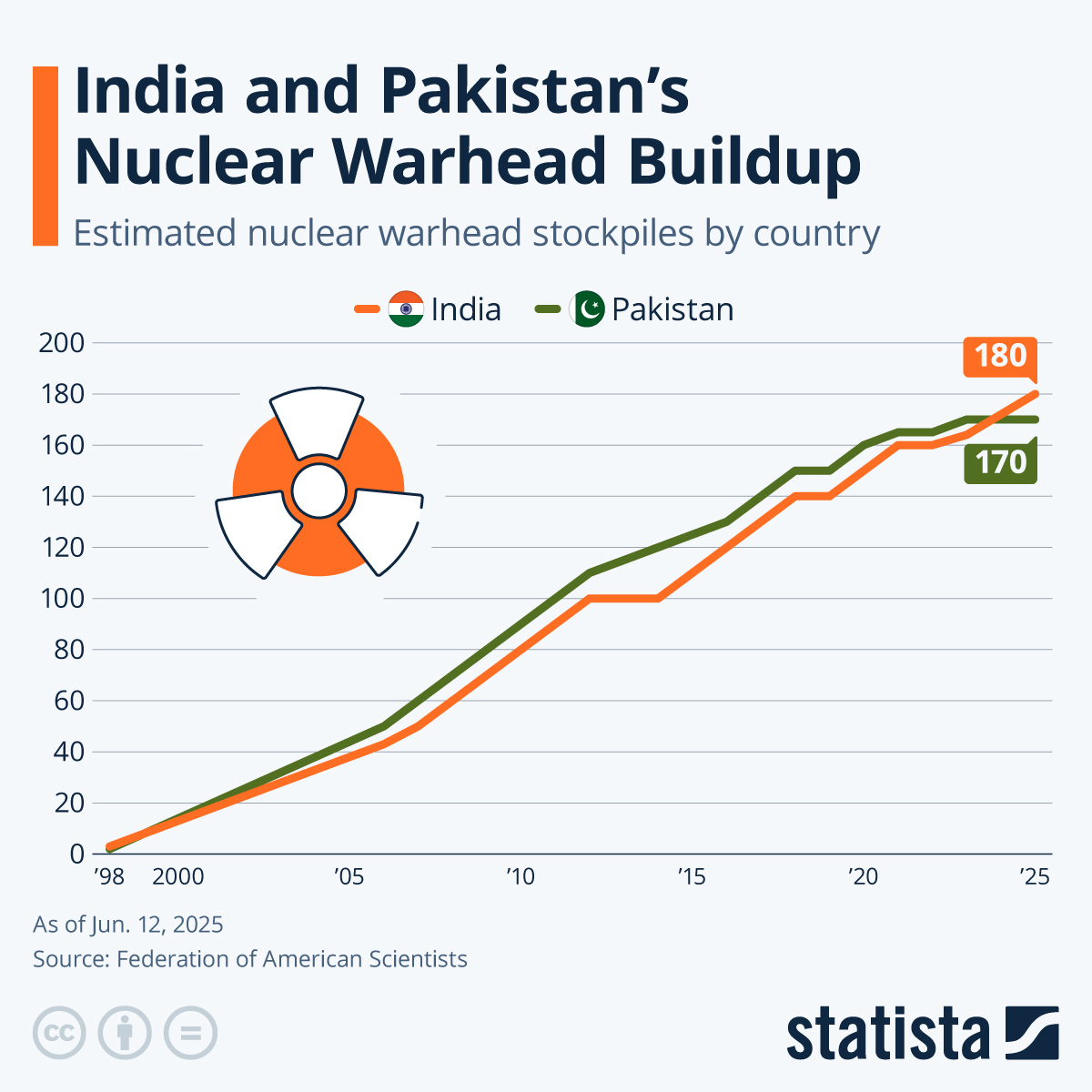
In the case of India and Pakistan, the two neighbors have trailed each other in might since the late 1990's. In 2024, India overtook Pakistan for the first time, according to FAS estimations. That year, it is estimated to have had 172 nuclear warheads, while Pakistan is believed to have had 170. In 2025, this number remained stable for Pakistan, while India added eight more to its arsenal, bringing its total to 180.
India has land-based, sea-based and air-launch nuclear capabilities. The state has historically stood by a No First Use policy, although in 2019 Indian Defense Minister Rajnath Singh made comments that drew the credibility of this into question. Pakistan, meanwhile, does not disclose information on the size of its nuclear arsenal and has not declared a No First Use policy.
In May 2025, an 88-hour standoff between India and Pakistan raised fears of a larger conflict. While a cease-fire was soon brokered by the United States, the episode underscored just how quickly tensions can become serious when nuclear-armed states are involved.
While India and Pakistan's numbers are far below those of Russia and the United States, they are still the highest levels for the respective countries on record. Over past years, the United States had been reducing its number of warheads. However, China, India, North Korea, Pakistan, the United Kingdom and Russia are thought to have been increasing their arsenals.