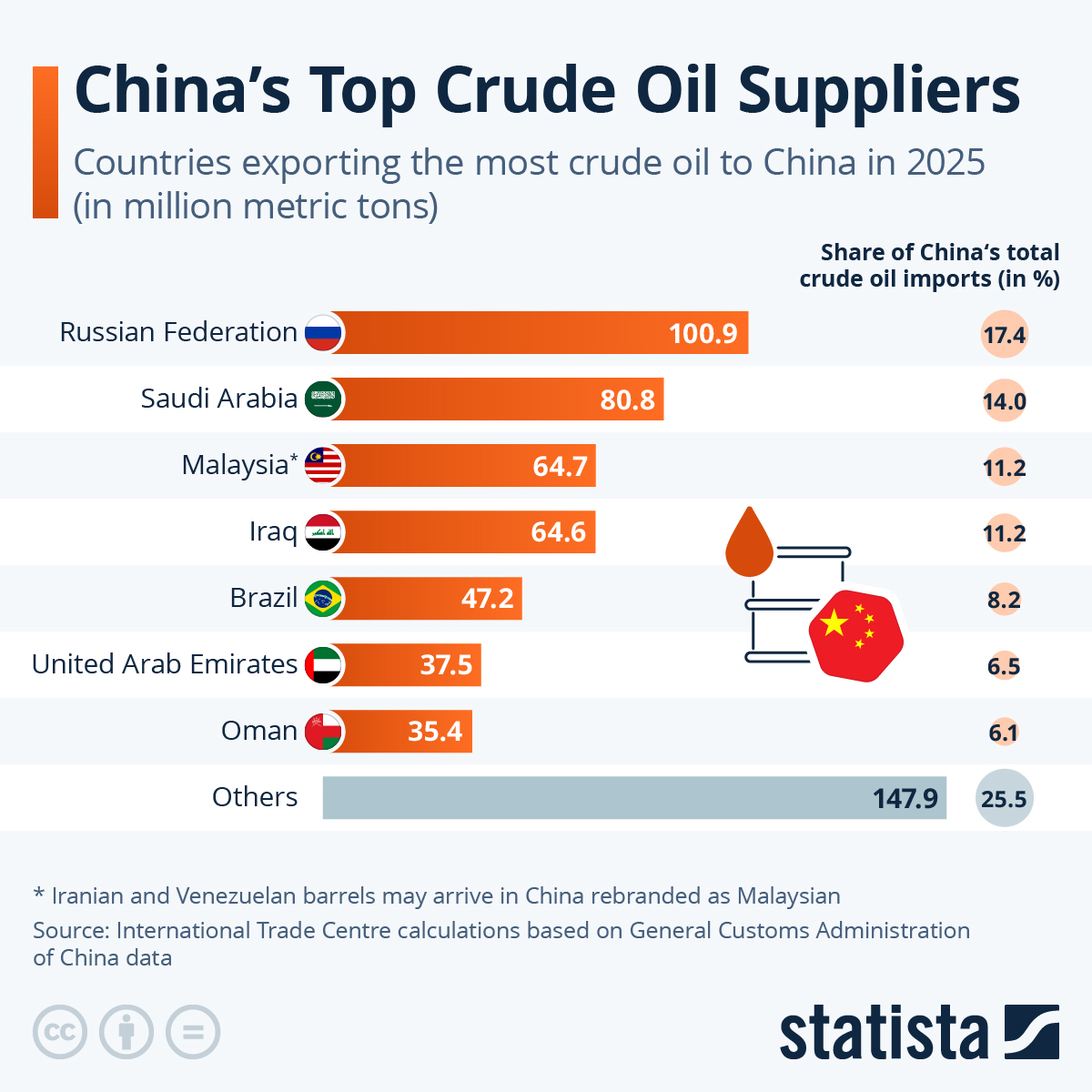
Russia, Saudi Arabia, Malaysia, Iraq and Brazil were China’s top suppliers of crude oil in 2025, together accounting for 62 percent of the country’s total imports. According to the International Trade Centre's calculations, based on data from China’s General Customs Administration, these five nations delivered 358.2 million metric tons of crude. Angola and Kuwait rounded out the top ten.
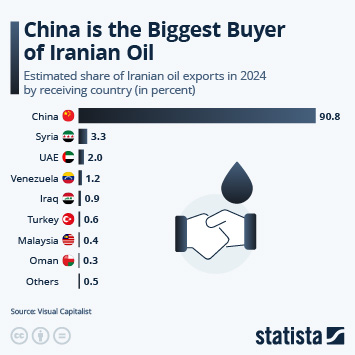
Notably missing from the top ranks are Iran and Venezuela, two major producers of oil that are subject to heavy international sanctions. While Venezuela officially sent about 444,000 metric tons of crude to China, experts believe the actual amount is higher. Erica Downs, Senior Research Scholar at Columbia University’s Center on Global Energy Policy, notes that Iranian and Venezuelan oil is often rebranded, with much of it labeled as Malaysian imports. This is reflected in the fact that China imports more “Malaysian” crude than Malaysia itself produces.
China’s oil supply remains highly diversified, with no single country contributing more than 20 percent of total imports. In 2025, Russia held the highest share at 17.4 percent, followed by Saudi Arabia at 14 percent.
Last year, China set a record for crude oil imports, bringing in 578 million tons, a 4.4 percent increase from 2024. According to Reuters, this surge was partly driven by a rise in stockpiling, with average daily stock builds reaching 430,000 barrels per day, up from 84,000 bpd in 2024. Although Beijing does not report the size of its oil reserves, they are estimated to be about 1.4 billion barrels, according to the Center on Global Energy Policy.
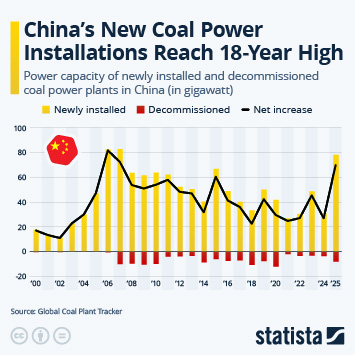
Even though China remains the world’s largest importer of oil through the Strait of Hormuz, it is relatively robust in terms of energy security. China does not need to depend majorly on crude for electricity, which is fueled largely by coal and a rising share attributed to renewables. However, oil remains important for areas such as aviation, shipping and diesel.