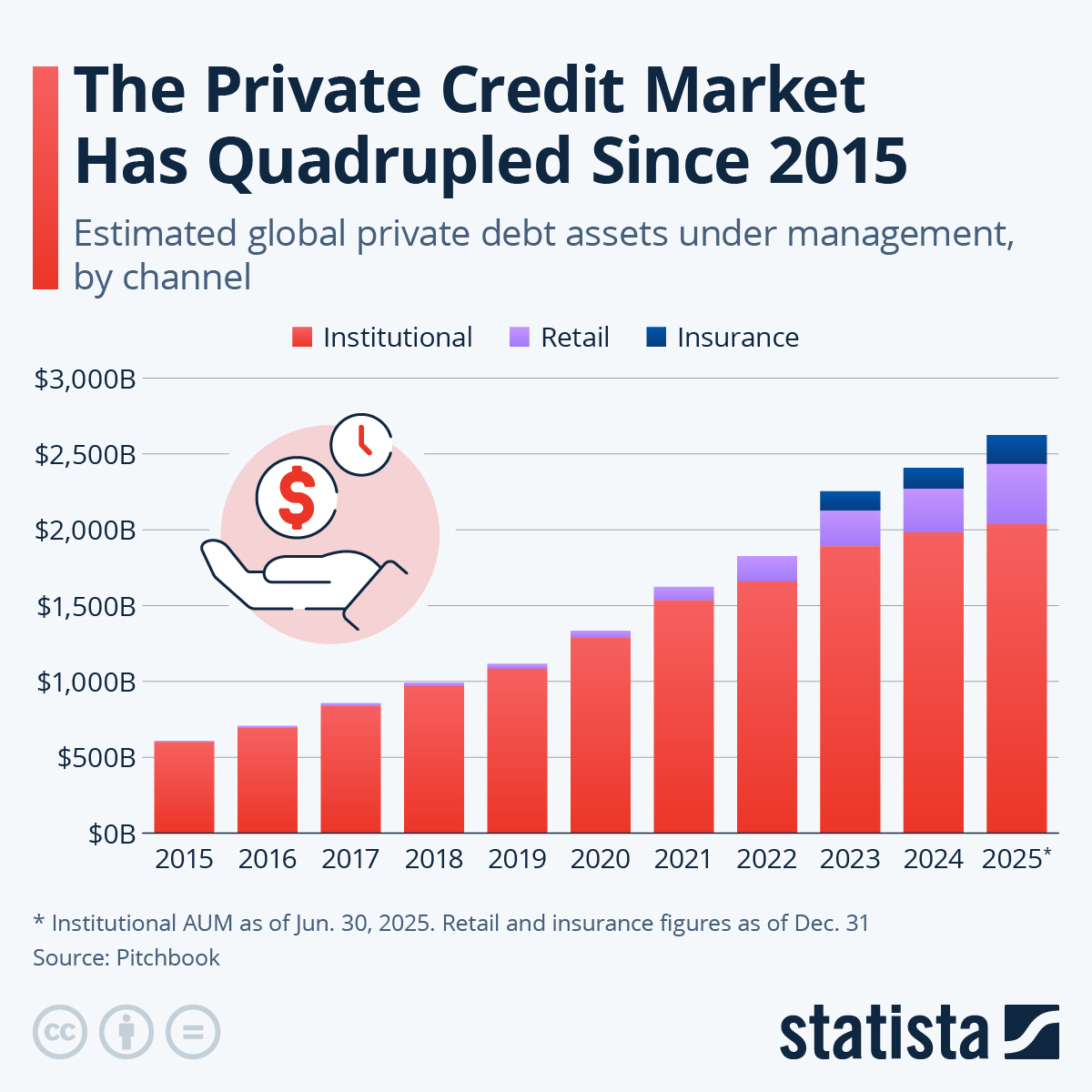
Private credit has grown rapidly over the past decade, transforming from a niche segment of the financial system into a multi-trillion-dollar market. As our chart, based on Pitchbook estimates, shows, global private debt assets under management have more than quadrupled since 2015, driven primarily by institutional investors such as pension funds, foundations, university endowments and insurers.
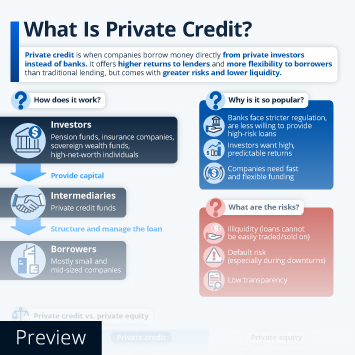
This surge reflects a broader shift in how companies access financing. Following tighter banking regulations after the global financial crisis, traditional lenders have become more cautious, creating space for private credit funds to step in. At the same time, investors have been drawn to the asset class by the prospect of higher and more predictable returns compared to traditional fixed-income products.
While institutional capital still dominates the private credit market, very wealthy individuals have also shown an appetite to invest. This additional influx of capital has helped fuel the market’s rapid expansion, but it has also raised questions about whether increasing competition among lenders could lead to looser standards and higher risks.
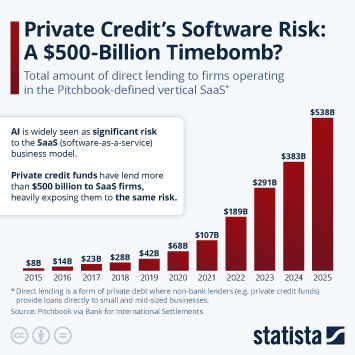
As private credit continues to scale, it is becoming an increasingly important pillar of corporate financing. At the same time, its growing size and interconnectedness mean that negative developments within the market are more likely to have broader implications for the financial system, fueling concerns about the sector's significant exposure to certain verticals, specifically software, where the risk of AI disruption is high.