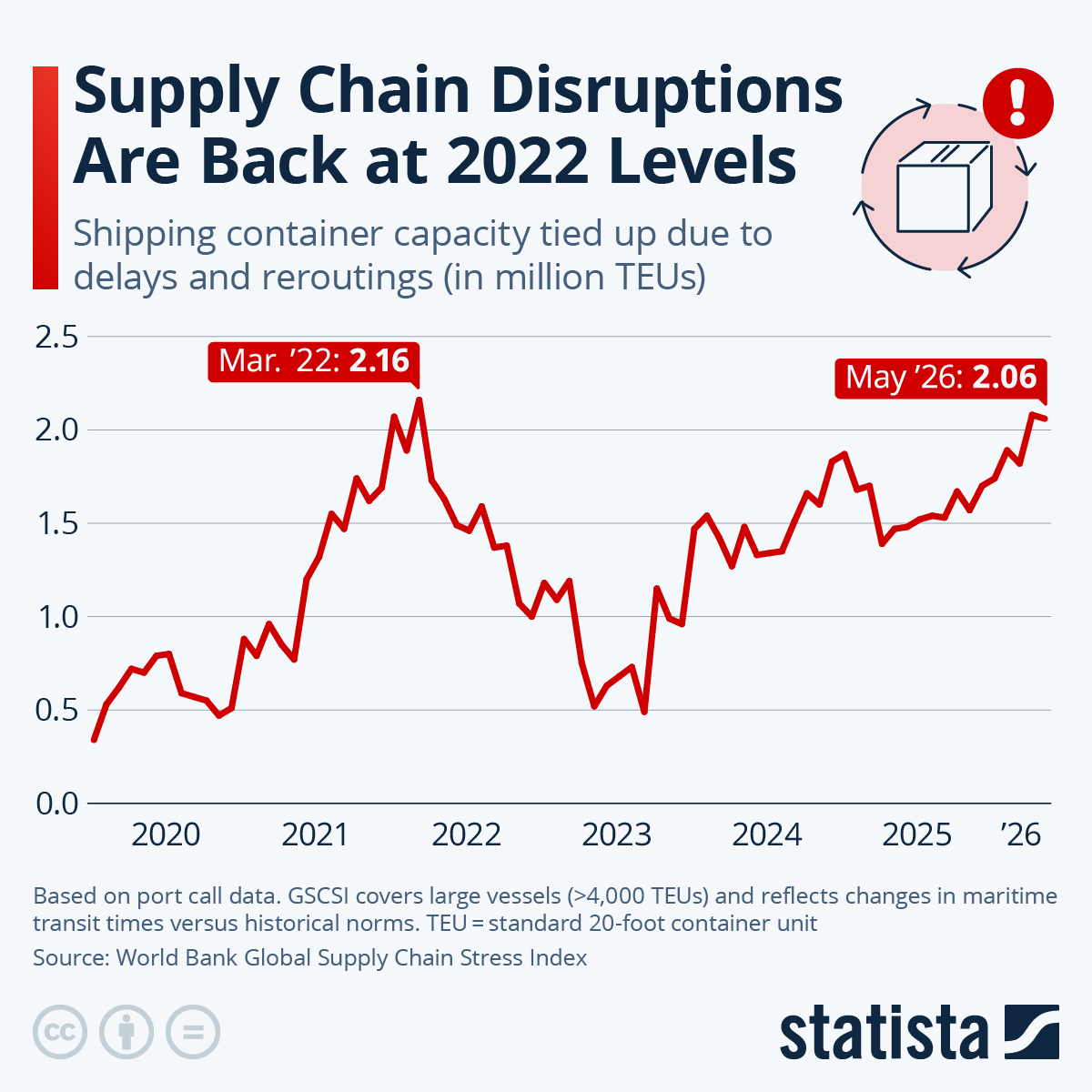
Global supply chain pressures have risen again in recent months, returning to levels last seen during the height of pandemic-related disruptions. According to the Global Supply Chain Stress Index (GSCPI) published by the World Bank, shipping container capacity tied up due to delays and reroutings reached around 2.06 million TEUs in May 2026, close to its previous peak of 2.16 million TEUs recorded in early 2022. The index is based on port call data and focuses on large container vessels, capturing deviations in maritime transit times from historical norms, measured in twenty-foot equivalent units (TEUs), the standard size of a shipping container.
As our chart shows, supply chain stress increased sharply throughout 2020 and 2021, as the Covid-19 pandemic disrupted production and shipping worldwide. After peaking in early 2022, pressures eased significantly over the following year, falling to around 0.5 in early 2023 as global trade flows normalized. Since then, however, disruptions have gradually intensified, with the index climbing steadily throughout 2024 and 2025 before surging again in early 2026. This renewed increase comes amid ongoing geopolitical tensions, including disruptions to key shipping routes and elevated risks in regions such as the Red Sea, as well as persistent bottlenecks and higher transport costs.