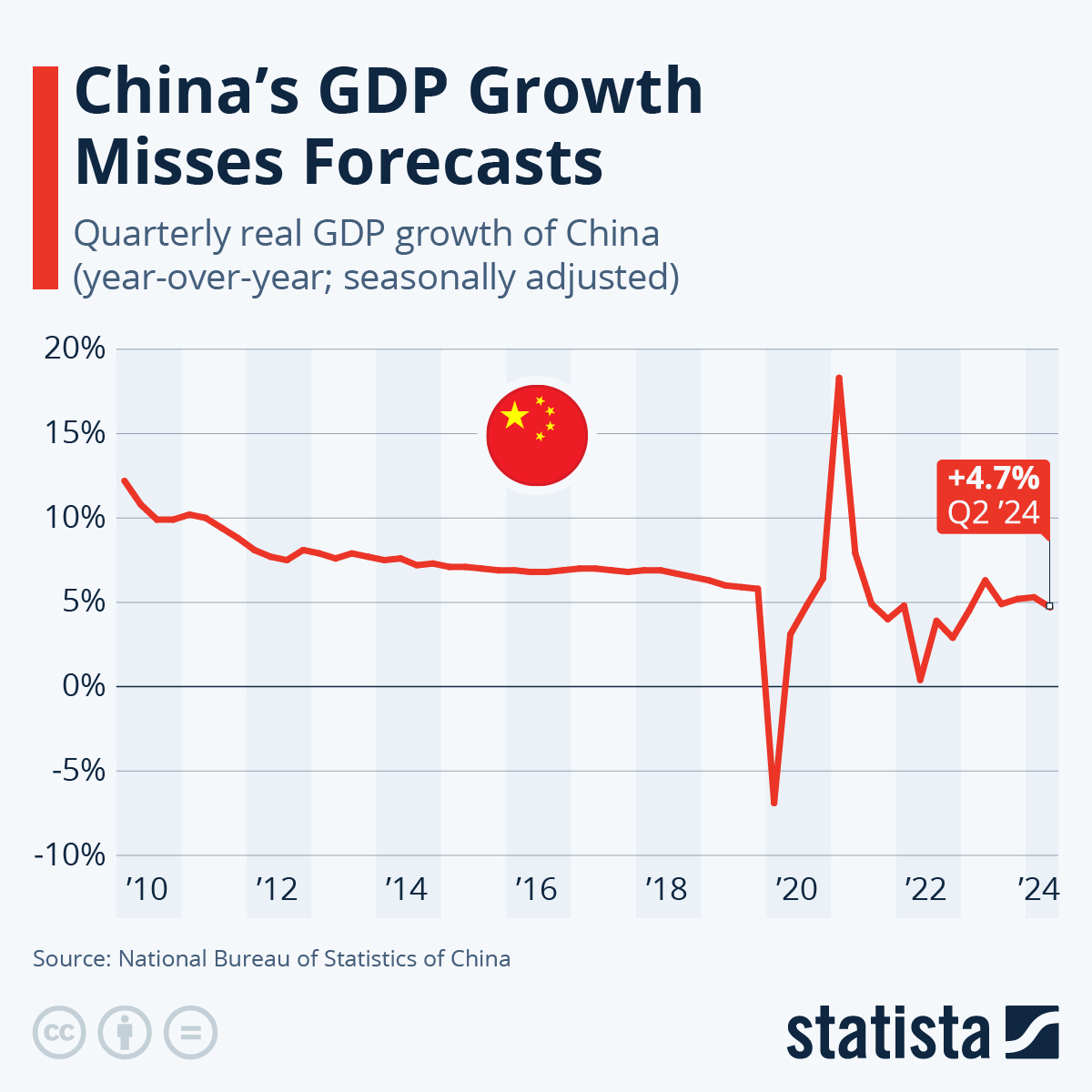
China’s economy grew by 5.0 percent in the first quarter of 2026 compared to the same period one year before, according to data released by China’s National Bureau of Statistics. This is an acceleration from the final quarter of 2025, which saw growth of real gross domestic product at 4.5 percent. GDP refers to the total market value of all goods and services that are produced within a country per year and is adjusted for price changes, making it a useful indicator for economic growth.
The start to the year has seen faster growth than expected, with economists having forecast the first three months growth at around 4.8 percent. This growth has been driven partly by strong exports of electrical and mechanical products as well as state-led investments, while domestic consumption has remained relatively weak. This comes despite geopolitical tensions affecting global energy markets and trade routes, including disruptions linked to the Strait of Hormuz. Experts have mixed views on the future impacts of the ongoing conflict on the Chinese economy.
China is currently in the midst of a real estate downturn and as part of the plan to counter this, Beijing has pushed to increase manufacturing. But with people less willing to spend, this has led to companies cutting their prices. China has also boosted its exports, as demand abroad is currently stronger, but this has triggered higher tariffs from countries trying to bolster their own markets, like the United States.
Prior to the Covid crisis, the Chinese economy had stabilized at an annual GDP growth of around 6 percent following a gradual slowdown from more than 10 percent growth in the first decade of the 21st century. The latest figures are still somewhat below this level.