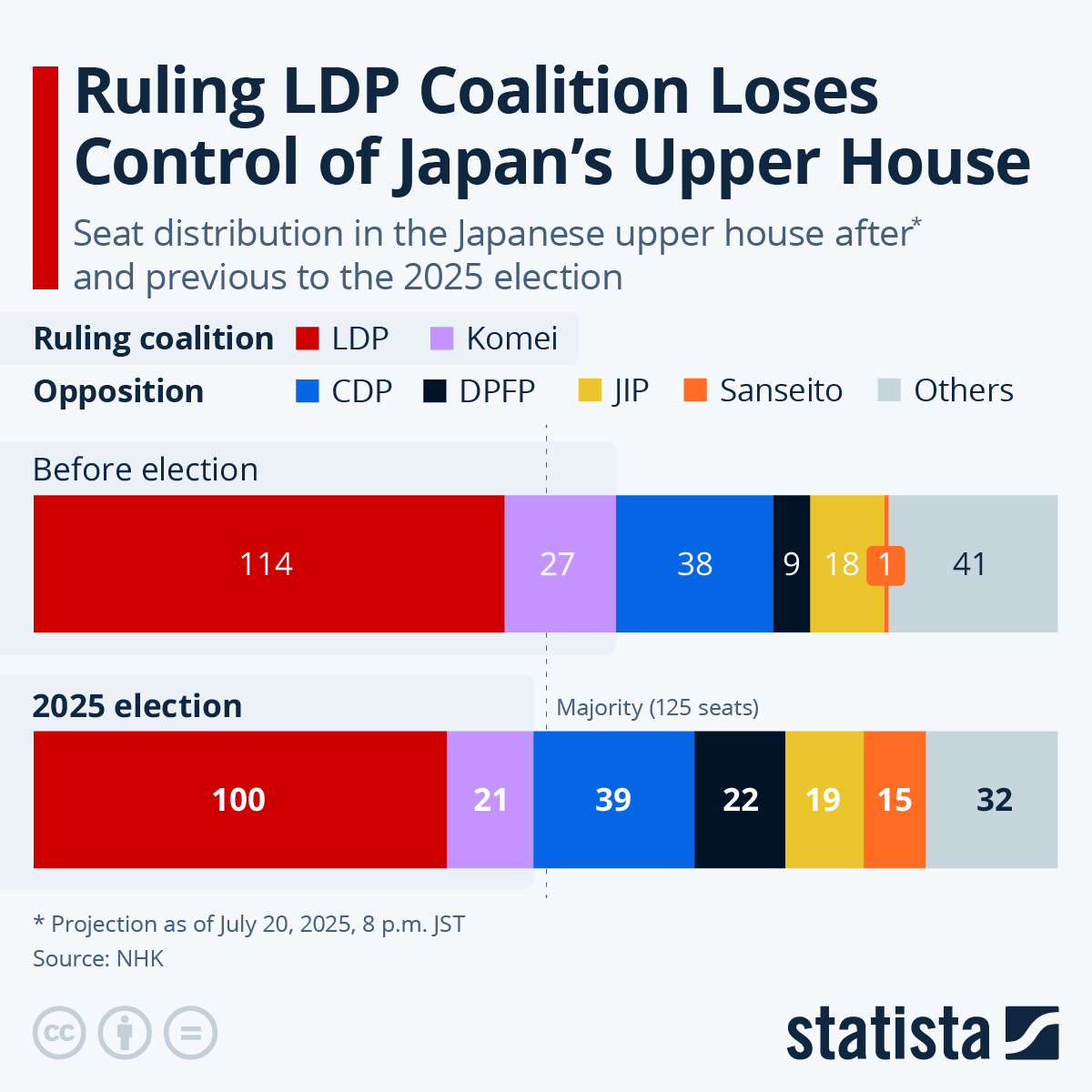
Japan's ruling party, the Liberal Democratic Party, and its coalition partner are projected to have lost the majority in the upper house after a portion of the seats in the parliamentary chamber went up for reelection Sunday. The party's grip on power it had for the majority of the past 70 years seems to be slipping as the LDP coalition has also governed with a minority of seats in the lower house since November of last year. Prime Minister Shigeru Ishiba vowed to stay on nevertheless, but his position is seen as in danger.
As seen in the results, voters swung right, bestowing the right-wing Sanseito party with a projected 14 seats, up from just one seat previously. The Democratic Party For the People, labeled conservative and populist, also saw gains. A record 42 women won seats in the upper house, 33 percent of all seats up for reelection. The previous record had been 35 seats.
Despite its continuing reign, the LDP has been growing increasingly unpopular, seen in the initial approval ratings of incoming cabinets. The latest, the Ishiba cabinet, only had an approval of a meager 28 percent when coming into power last October, as it struggles to address issues like the aging Japanese society and rising prices. After becoming prime minister, Ishiba had called the election that had lost the party its first parliamentary majority on short notice.