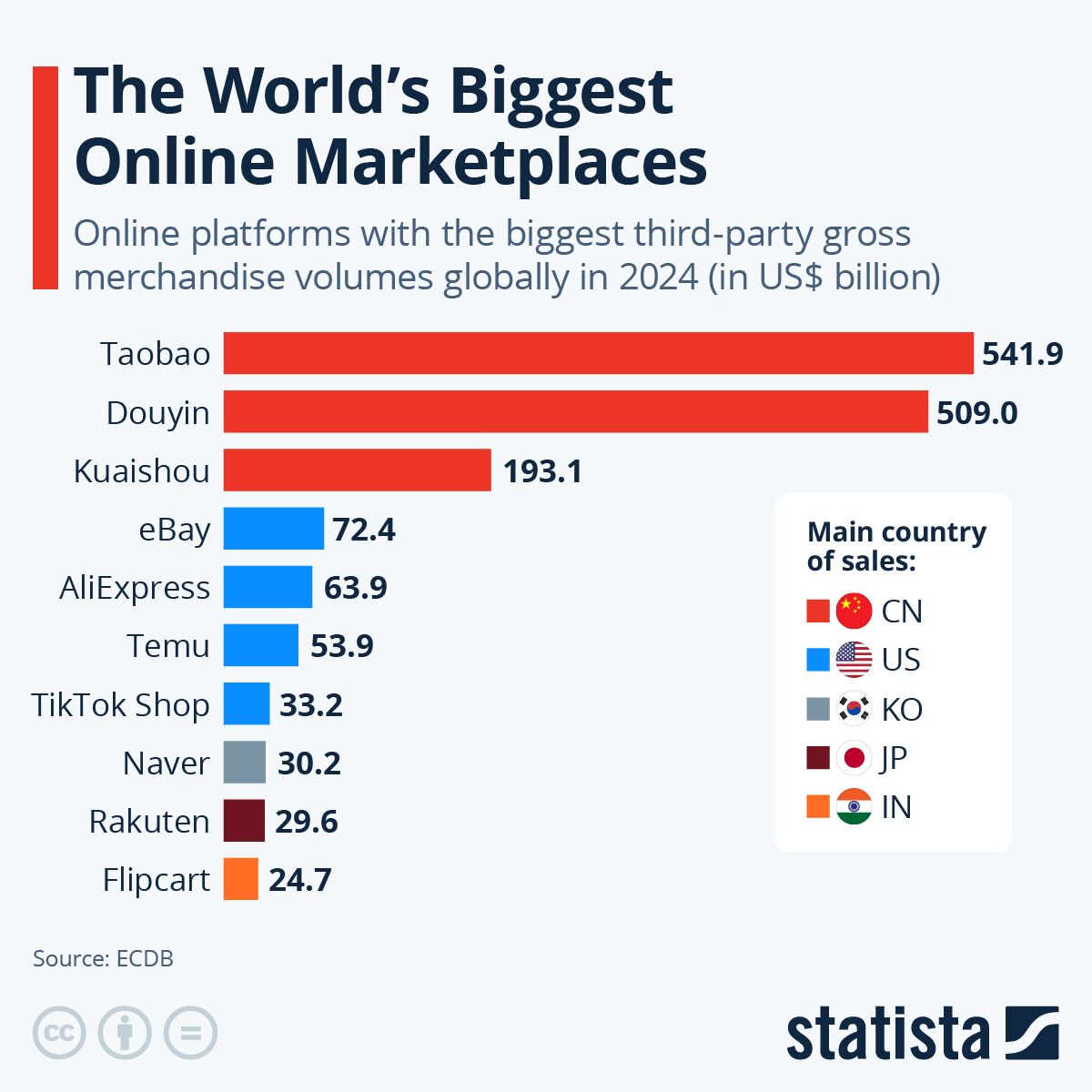
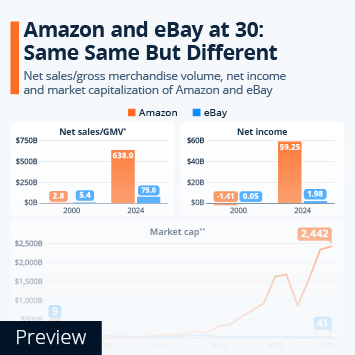
At 30 years old, eBay is a titan of e-commerce. While the company has undergone many transformations over the years, competition in the market has certainly increased. Yet, eBay remains the fourth-biggest platform for third-party gross sales volume in the world, harking back to its beginnings as an auction site where anybody could sell their private belongings or merchandise.
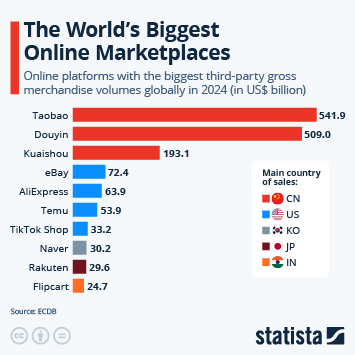
The company also remains the third-biggest e-commerce player in the United States by first and third-party merchandise volume combined (after Amazon and Walmart) and also the tenth-biggest in the world in this category, accoding to ECDB. While Amazon remains the biggest overall seller globally at $790 billion of gross merchandise volume, most third-party sales are done by Chinese companies Taobao by Alibaba ($542 billion) as well as social video sites Douyin's and Kuaishou's marketplaces, making eBay the biggest non-Chinese third-party seller in the world.
In both overall and third-party sales, Asian players are numerous among the top 10, also including Chinese enterprises Pinduoduo, Tmall (also Alibaba) and JD for total merchandise volume. Apart from social media-based shops that have become some of the most important third-party sellers in the world, Alibaba's international arm AliExpress, internationally-focused Temu as well as South Korean site Naver, Japanese Rakuten and India's Flipkart move some of the biggest third-party merchandise volumes in the world, showing how the concept has flourished in Asian markets. The numbers also show how much more advanced social sales are in China than in the rest of the world. While Douyin's and Kuaishou's marketplaces moved more than $700 billion in third-party sales in 2024 combined, the TikTok Shop only stood at $33 billion for this metric.