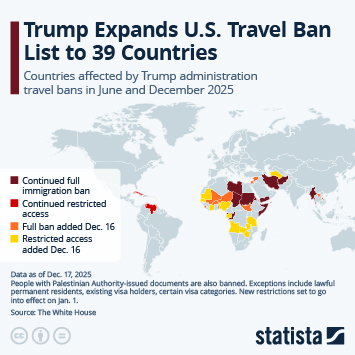
Following the shooting of two National Guard members in Washington, D.C. by an Afghan national last week, the Trump administration has announced measures that will make it harder for some foreigners to enter or stay in the country. The administration said it was pausing all asylum decisions, halting visas for Afghan nationals regardless of whether they assisted in the U.S. war effort, and reexamining green card applications for countries deemed to be "of concern".
These measures add to a long list of policies put in place by the Trump administration in order to limit immigration to the United States, in a year marked by repeated ICE raids in major cities across the country. According to Pew Research Center, the U.S. was home to 51.9 million immigrants as of last June; they made up 15.4 percent of all U.S. residents, and 19 percent of the country's workforce.
Data from the most recent KFF/New York Times Survey of Immigrants shines a light on the feelings of foreign-born residents of the U.S. regarding their safety in the country. An increasing number of immigrants say they know someone who has been detained or deported: they were 8 percent in the last wave of the survey conducted in March-April, compared to 22 percent for those surveyed between August 28 and October 20. With the increased worry among foreign-born U.S. residents, many say they try to avoid activities outside the home, including seeking health care or going to work.
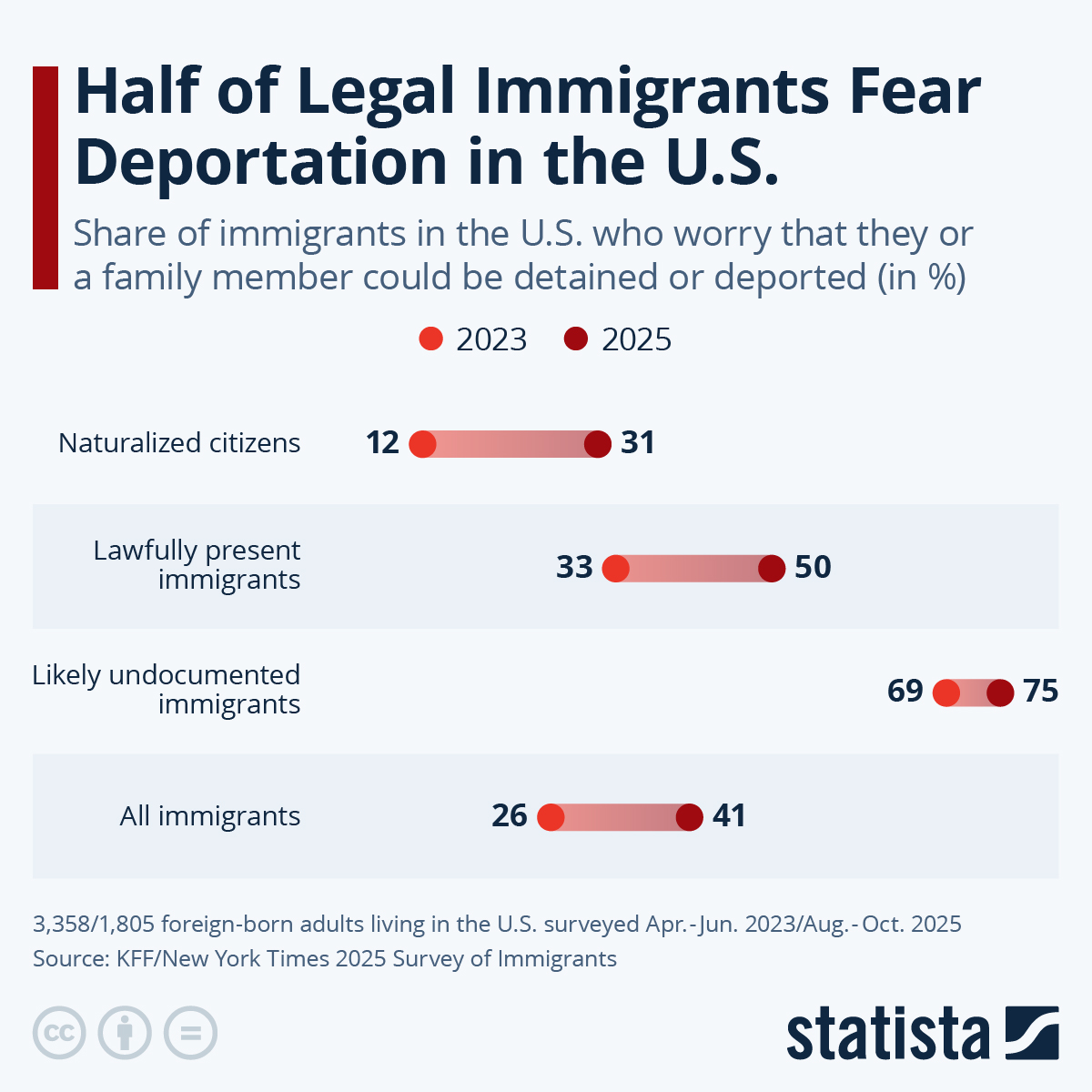
As our infographic shows, more than four in ten immigrants say they personally worry they or a family member could be detained or deported, a fifteen percentage point increase from 2023. While those worries are most pronounced among likely undocumented immigrants (75 percent), they have increased the most among lawfully present immigrants (from 33 percent to 50 percent) and naturalized citizens (from 12 percent to 31 percent). More than half of foreign-born adults surveyed (53 percent), including a majority of those who have obtained U.S. citizenship and those residing in the country on a valid visa, are not confident they or a family member would receive fair treatment by the U.S. legal system if they were detained on immigration-related charges.