International Migrants Day is commemorated each December 18 to acknowledge the millions of people who are forced to leave their homes, in search of safety or opportunity. According to the United Nations, over 122 million people are now forcibly displaced globally, a figure that includes refugees, asylum-seekers and those internally displaced by conflict, persecution or climate disasters. This year has seen record levels of internal displacement, rising humanitarian needs and the highest-ever recorded death toll of migrants in transit, underscoring the urgency of safe, orderly and humane migration pathways.
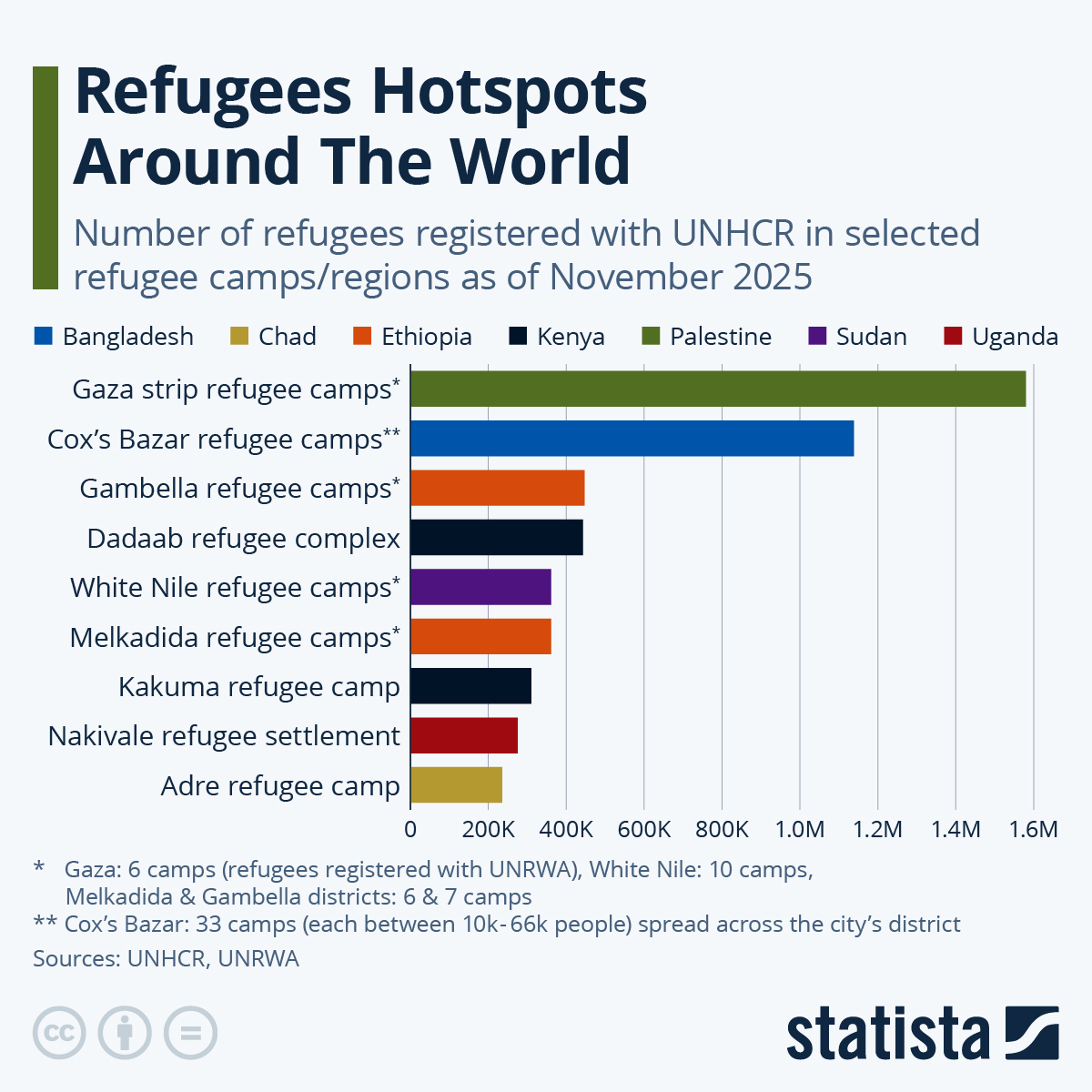
Our chart, based on United Nations agencies' data (UNHCR and UNRWA), highlights the world's largest refugees hotspots: camps or settlement areas where millions seek temporary safety and shelter. The Gaza Strip's refugee camps in Palestine - currently facing intense conflict and humanitarian crisis - and those of the city of Cox's Bazar in Bangladesh, hosting primarily Rohingyas fleeing persecution in Myanmar, stand out as the most populated, each home to over a million refugees. These camps, along with multiple in Africa - hosting persons escaping regional conflicts and drought - in Ethiopia, Kenya, Sudan, Uganda and Chad - reflect ongoing global challenges. The majority of refugees registered in the ten largest hotspots come from six countries: Palestine, Myanmar, Sudan, South Sudan, Somalia and the DR Congo, regions grappling with war, political instability and climate pressures.