The Artemis II Space Crew is on its way back to Earth after setting a new record for the farthest distance humans have ever traveled from the planet. During its historic lunar flyby, NASA’s mission reached a maximum distance of 252,756 miles (406,771 km) from Earth. The crew is expected to splash down in the Pacific Ocean off the west coast of the United States at 20:07 Eastern Time on Friday.
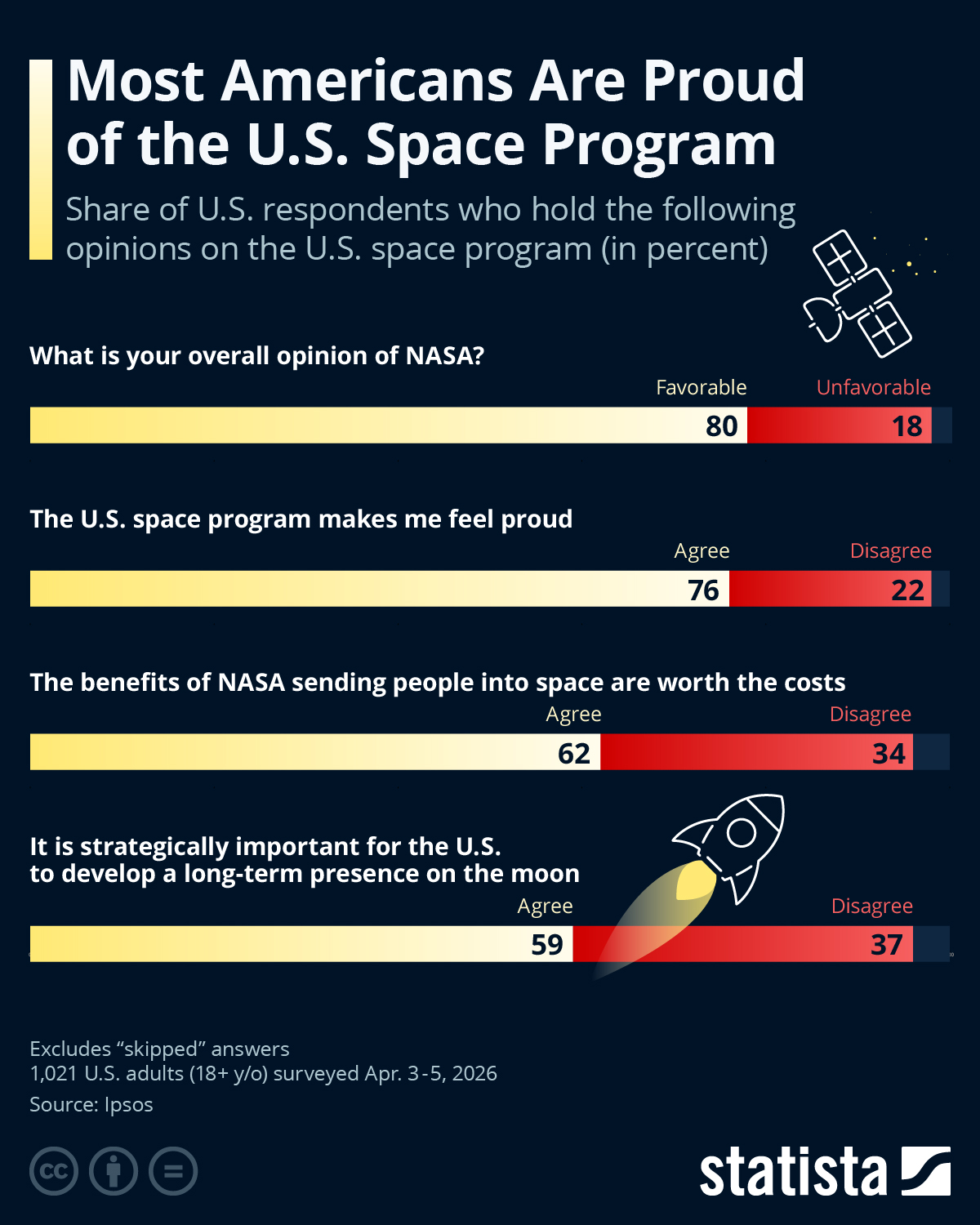
A new Ipsos survey conducted from April 3 to 5 indicates strong public support for the U.S. space program - the United States' efforts to explore space, led primarily by NASA and in collaboration with private companies and international partners. According to the survey, 76 percent of adults say they are proud of the program, while 80 percent report having a favorable view of NASA.
When asked about the strategic importance of establishing a long-term presence on the moon, 59 percent of respondents said it is important, compared to 37 percent who said it is not.
U.S. adults were most likely to say that NASA’s goals of monitoring the earth’s climate, weather and natural disasters (90 percent), developing new technologies (90 percent) and exploring the solar system with tools like telescopes and robots (83 percent) are important for the United States. Crewed exploration received somewhat lower levels of support, with 69 percent saying it is important to send astronauts back to the Moon and 59 percent supporting missions to Mars.
Overall, a majority of Americans (62 percent) believe the benefits of sending humans into space outweigh the costs, while 34 percent say the costs exceed the benefits.