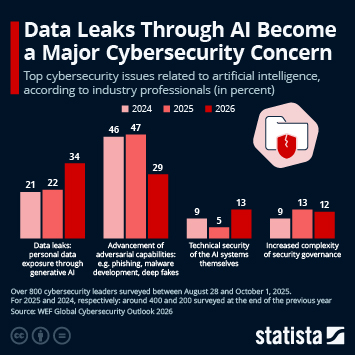
While artificial intelligence is driving new business opportunities, it is also expanding the landscape of cyber risks. As companies integrate AI into their operations, these risks are becoming more complex and harder to detect, pushing cybersecurity to the top of corporate agendas and driving rapid growth in spending. At the same time, as highlighted in Statista’s Putting Agentic AI to Work whitepaper, cybersecurity is just one part of a broader transformation, with businesses also investing heavily in workflow automation, customer experience and workforce productivity.
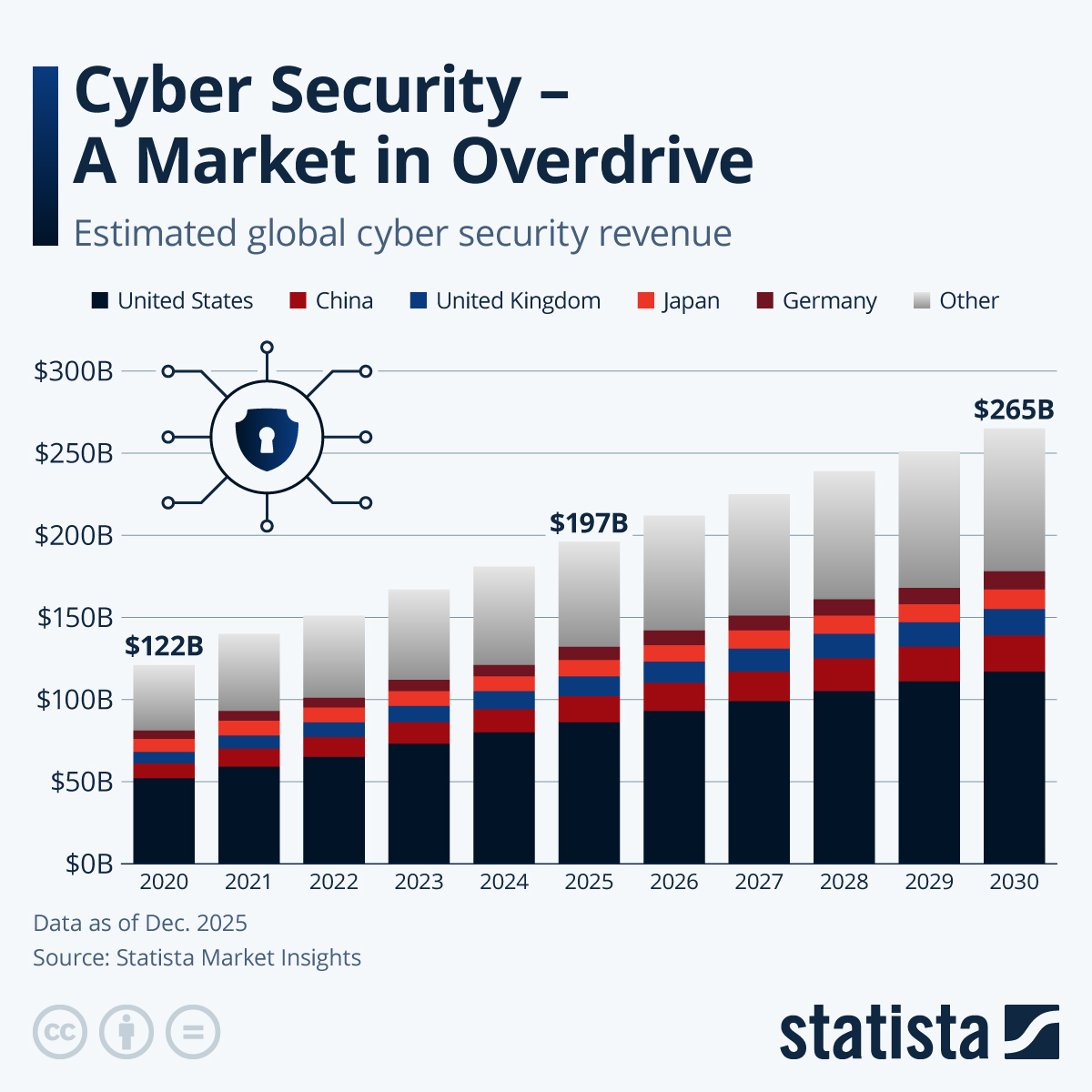
As our chart shows, global cybersecurity revenues are estimated to have grown from around $120 billion in 2020 to nearly $200 billion in 2025, and by 2030, they are expected to reach about $265 billion, according to Statista Market Insights. The United States remains by far the largest market, accounting for $86 billion in 2025, followed by China at $16 billion. Europe’s major economies, including the United Kingdom and Germany, also contribute steadily to overall growth, albeit at a smaller scale.
This surge in investment is closely tied to a wave of high-profile cyber incidents and the growing number of potential entry points for cyberattacks created by digitalization and AI. In 2025, 16 billion login records were exposed in a massive data leak, marking the largest data breach to date and highlighting the scale of vulnerabilities in digital systems. At the same time, the rise of generative AI has introduced new threats, including automated phishing, deepfake-based fraud and AI-assisted hacking, prompting governments and firms alike to step up defenses.