As populations age rapidly in many regions around the world, the growing share of older workers and pensioners is raising new challenges for labor markets and public finances. UN projections show that old-age dependency ratios are set to rise sharply in countries such as Italy, Germany and South Korea by 2050, increasing pressure on working-age populations.
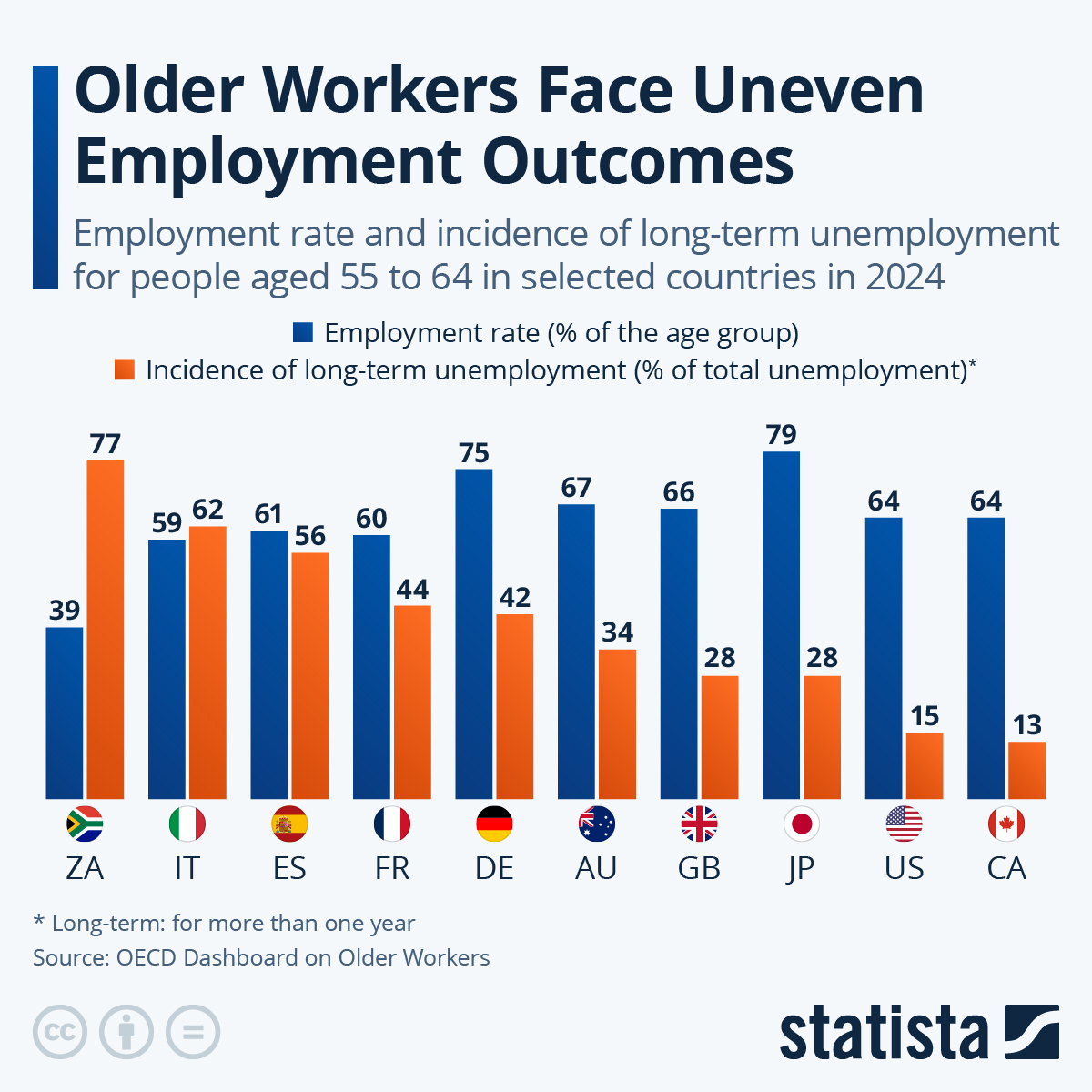
Against this backdrop, data from the OECD Dashboard on Older Workers highlights that uneven employment outcomes persist for people in the final decade of their working lives (aged 55 to 64). In 2024, employment rates among this age group range from just 39 percent in South Africa to 79 percent in Japan, while in major European countries, rates vary from 59 percent in Italy to 75 percent in Germany, with the United Kingdom at 66 percent. In North America (the United States and Canada), the rate stands at 64 percent.
At the same time, many older jobseekers face prolonged periods out of work. The incidence of long-term unemployment (defined as being unemployed for more than a year) in this group reaches 77 percent in South Africa, 62 percent in Italy and 56 percent in Spain. Even in countries with relatively high employment, challenges persist: in Germany, 75 percent of older people are employed, while 42 percent of unemployed individuals of this age group are long-term unemployed. By contrast, the United States and Canada combine mid-range employment rates (both 64 percent) with lower shares of long-term unemployment, at 15 percent and 13 percent, respectively.
These disparities reflect structural barriers such as skills mismatches, health constraints, and age-related hiring biases, which make it harder for older workers to return to employment after becoming unemployed. Differences in labor market flexibility, retirement policies and employer practices also help explain why outcomes vary so widely across OECD countries.