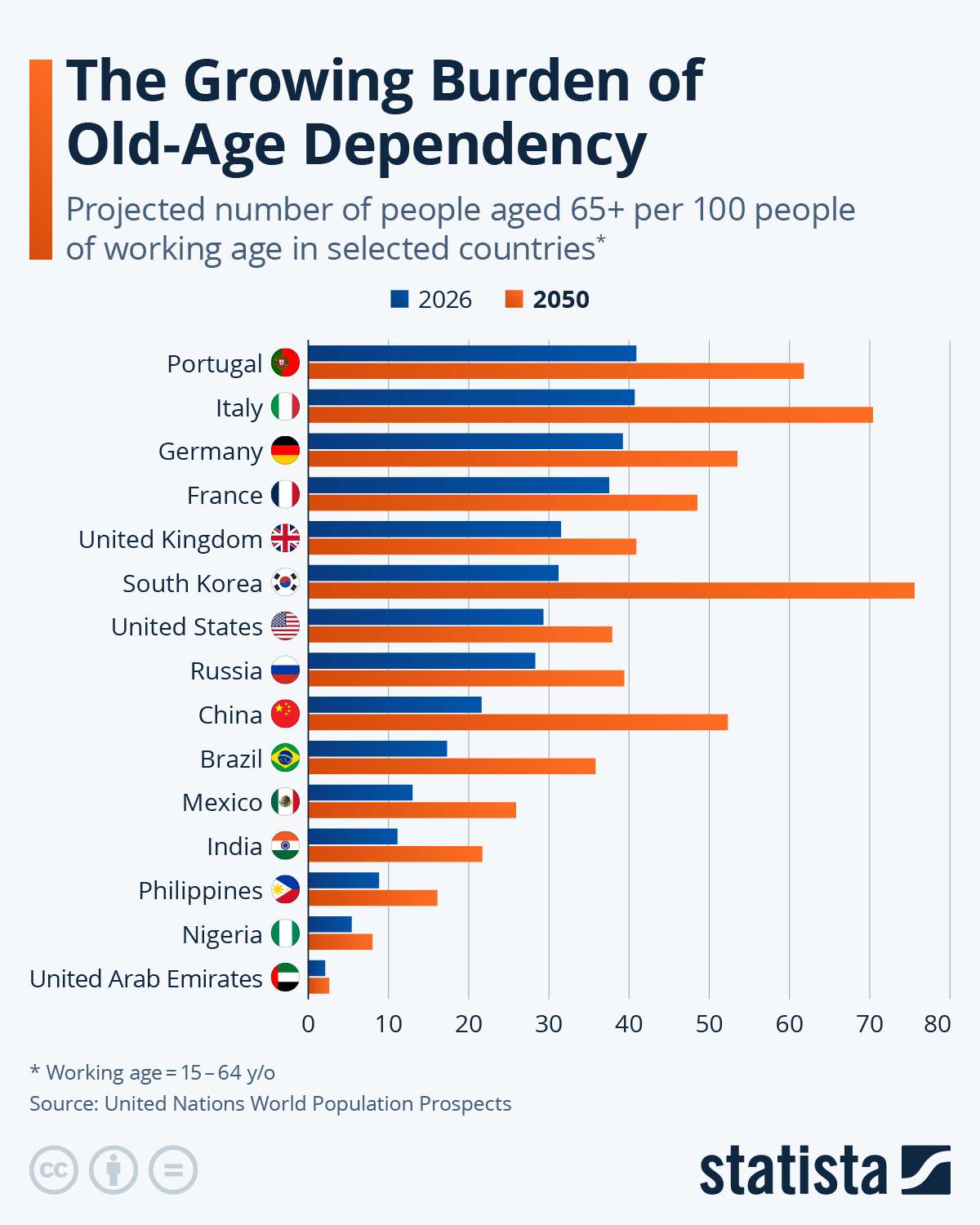
Many countries around the world are facing a rapidly rising old-age dependency ratio, according to projections published in the UN’s World Population Prospects 2024. This indicator measures the number of people aged 65 and older relative to the working-age population (between 15 and 64 years old).
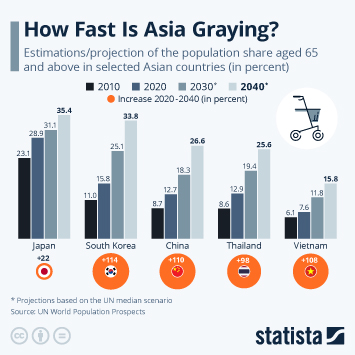
South Korea is expected to experience a particularly steep increase, with the number of people aged 65 and over per 100 working-age adults projected to jump from 31.2 in 2026 to 75.6 by 2050. Italy is also forecast to see a dramatic rise, climbing from 40.7 to 70.4. These figures underscore the accelerating pace of global population ageing, which will result in a growing economic burden on shrinking workforces.
Established industrial economies such as the United States are projected to age more gradually, with the old-age dependency ratio rising from 29.3 to 37.9 over the same period. By comparison, China is expected to undergo a particularly rapid demographic shift, with its ratio more than doubling from 21.6 to 52.3. India and several younger emerging economies are forecast to remain comparatively youthful despite moderate increases.
These UN projections are based on certain trends in birth rates, life expectancy and migration. If these trends continue, ageing populations are likely to put increasing pressure on labor markets, pension systems and public finances, requiring governments to adapt their policies to older populations. It's important to note that this data does not account for the fact that many people over the age of 65 are still working, and younger people will not all be working.