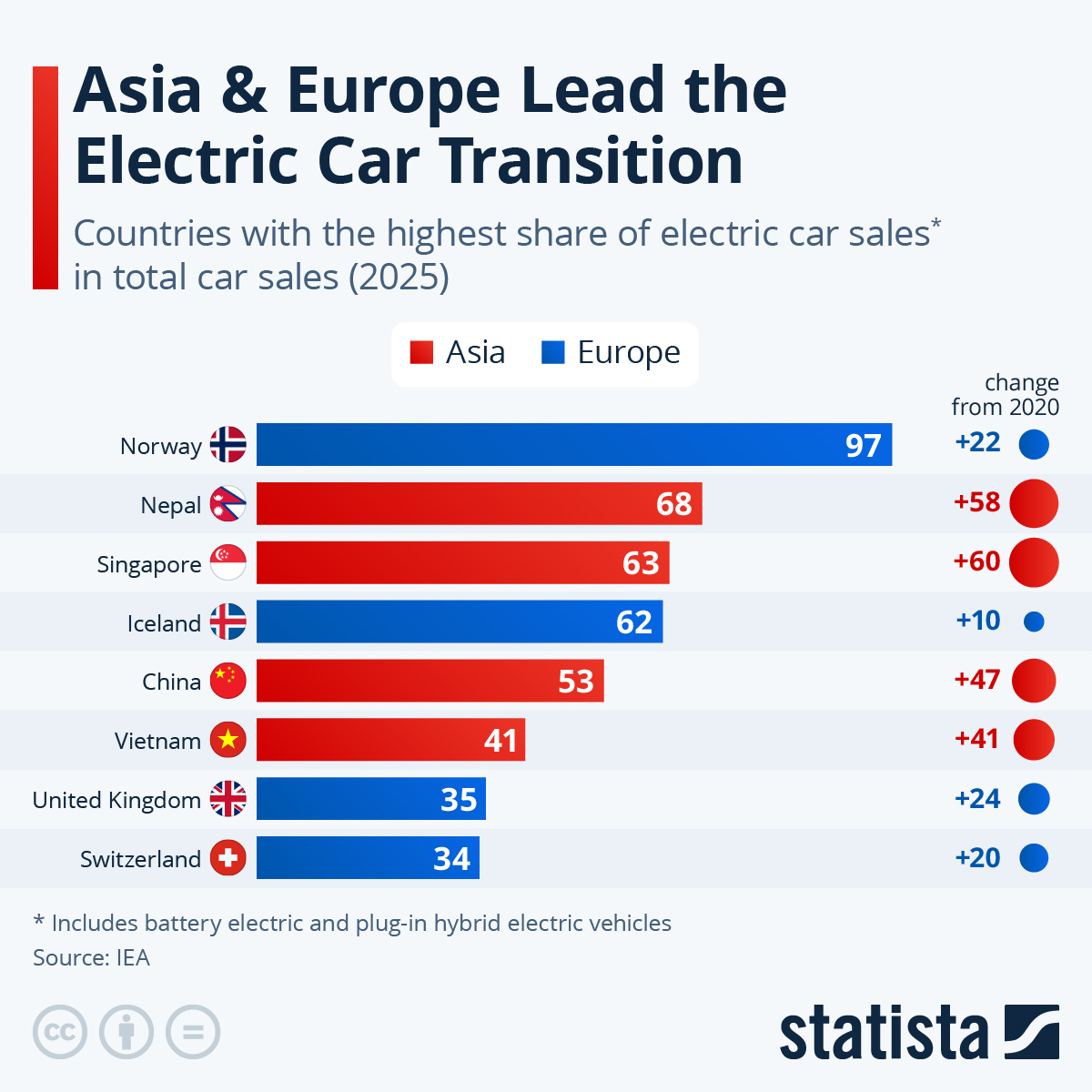
Norway has moved even further ahead in the global shift to electric mobility, with nearly all new cars sold in 2025 being either battery-electric or plug-in hybrid vehicles, according to data from the International Energy Agency. Electric vehicles already accounted for 75 percent of new car sales in the country in 2020, but that figure has since climbed to 97 percent.
The eight countries with the highest shares of electric car sales were all located in Northern Europe or East and Southeast Asia. Nepal ranked second, with electric vehicles accounting for 68 percent of new car sales, followed by Singapore (63 percent), Iceland (62 percent) and China (53 percent).
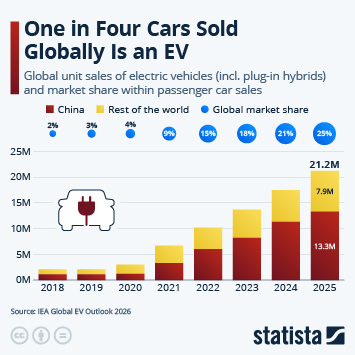
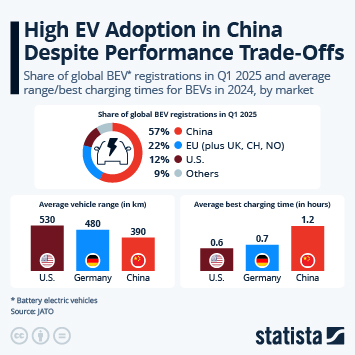
Although growth in China’s electric vehicle market slowed in 2025, partly due to the temporary suspension of the country’s vehicle trade-in subsidy scheme, adoption has still surged over the past five years. Electric vehicles represented just 6 percent of new car sales in China in 2020, compared with 53 percent in 2025. The country accounted for more than half of the global increase in electric vehicle sales last year, and around six in ten electric cars sold worldwide were purchased in China.
Neighboring countries have also benefitted from China’s electric revolution. In Nepal, for example, the share of electric car sales climbed from 10 percent in 2020 to 68 percent in 2025, driven in part by imports of lower-cost Chinese-made EVs.
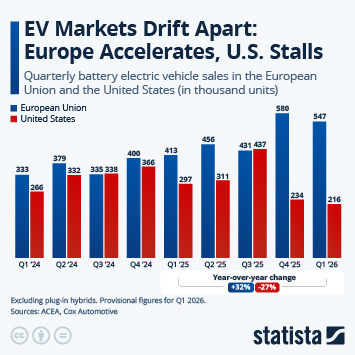
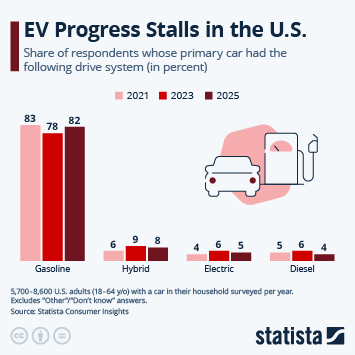
In the United States, meanwhile, electric vehicle adoption continued to hover at just below 10 percent of new car sales. This came despite several policy changes, including the phaseout of federal tax credits. Analysts at the IEA noted that the end of these incentives contributed to weaker U.S. EV sales toward the close of the year.