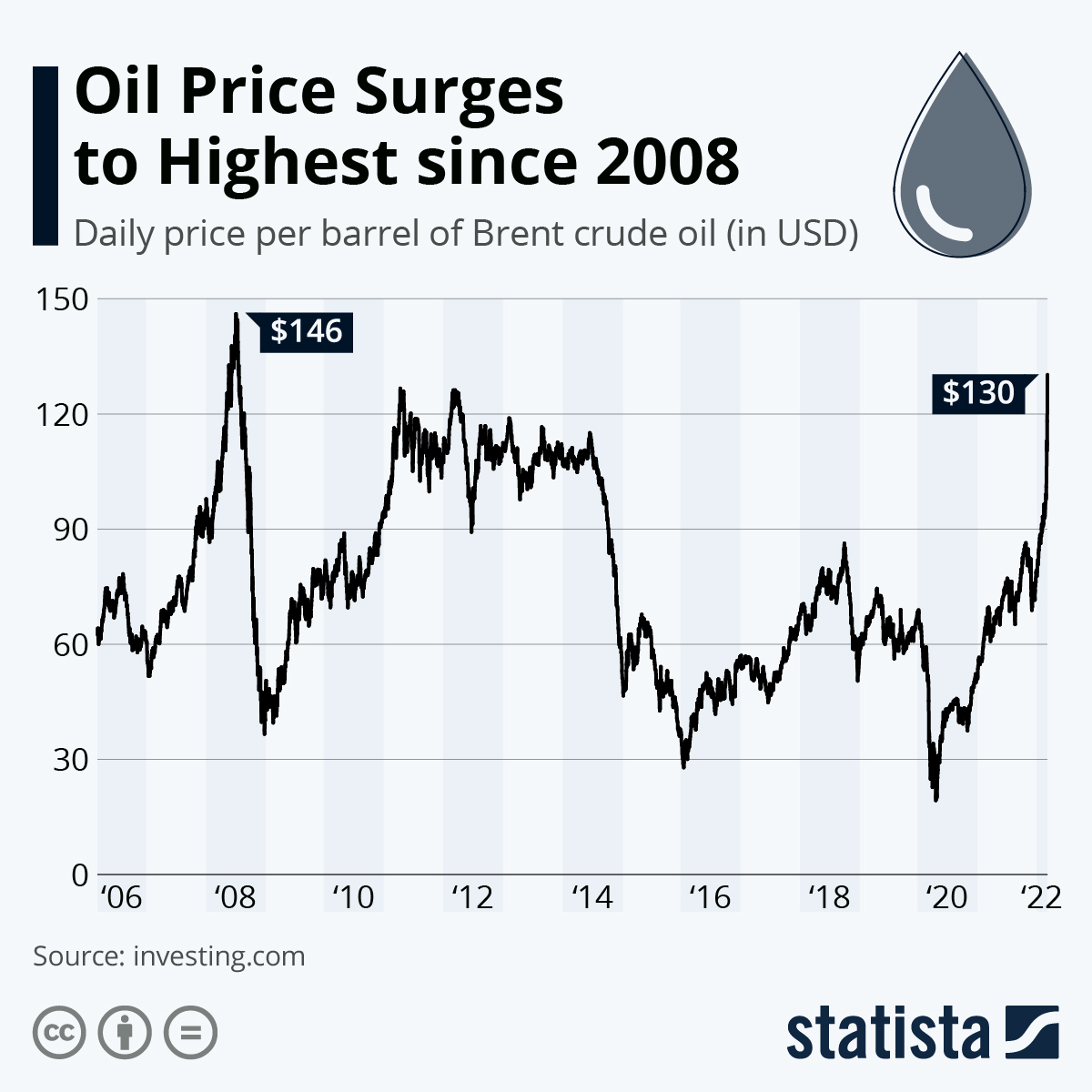
The price of a global oil benchmark reached a four-year high momentarily on early Thursday as the blockage of the Strait of Hormuz continues. A barrel of Brent crude traded for $126 intraday after having opened at $111. It proceeded to fall further during the day, however, and reached $110 as of mid-morning in the U.S.
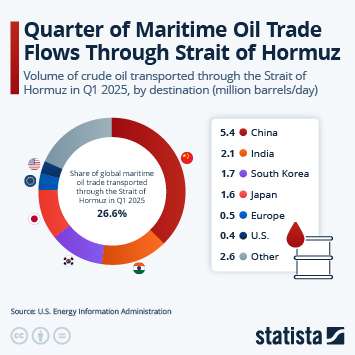
Since Israel and the U.S. launched a war against Iran at the end of February, international shipping has almost come to a halt at the entrance of the Strait of Hormuz, through which transits close to 27 percent of the world's maritime oil trade. The impact of the instability in the region on oil prices was swift: in the days following the first strikes, the price of Brent crude jumped by 10 percent. Ten days later, the price of a barrel of Brent crude oil reached $108, exceeding the $100 mark for the first time since August 2022, according to data from Investing.com. Thursday's intraday high marked the costliest barrel since the spring of 2022, shortly after the Russian invasion of Ukraine and the ensuing energy crisis.
Analysis from Rapidan Energy Group picked up by CNN and CNBC shows that an estimated 20 percent of the world's oil supply has been disrupted by the ongoing conflict. That’s more than double the previous record set during the Suez Crisis of 1956-1957.