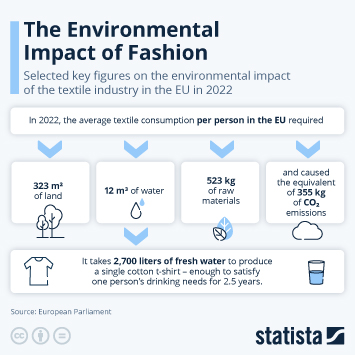
The European Parliament has officially passed a new law aimed at reducing food and textile waste within the European Union. The ambitious legislation introduces new rules that place the responsibility for the collection, sorting and recycling of used clothing and household textiles on the companies that produce them.
Currently, several hundred thousand tons of used textiles are exported annually from EU countries to third-party nations. In the past two decades, these exports have tripled, from just over 550,000 tons in 2000 to nearly 1.7 million tons in 2019. The fate of these textiles is often uncertain: while some are reused, between 10 percent and 40 percent typically end up in landfills.
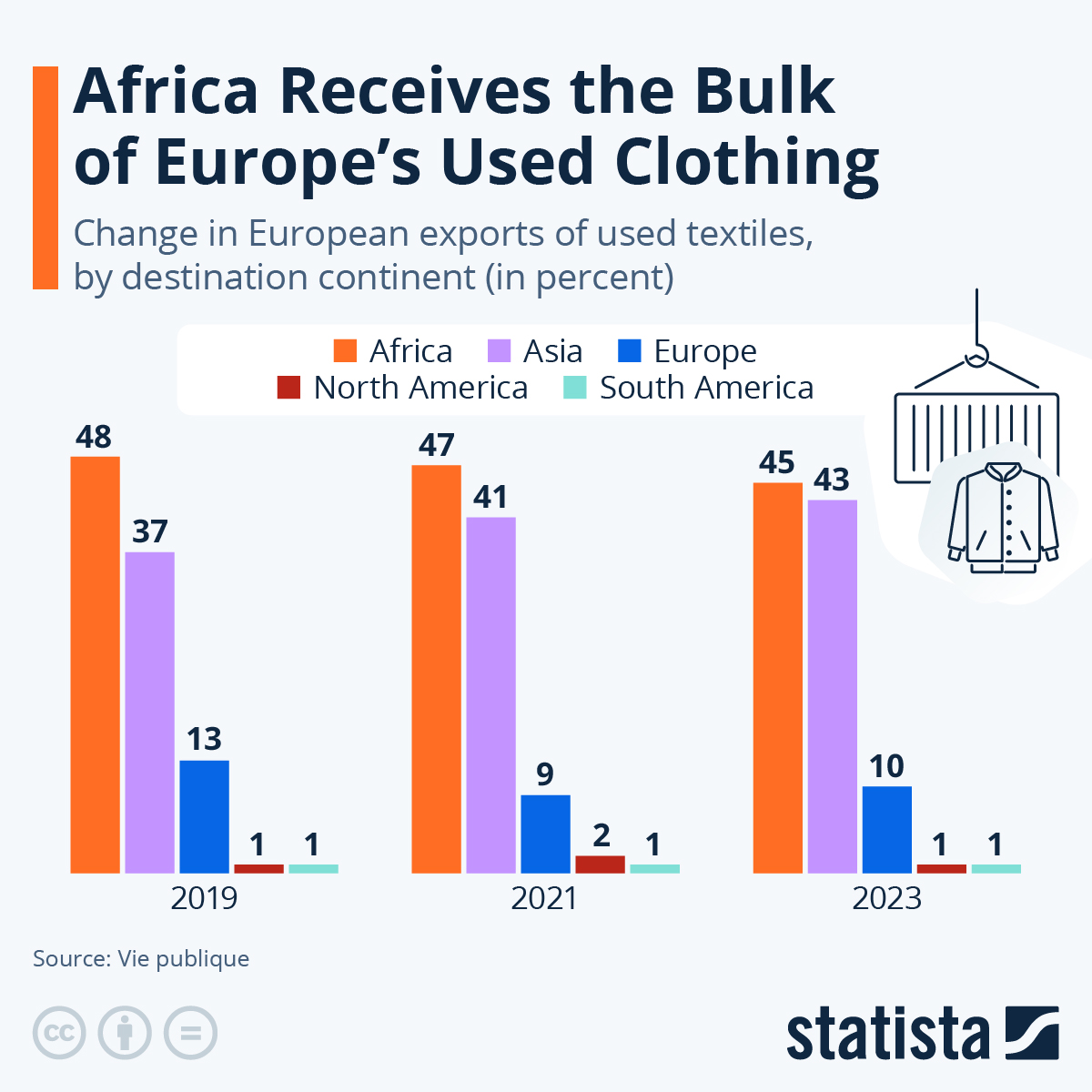
Data from Vie publique reveals that nearly half of the textiles exported by Europe each year are sent to Africa. While there is demand for affordable secondhand clothing on the continent, the notion that these textile donations are charitable gifts to those in need does not reflect reality.
The growing trend of fast fashion and the export of low-quality waste are threatening local textile industries, as well as having a devastating impact on ecosystems and public health. Many African countries receive massive quantities of used clothing, much of which is unusable, leading to large-scale landfills. The majority of these imports are made from synthetic fibers, which contribute to microplastic pollution in soil, water and air.
This infographic and article were originally authored by Valentine Fourreau in French. For the original version, please see here.