Shaking the entertainment industry to its core, Netflix announced on Friday that it had agreed to acquire Warner Bros., including its film and television studios, HBO Max and HBO for $72 billion in a cash and stock deal. After years of tech companies gradually moving in on Hollywood’s turf, which saw companies like Netflix, Apple and Amazon invest billions in original content and threaten the traditional movie distribution model by disregarding theatrical release windows, this would be the first time that a tech company gains control of one of the five major Hollywood studios – Universal Pictures, Paramount Pictures, Walt Disney Studios, Sony Pictures and Warner Bros.
While proponents of the deal argue that Hollywood studios have changed hands before and that the deal is just another – admittedly extreme – example of vertical integration in the media and entertainment industry, critics view Netflix as a major threat to the film industry and the deal as the potential first domino in Hollywood’s inevitable fall.
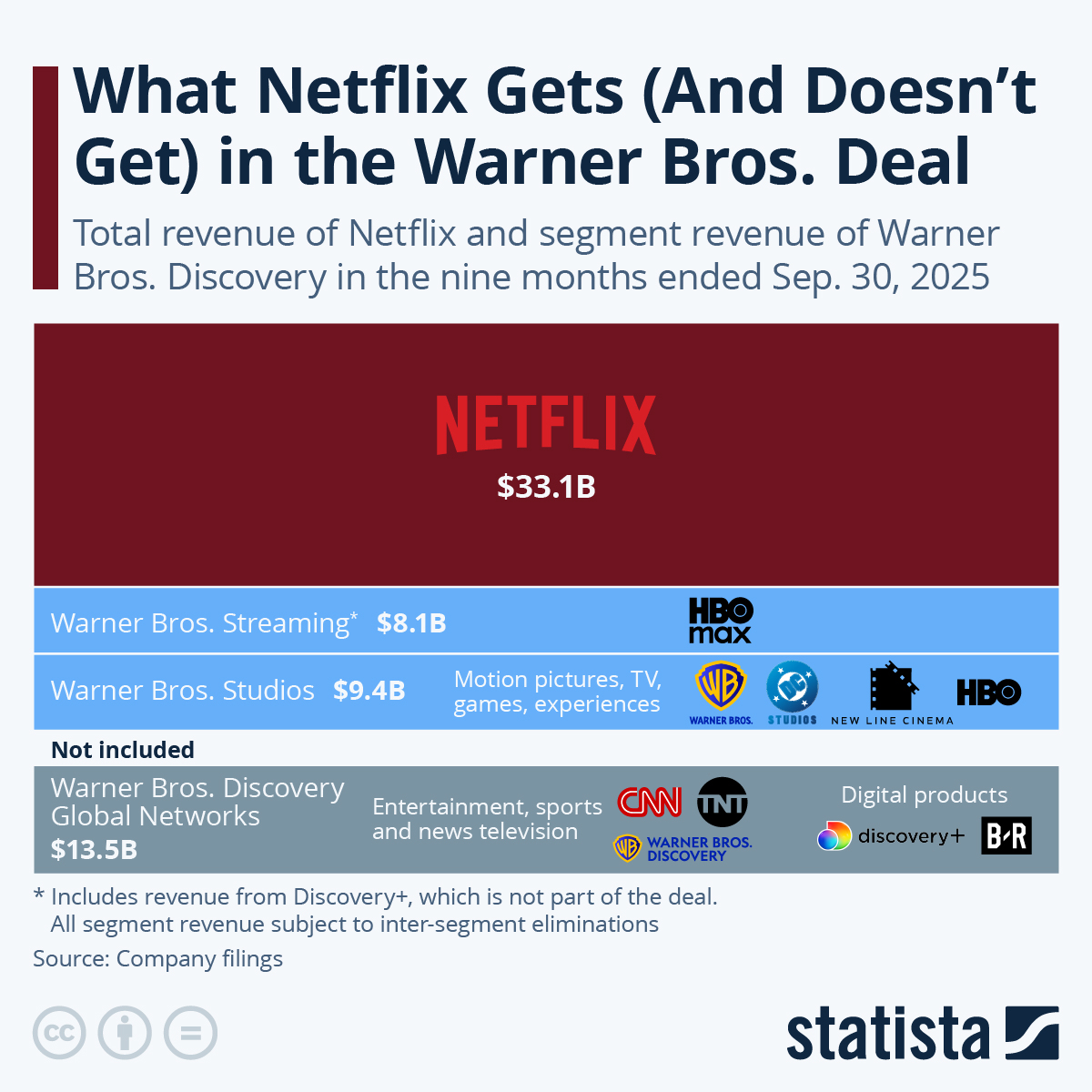
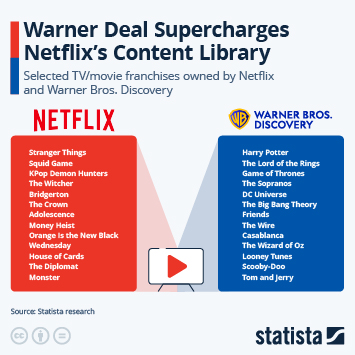
But what exactly is Netflix getting in the deal, assuming it clears antitrust hurdles? Aside from Warner Bros.’ namesake TV and movie studios, the deal also includes HBO, HBO Max and, perhaps most importantly, the company’s huge library of TV and movie franchises – intellectual property that is worth billions to a company with Netflix’s global reach.
Not included in the deal is the Global Networks division of Warner Bros. Discovery, which includes CNN, TNT and Discovery as well as other linear TV channels. These, as well as digital entities like Bleacher Report and Discovery+, will all be part of a newly separated publicly traded company, as announced by WBD earlier this year. With the spin-off of Discovery Global currently expected for Q3 2026 and antitrust scrutiny expected to be intense, the deal is currently expected to close in 12 to 18 months. Until then, both Netflix and Warner Bros. will continue to operate independently.