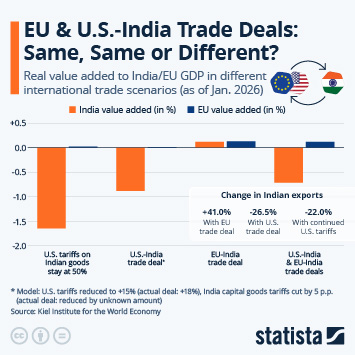
The White House has issued a revised fact sheet for the US-India trade deal originally announced on February 6, which contains key changes to the original framework. The original fact sheet, published on February 9, mentioned that India would remove its digital services taxes, but this claim has now been removed. India currently finds itself at a critical juncture in global trade policy, balancing domestic protectionist sentiments with the imperatives of international commerce.
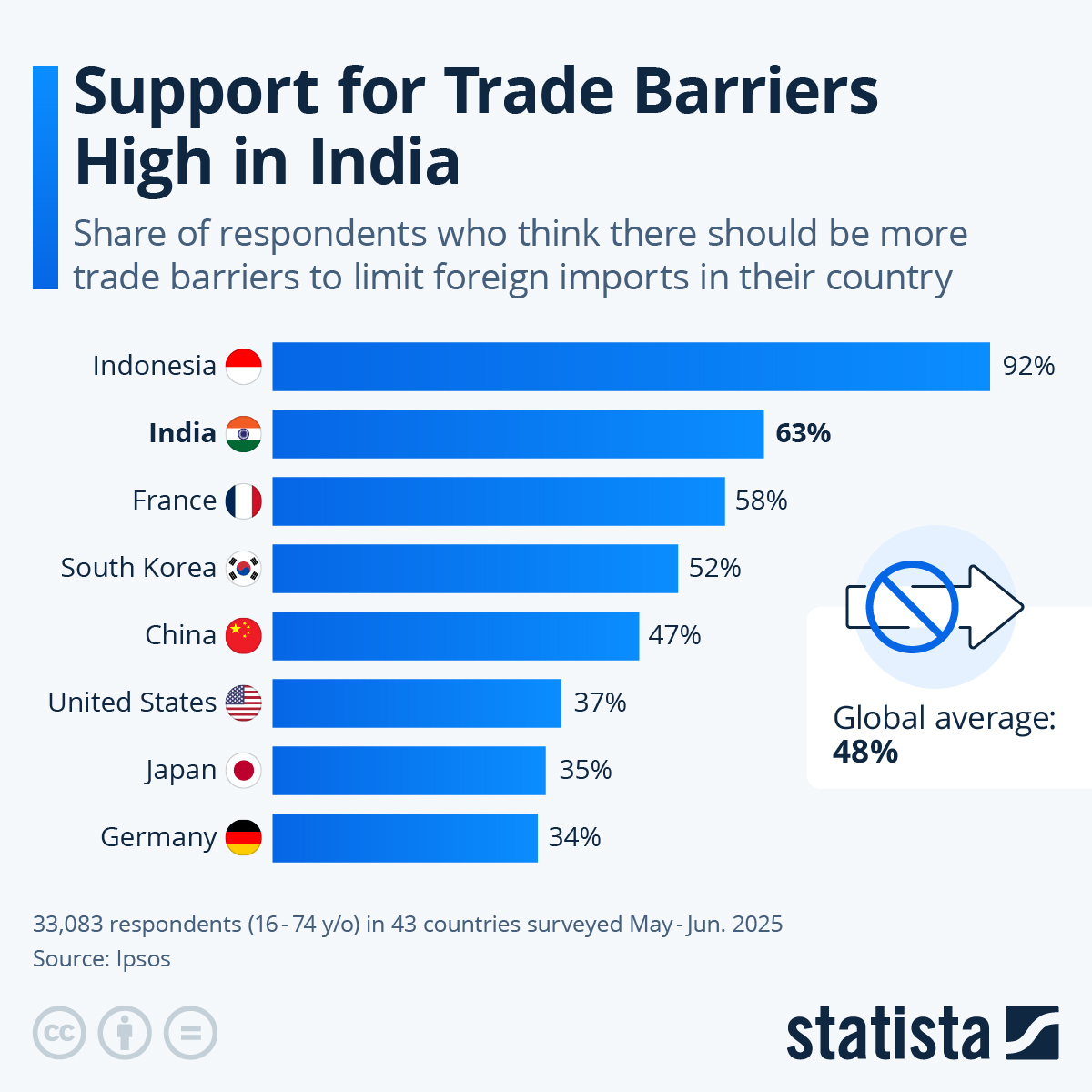
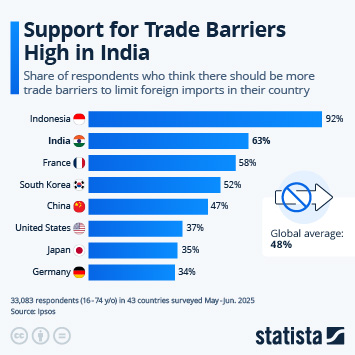
According to a recent Ipsos Global Trends survey, 63 percent of Indians believe there should be more trade barriers to limit imports of foreign goods and services, well above the global average of 48 percent. As our infographic shows, support for more trade barriers was only higher in Indonesia, where more than nine out of ten respondents (92 percent) said they were in favor of such measures. Among the countries who also scored above the average were France (58 percent) and South Korea (52 percent), while China scored just below (47 percent).
India's position reflects a broader trend observed in emerging economies across Africa and Asia, where many view trade barriers as protection against the dumping of foreign products in their precarious and often struggling local economies. As negotiations continue towards a comprehensive trade agreement, India will likely maintain this careful balancing act, selectively opening markets while preserving strategic protections that resonate with its population's preferences.