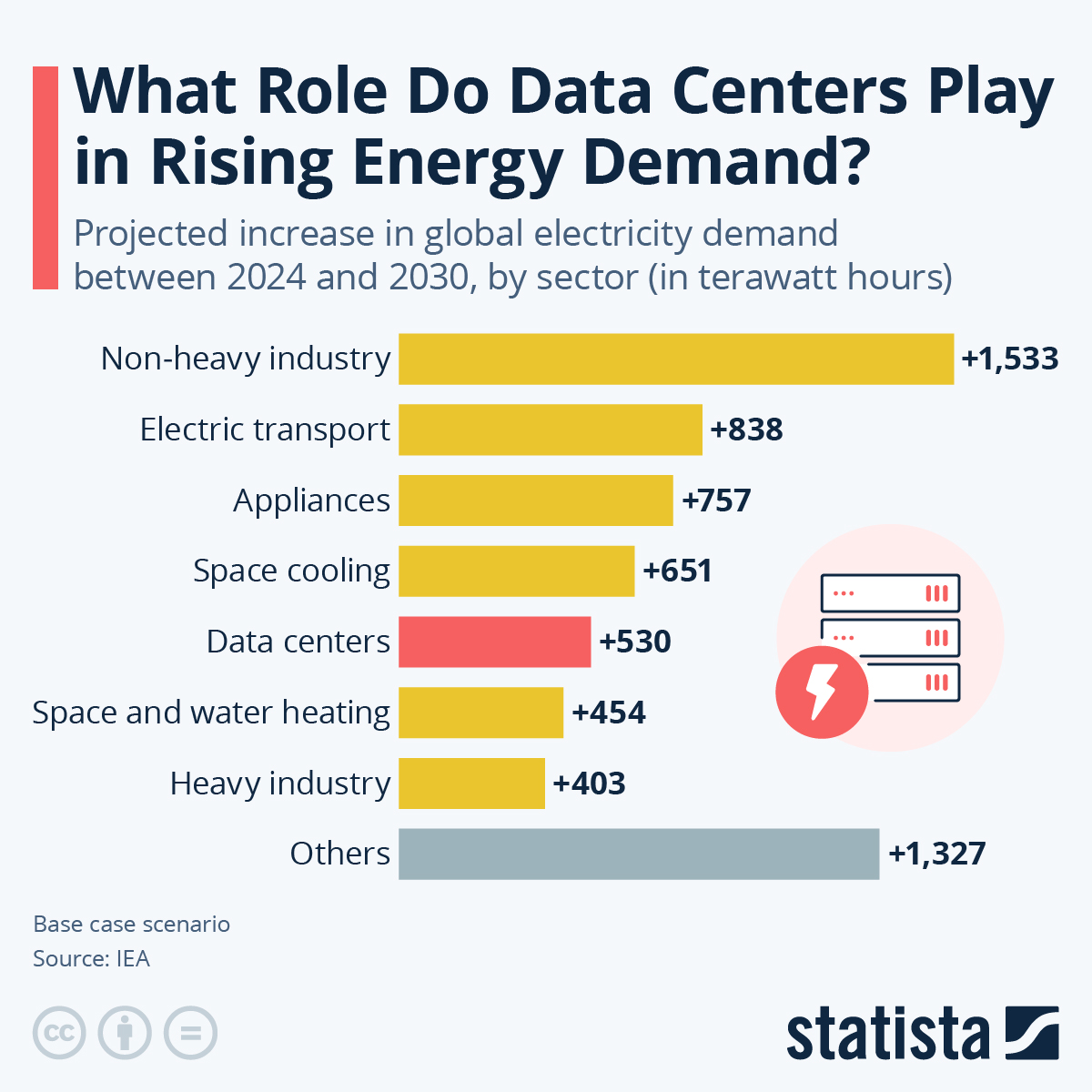
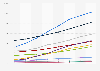
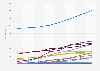
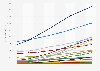
The global AI craze has given data centers yet another boost as all the helpful and unhelpful comments that ChatGPT, Gemini and other artificial intelligence tools generate are associated with a high level of computational power that these centers provide. However, when looking at projected global electricity demand increases until 2030, the International Energy Agency expects that despite data centers’ known energy hunger, other sectors will increase their energy use even more.
Non-heavy industries are projected to see the biggest increases in electricity use between 2024 and 2030, at an additional 1,533 terawatt hours. This is the same amount of energy that around 145 million average U.S. households would consume annually. In the IEA analysis, data centers come fifth, also running behind the growth sector of electric transport as well as appliances and space cooling. Yet, data center use going up by 530 terawatt hours over the course of six years would still constitute an increased energy need equivalent to the annual use of 50 million households.
According to the IEA calculation, 8 percent of the increase of global electricity demand until 2030 would be due to data centers in the organization’s base scenario. In another scenario in which AI adoption is to speed up even more in the future, this share could reach as high as 12 percent by 2030 and even higher by 2035, making up as much as 4.4 percent of overall global electricity demand then.
But the agency has also run through opposing frameworks, for example a case where better energy efficiency is achieved going forward. In this scenarios, only 2.6 percent of global electricity demand would be caused by data centers in 2035. Likewise, if AI use failed to lift off further than it already has, its share of global electricity use would stay below 2 percent by that time, compared to 3.2 percent in the 2035 base scenario and 1.5 percent today.
Taking a broader view, data centers are just one aspect of a world that is rapidly electrifying, driving up demand everywhere. It is not just cars and other vehicles that are making the switch to electricity from other power sources. Industries, especially non-heavy industries, are not only scaling up production, they are also increasingly seeing electrification as a way to be more competitive, taking advantage of sinking prices for renewable energy installations while reducing volatility stemming from purchasing energy off the world market. This became clear to many when the invasion of Ukraine by Russia led to the price of oil and natural gas soaring, hurting especially energy-intensive production plants.