A U.S. jury has found Meta and YouTube liable in a landmark social media addiction trial, marking a major legal setback for the tech giants. According to the BBC, jurors concluded that the platforms were deliberately designed to be addictive and contributed to harm experienced by a young user. The ruling could open the door to further lawsuits and increased regulatory scrutiny of social media companies.
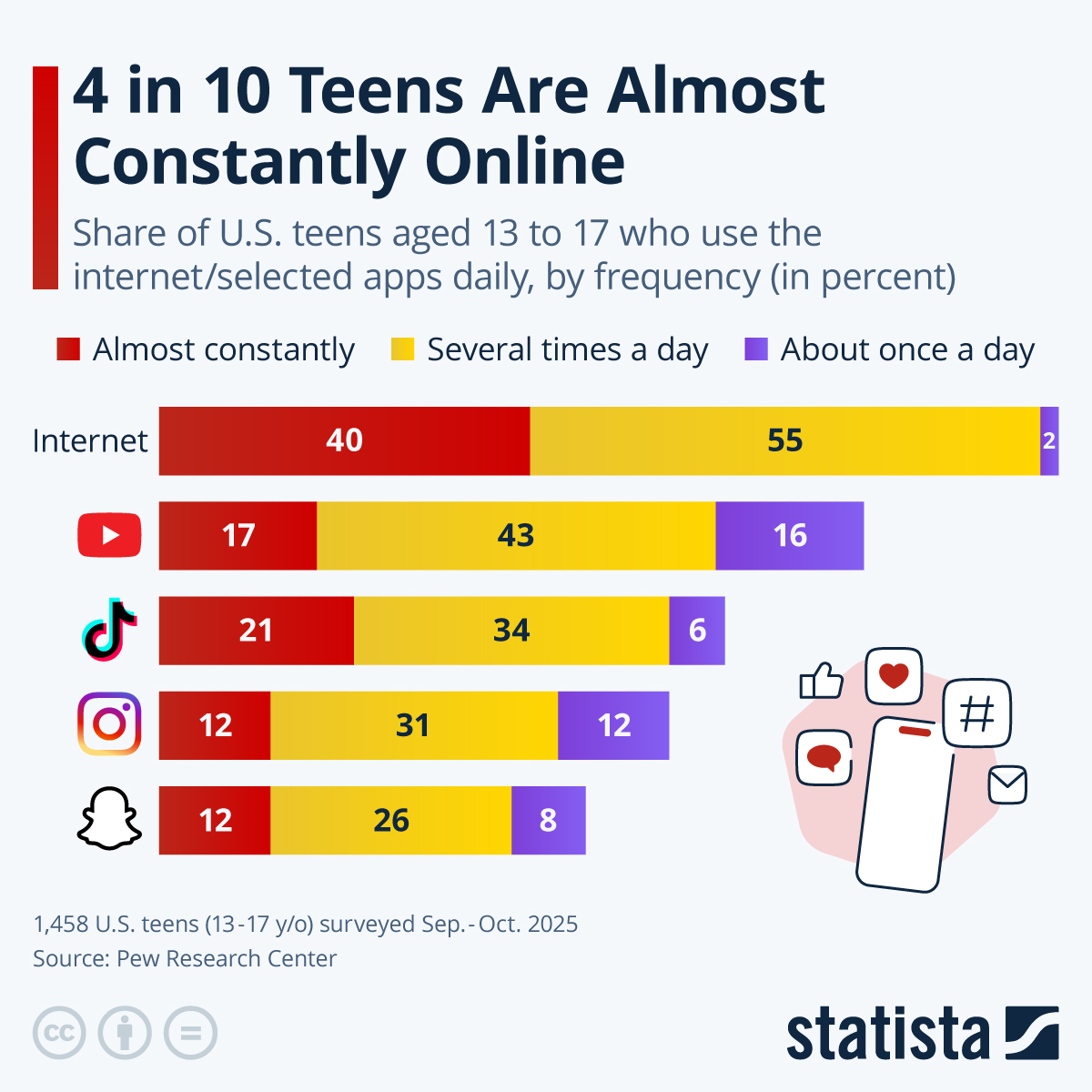
This debate over the impact of social platforms is closely tied to the extent to which young people use them. A recent survey by the Pew Research Center shows that social media is deeply embedded in teenagers’ daily lives, with a vast majority of U.S. teens reporting daily use of the internet (97 percent) and platforms such as YouTube (76 percent), TikTok (61 percent) and Instagram (55 percent). As our infographic shows, a notable share reports near-constant use: 40 percent overall for the internet, 21 percent for TikTok, 17 percent for YouTube and 12 percent for Instagram, with a further 31 to 43 percent saying they use these platforms several times a day.
These patterns point to clear differences in engagement across platforms, with video-based apps standing out for their particularly intensive use. TikTok and YouTube, both centered on short-form and highly personalized video content, are among the platforms most likely to be used almost constantly, reinforcing concerns about their potentially addictive design. More broadly, the rise of algorithm-driven feeds and endless scrolling has reshaped how teens consume content, increasing both the frequency and duration of their online activity.