As part of its ongoing immigration crackdown, the Trump administration announced on Friday that the fee for skilled workers applying for the H-1B visa is to be raised to $100,000. Since it was not immediately clear who this would affect, chaotic scenes ensued in the hours following the announcement, with companies in Silicon Valley urging staff not to leave the country. Only later did it become clear that the fee is a one-time payment only applicable to new H-1B applications.
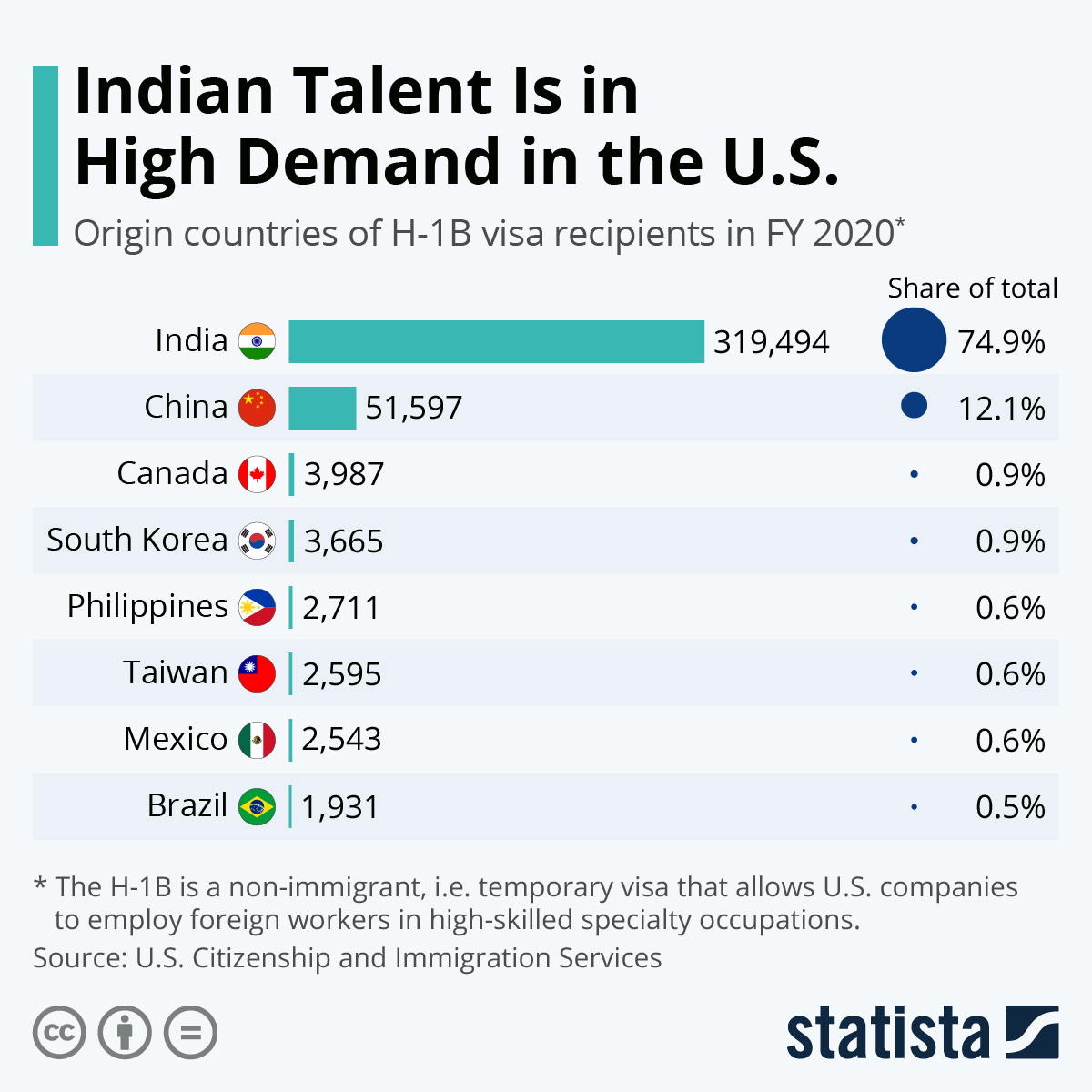
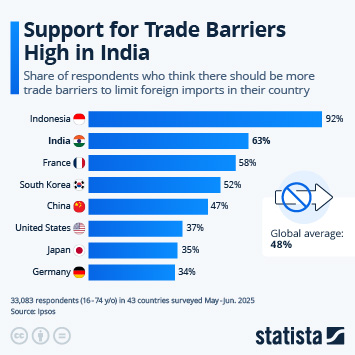
H-1B visas are work permits for skilled professionals and have long been used as a key tool for U.S. employers seeking talent with specizlied knowledge. While applications are open to all non-U.S. citizens with university degrees in specialized fields, data from the U.S. Citizenship and Immigration Services (USCIS) reveals that the new fee is likely to disproportionately affect workers from India, who make up the largest group of H-1B visa holders.
As the following chart shows, in fiscal year 2024, 283,397 Indian nationals received H-1B visas, or around 71 percent of all H-1B approvals. Chinese applicants received the second-highest number, at 46,680 visas (11.7 percent of the total). Other countries, including the Philippines, Canada and South Korea, accounted for a much smaller share of the H-1B approvals, with each country representing between 1 percent and 1.3 percent of the total.
H-1B visas are typically valid for three years and can be renewed for up to six years. Many high-profile figures in tech such as Satya Nadella of Microsoft and Sundar Pichai of Alphabet, are examples of Indian-born leaders who came to the U.S. with the H-1B visa.
Historically, the program has been seen as mutually beneficial to both the U.S. and the countries of origin of the recipients as it gives international employees the opportunity to pursue a career in the U.S. and earn income in U.S. dollars, while simultaneously attracting top global talent into U.S. firms. The new policy, however, is intended to prioritize jobs for Americans.