Continuing the surge in oil prices amid the widening conflict in the Middle East, the price of Brent crude oil futures surged past $100 per barrel for the first time since 2022 on Monday. An end to the oil price surge is currently not in sight as several major oil producers in the region have started to cut production in the face of maritime trade disruptions and attacks on oil infrastructure.
Due to its large reserves and strategic geographic position, Iran plays a significant role in the global oil market, which has given the country a valuable bargaining chip in international negotiations over the past decades. According to the U.S. Energy Information Administration, Iran produced roughly 4.6 million barrels of crude oil and natural gas liquids per day in 2024, making it the world’s sixth largest oil producer.
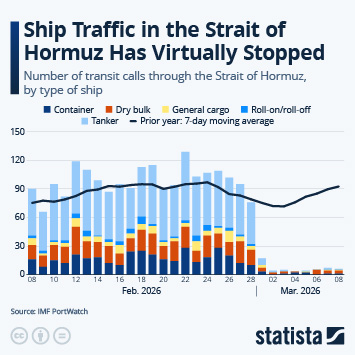
Perhaps more important than Iran’s role as an oil producer is its strategic position and control of the Strait of Hormuz, though. By blocking off the narrow waterway, Iran has the power to disrupt the global oil market significantly. In Q1 2025, more than a quarter of the world's maritime oil trade passed through the Strait of Hormuz. The current blockage of the strait is forcing oil producers in the region to cut production, as storage facilities quickly fill up when shipping routes are closed.