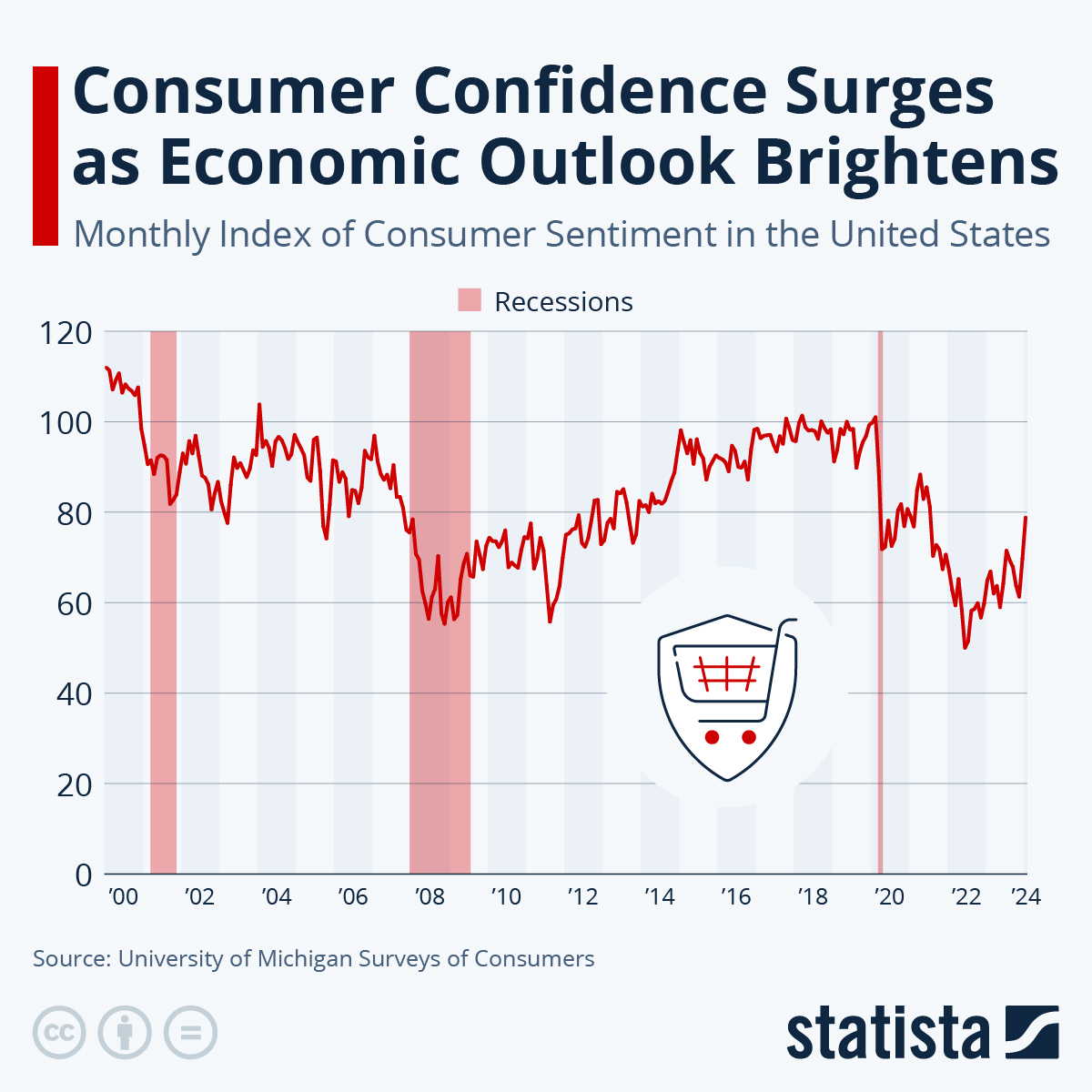
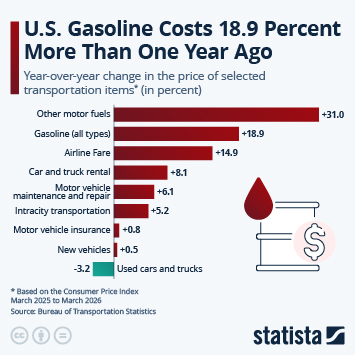
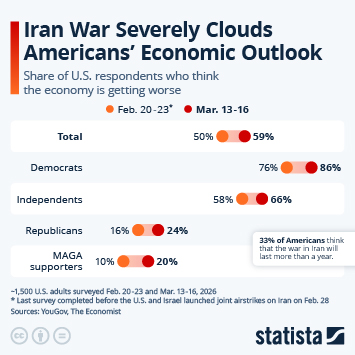
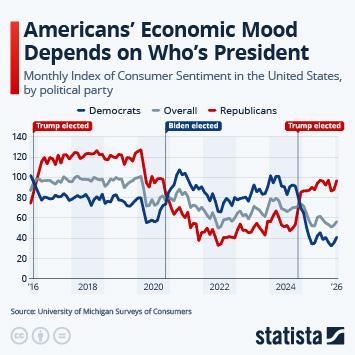
Consumer sentiment in the United States dropped to a record low in April, as the war in Iran and its effect on energy prices spurred Americans' inflation fears and added to broader concerns over the economy's trajectory. Preliminary results for April from the University of Michigan’s monthly Index of Consumer Sentiment showed an 11-percent drop in the headline Index of Consumer Sentiment, as both subindexes, the Index of Current Economic Conditions and the Index of Consumer Expectations saw double-digit declines. It was the first time in the survey's history, dating back to 1952, that the index dropped below 50, illustrating just how downbeat Americans are about their personal finances and the economy overall. Most notably, inflation expectations surged in response to the conflict in Middle East, with respondents now expecting prices to increase 4.8 percent over the coming 12 months, up from 3.8 percent in March.
According to Surveys of Consumers Director Joanne Hsu, the comments made by respondents show that the war in Iran was the main reason behind the decline in confidence, as consumers expressed "a substantial increase in concerns over high prices and weaker asset values." However, Hsu notes that most interviews for the preliminary results were completed before the April 7 announcement of a ceasefire, which could improve the outlook in the final April data. However, given the fragility of the truce and the continued blockage of the Hormuz Strait, it could take a while before the supply chain disruptions stemming from the war ease significantly. What could help brighten consumers' mood is the somewhat surprising stock market rebound in April, which has carried the S&P 500 to new highs.