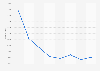
Even though World AIDS Day on December 1 has been used to promote awareness of the disease and mourn those who have died from it since 1988, the global epidemic is far from over. In 2024, approximately 630,000 people worldwide died due to AIDS-related illnesses. While this is a far cry from the peak of HIV/AIDS deaths in 2005, there's still a long way to go to combat the disease.
When taking a closer look at the data, there are enormous regional differences in terms of deaths. In 2024, 260,000 people died from AIDS-related causes in East and Southern Africa (-59 percent from 2010). The next highest numbers of deaths were reported in Asia and the Pacific at 150,000 (-53 percent), followed by West and Central Africa at 120,000 (-60 percent), Eastern Europe and Central Asia at 48,000 (+48 percent) and Latin America at 27,000 (-31 percent). Last year, there were 9,000 AIDS-related deaths in Western and Central Europe and North Africa (-48 percent), 7,000 in the Middle East and North Africa (-6 percent) and 4,800 in the Caribbean (-62 percent).
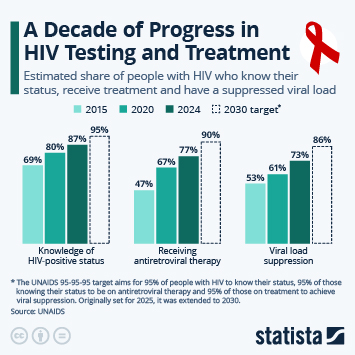
Around 40.8 million people worldwide are currently living with an HIV infection, including around 1.4 million children under the age of 15. At the end of December 2024, 31.6 million out of the 40.8 million people living with HIV were accessing lifesaving antiretroviral treatment. This is up from the 7.7 million in 2010, but still short of the UN’s target of 34 million by 2025.
The UN warns that the global response to HIV has suffered its most significant setback in decades, citing major international funding cuts and a deteriorating human rights environment. The impact has been “immediate and severe”, the organization states, and has particularly hit low- and middle-income countries.