589 million people between the ages of 20 and 79 suffered from diabetes worldwide in 2024, according to the International Diabetes Federation (IDB). This represented 11.1 percent of the world population in this age group. The total number of adults with the disease is projected to rise to 853 million (13.0 percent of the global population) by 2050.
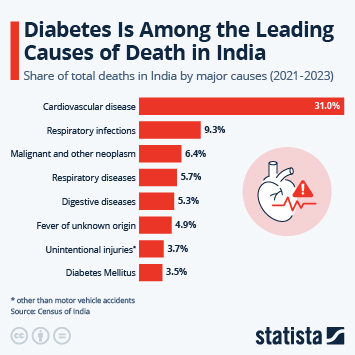
Africa is expected to see a more than 140 percent increase in cases from 24.6 million in 2024 to 59.5 million by 2050, while in Europe, close to 66 million adults were estimated to have diabetes in 2024, a figure that is expected to reach 72 million by 2050. The International Federation highlights that globally, diabetes is now among the top ten causes of death, and represents a serious and growing challenge to public health.
As the following chart shows, Southeast Asia and the West Pacific were the two regions with the highest estimated numbers of adults suffering from diabetes last year, at 107 million and 215 million people, respectively. India, in South Asia, had the second highest number of adults living with the disease, at 89.8 million, trailing only after China. This is projected to reach 156.7 million by 2050, an increase of 74.5 percent, with the age-standardized prevalence of people living with diabetes predicted to hit 13 percent.
Under-diagnosis continues to be a pressing problem in many countries around the world. Last year, almost one in two adults in India living with diabetes were undiagnosed (42.7 percent). On a global level too, disparities persist, with 28.9 percent of adults aged 20-79 years old believed to be undiagnosed in high-income countries in 2024, compared to 45.5 percent in middle-income countries and 58.7 percent in low-income countries.
According to the National Institutes of Health, the highest proportions of undiagnosed populations are in Africa, the Western Pacific and Southeast Asia, which each include significant rural areas that “may result in difficulty in identifying undiagnosed diabetes due to limited resources, poor access to healthcare services and the prioritisation of other health issues.”