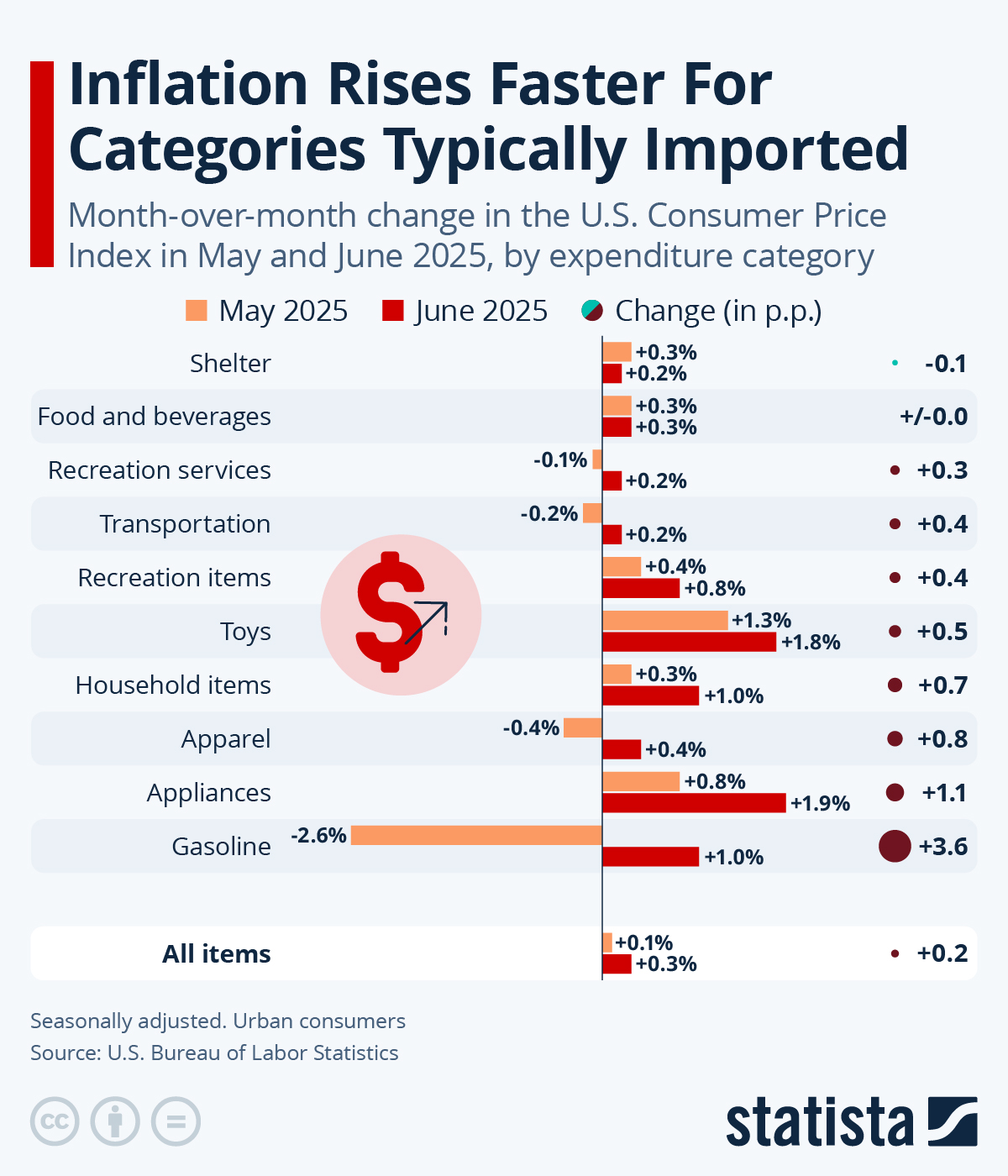
Apart from gasoline and some food subcategories, the items which saw the highest inflation in the United States in June were those that are typically imported. The price of applicances was up 1.9 percent last month, while household items increased in price by 1 percent and toys even by 1.8 percent as experts are saying that the first signs of the Trump administration's tariffs are becoming visible. More increases above one percent month-over-month could be seen for tools, sporting goods and computers.
Since April, goods from most countries in the world are charged with an extra 10 percent tariff when imported to the United States. Higher rates on cars and car parts, steel and aluminium as well as Chinese goods are in effect. The impact of the tariffs has been rather slow to show in retail prices, however, as retailers went to great lengths to stock up before the rates went into effect, in the process increasing the U.S. trade deficit momentarily and even turning GDP negative in Q1 of 2025. But stocks can't last forever and price increases due to tariffs are bound to show up for imported good, especially those from China.
Looking at how the Consumer Price Index is calculated, categories like housing, transportation and food make up a large part of peoples' budgets. While inflationary pressure from tariffs can show up in these categories as well, as they include for example furniture and cars, these are balanced out by large non-tariffed expenditures like rent, gas and domestically grown foods. Due to this, the modest overall increases in inflation can obscure the steep impact tariffs can have on certain expenses if the items in question is typically imported. This could apply to basic clothing items, childrens toys, washing machines, fridges and ovens (to which the higher aluminium tariff now applies) as well as to electronics from China or curtains, carpets and linens, according to reports.