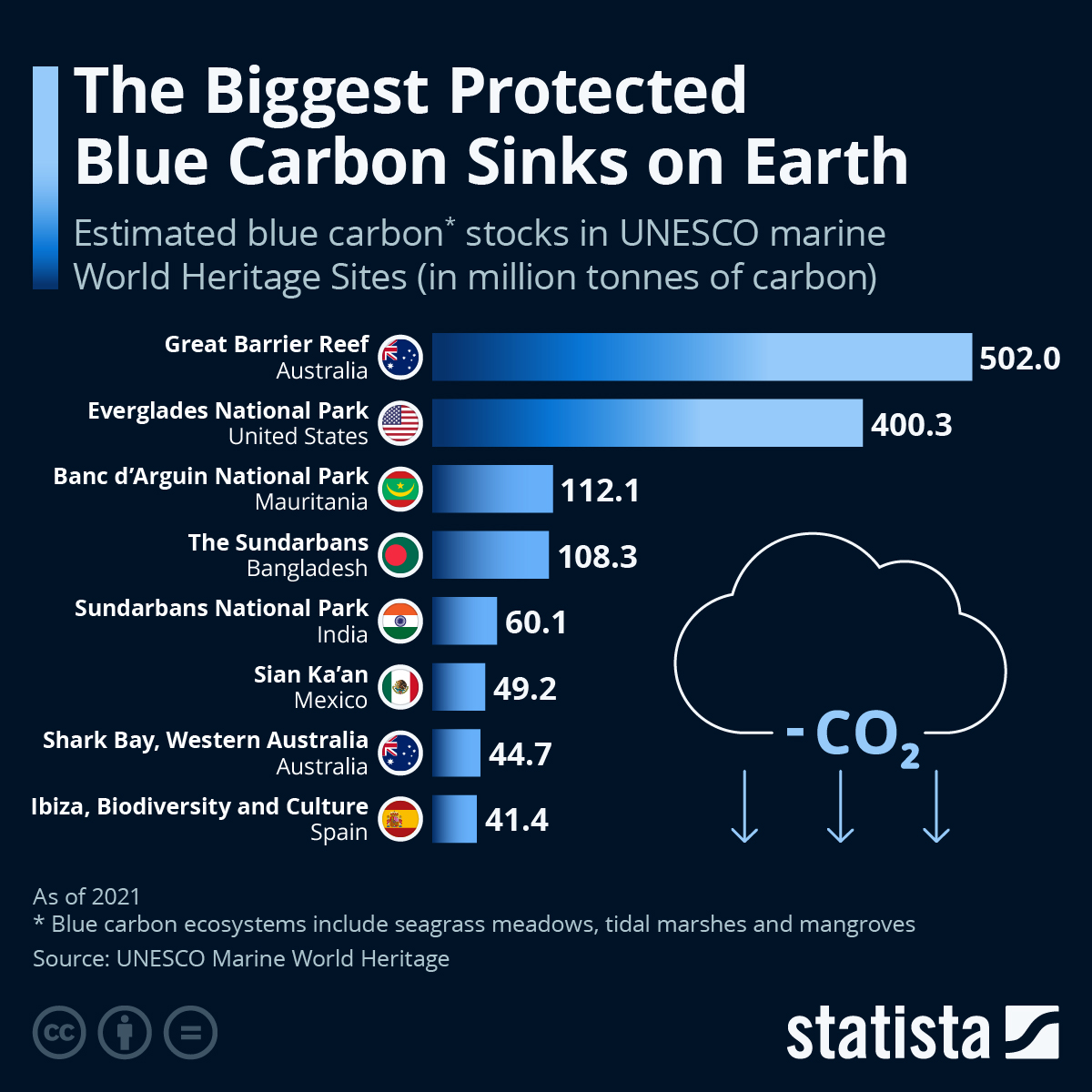
The Great Barrier Reef in Australia is a global hotspot for blue carbon stocks. It is the largest blue carbon ecosystem among the World Heritage’s marine sites, with stocks of more than 502 million tonnes. This makes it a critical “carbon sink” for mitigating climate change.
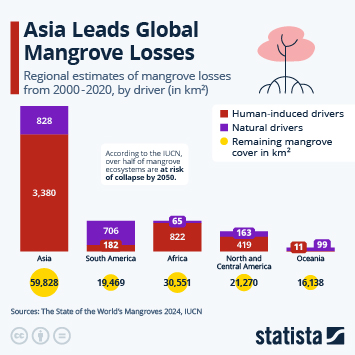
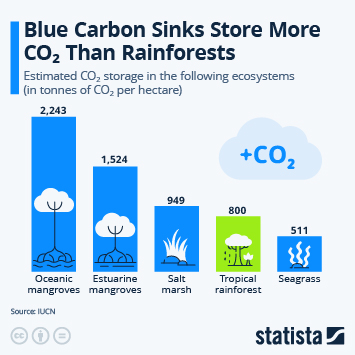
“Blue carbon” is the organic carbon that comes from decaying plants, leaves, wood, roots and animals, which has been captured and stored by ocean and coastal ecosystems. Blue carbon ecosystems include seagrass meadows, tidal marshes and mangroves and are highly effective carbon sinks.
Out of 50 marine sites on the UNESCO World Heritage List, 21 have been specifically recognized for their blue carbon ecosystems. According to the 2021 report Custodians of the globe’s blue carbon assets, these ecosystems cover a marine area of 207 million hectares combined, representing 10 percent of the world’s protected marine area.
After the Great Barrier Reef, the next biggest blue carbon ecosystems protected by UNESCO are the Everglades National Park in the United States, the Banc d’Arguin National Park in Mauritania and the Sundarbans in Bangladesh. These figures look at the total area of blue carbon ecosystems in each site and their adjoining waters.