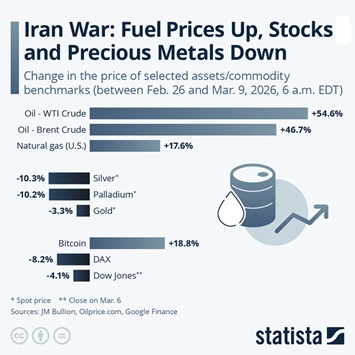
Following the escalation of the Iran conflict in early 2026, disruptions to oil shipments through the Strait of Hormuz triggered a global fuel crisis, pushing prices higher and straining supply chains worldwide. Governments have responded with a wide range of emergency measures aimed at shielding consumers and securing domestic supply, ranging from financial support to rationing as the fuel crisis deepens.
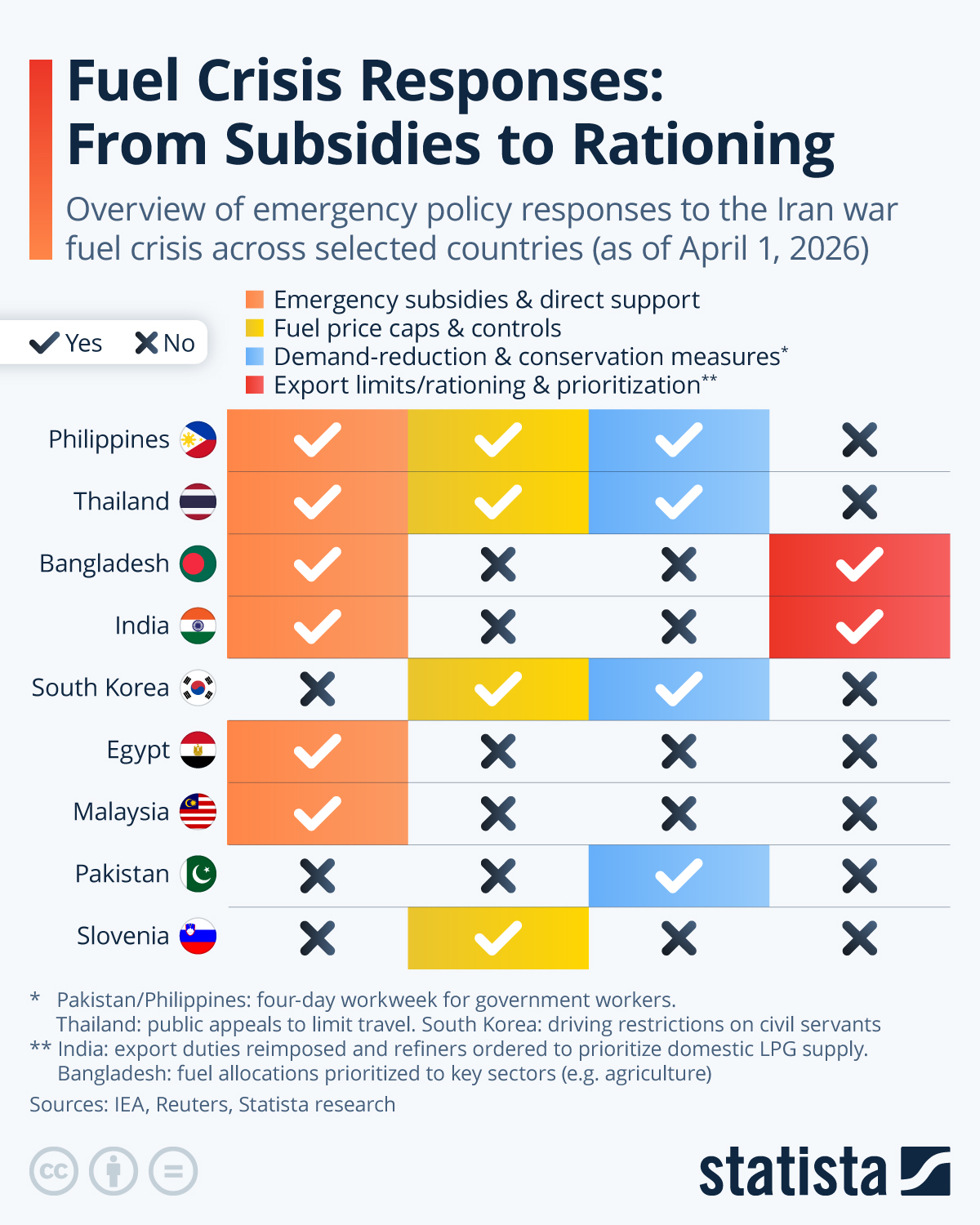
Based in part on IEA and Reuters' information, our infographic shows that one of the most common responses has been the introduction of emergency subsidies and direct financial support, particularly in countries such as the Philippines, Thailand, Malaysia, Egypt and Sri Lanka. Several governments have also implemented temporary fuel price caps or controls to limit the immediate impact of rising costs on households and businesses, such as in South Korea, Slovenia, Thailand and the Philippines.
Beyond price-based measures, some countries have adopted demand-reduction policies to curb fuel consumption. These include shorter workweeks for public sector employees, travel advisories and restrictions, as seen in Pakistan, the Philippines and Thailand. Such measures aim to ease pressure on limited fuel supplies without direct market intervention.
The most severe responses involve direct intervention in fuel distribution. India and Bangladesh, for example, have introduced export restrictions and prioritised fuel allocation to essential sectors, ensuring domestic availability amid supply disruptions. These measures signal a shift from price management to active crisis control, typically seen when shortages become more acute.