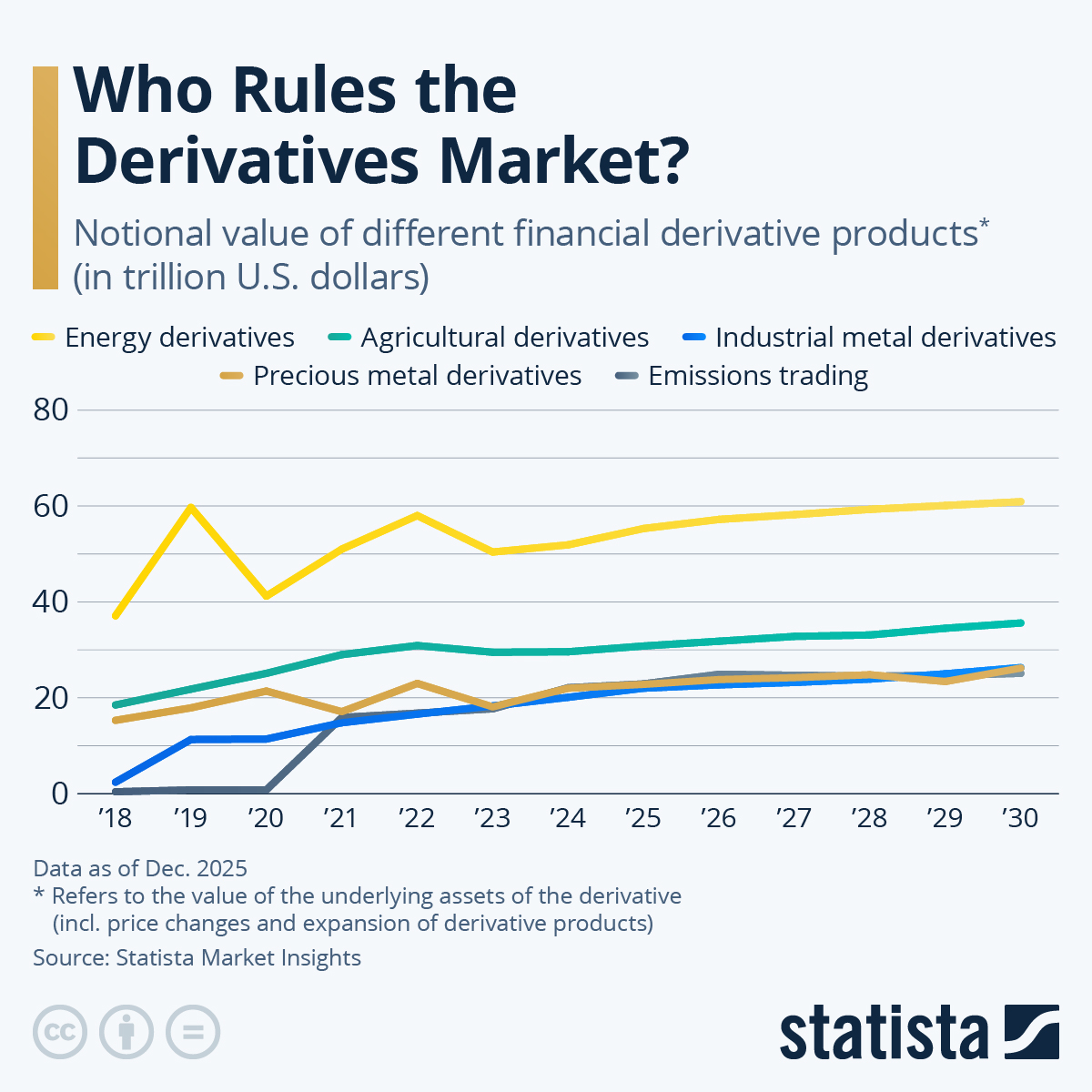
The derivatives market is growing around the world, with energy and agricultural commodities leading the way. Derivatives allow investments in different commodities without buying these directly. They are also used by companies that are dependent on the price of different commodities to hedge against the risks of their prices changing in a way unfavorable to them, by essentially betting on a negative outcome and reaping the reward of that to balance their finances. This also works in the opposite way, however, when the prices changes in a company's favor and the future (a type of derivative) purchased is decreasing in value as a result.
Precious metal derivatives come in after energy and agricultural ones and are expected to reach a volume of more than $26 trillion by 2030. The data as of December 2025 does not take into account the recent price increases of precious metals against the backdrop of them being seen as safe haven asset in times of increased geopolitical tensions.
Industrial metal derivatives as well as emissions trading derivatives are expected to grow strongly over the upcoming couple of years to a volume of $25-26 trillion as well. Creating emissions carries a price if companies go over certain limits and emissions trading is therefore considered a derivative. Emissions futures can equally hedge against price changes to creating emissions. The market grew significantly in 2021 as the European Union Emissions Trading System limited supply of certificates, increasing their price significantly.