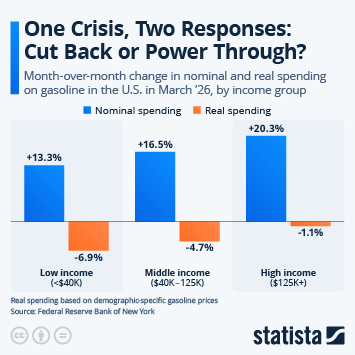
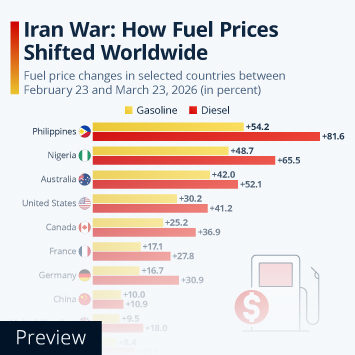
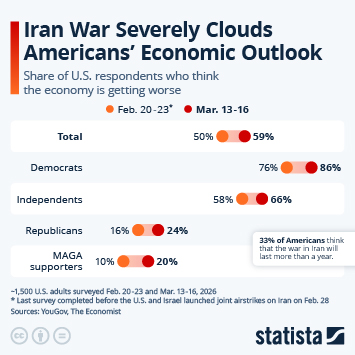
When gas prices spike, not everyone feels the impact in the same way. New research from the Federal Reserve Bank of New York highlights a striking divide in how U.S. households respond, revealing what economists call a “K-shaped” pattern. Drawing data from a panel of 200,000 respondents, the authors analyzed how Americans from different income groups responded to the increase in gasoline prices, finding a similar trend in gas consumption as they did four years ago, when the Russia-Ukraine war disrupted global energy markets.
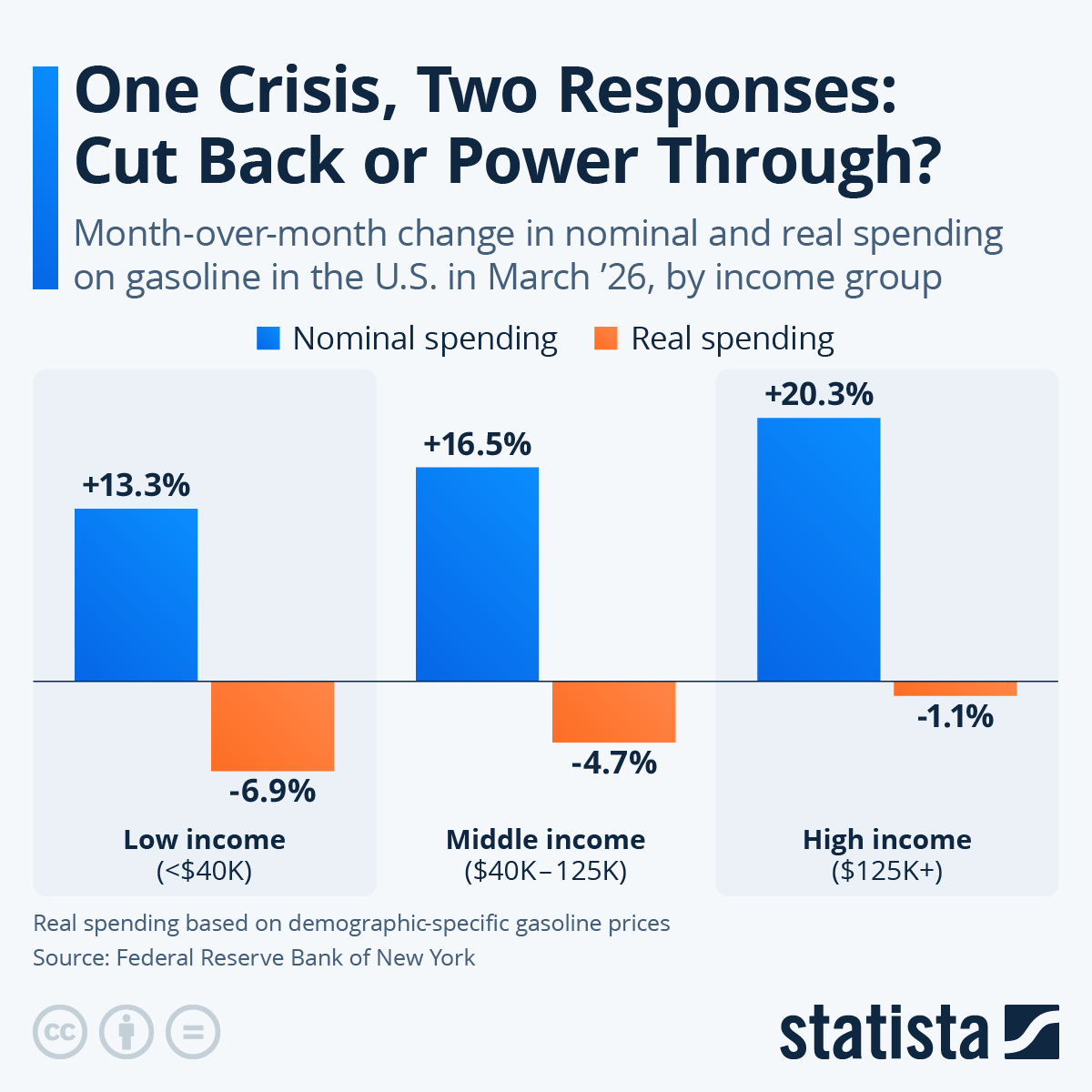
As our chart shows, spending on gasoline rose across all income groups in March 2026. But once prices increases are taken into account, the picture changes dramatically. Lower-income households actually reduced their real gasoline consumption by 7 percent, even as their nominal spending increased by 13 percent. Middle-income households also cut back, though less sharply. Meanwhile, high-income households were largely able to maintain their consumption, spending 20 percent more as they reduced their real consumption by 1 percent.
In simple terms, wealthier households are better positioned to absorb higher prices, while lower-income households are forced to adjust to price shocks, often by driving less or cutting back on other essentials. The findings highlight an often overlooked reality of inflation: it doesn’t hit everyone equally. For some, higher prices are an inconvenience. For others, they require meaningful changes to everyday life.