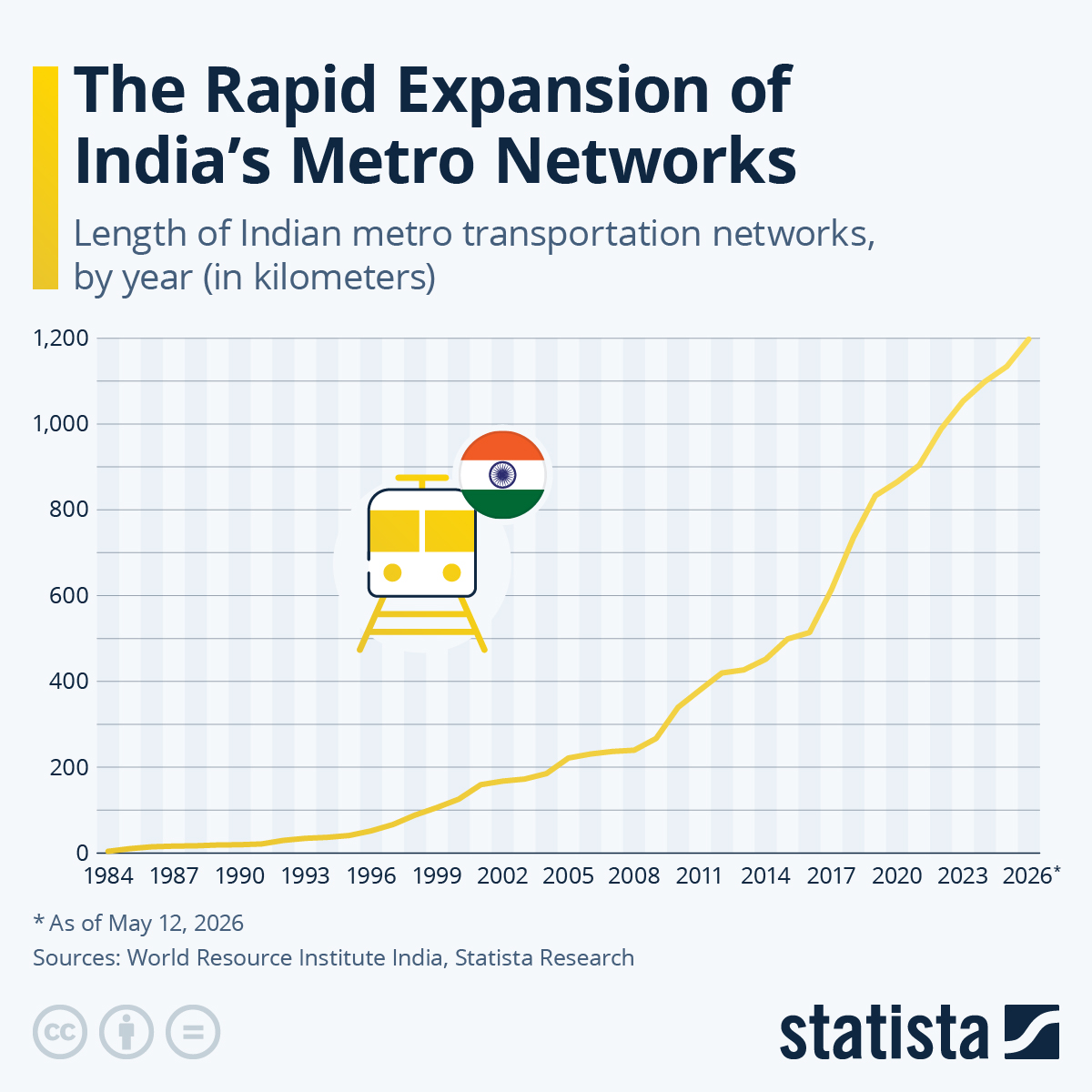
The length of the Indian metro train network has expanded quickly in recent years and has surpassed 1,000 kilometers – making it the third longest in the world. Data by the World Resources Institute India shows how Indian metro rail grew. Metro trains now serve more than 20 cities in the country, including all of its largest metropolises as well as urban satellite towns.
Kolkata and Delhi are India's oldest metro train systems, starting out in the 1980s and 2000s, respectively. They were followed by Mumbai and Bengaluru metros in the first half of the 2010s. However, many of these older networks are still expanding, with Bengaluru, Mumbai and Delhi last opening new lines in 2024, 2025 and even 2026.
On top of this, more tier-2 and tier-3 cities have been opening metro networks as centralized planning and big investments started under Manmohan Singh and continued under current Prime Minister Narendra Modi. Yet, ridership projections are often not met, neither in megacities nor in mid-tier cities, as a lack of system maturity, connectivity and affordability continue to plague Indian metros that compete with large bus networks, high-usage regional trains, auto-rickshaws and taxis.