In July, the Plastic Free Foundation is inviting people around the world to cut back on their plastic consumption. Global plastics overconsumption does not only create many greenhouse gases, it can also lead to land, air and maritime pollution, especially if plastic waste is not managed properly. Sadly, this is still a reality around the world. Single-use plastic products, like cutlery, bags, food wrappers, bottles or cotton swaps, often end up in the environment, harming marine animals, impacting water and soil quality and creating microplastics. As many industrialized nations continue to export their plastic waste to the developing world, they are actively contributing to mismanagement problems there.
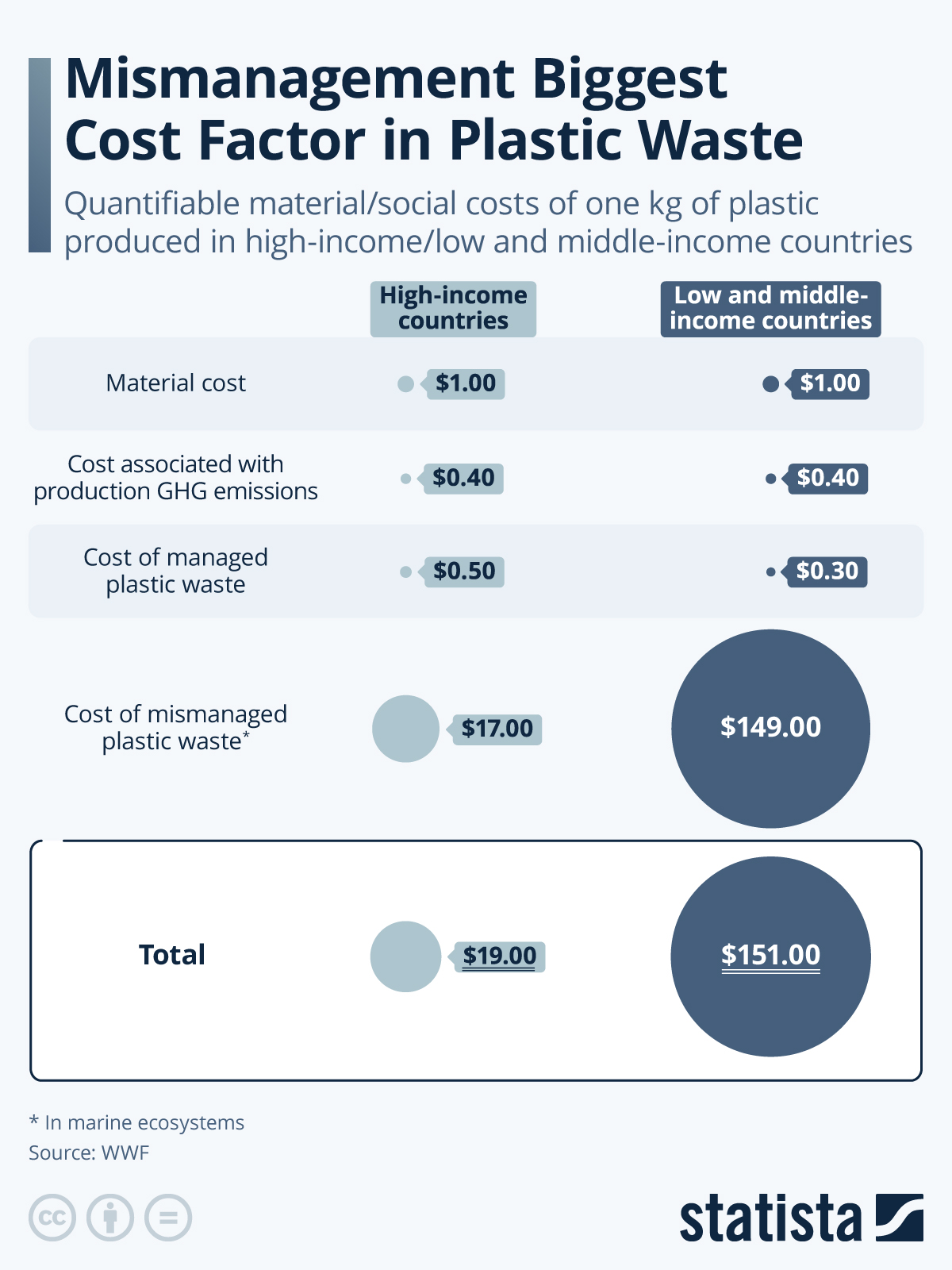
Data by the WWF shows how the mismanagement of plastic waste is the biggest negative factor in lifecycle of plastics, for the study expressed as a monetary value. The numbers also show that these mismanagement costs are much higher in low and middle-income countries.
While the equivalent cost of greenhouse gases emitted during the production process of plastics is comparably low ($0.5 per kilogram), the cost equivalent of mismanagement makes up between 89 and 99 percent of the quantifiable cost of the plastic lifecycle (between $17 and $149 per kilogram when looking only at marine ecosystems). As low and middle-income countries bear the brunt of plastic waste mismanagement, they are hit with the highest costs in this respect. High-income countries do pay more for their better-developed waste management systems, but these additional costs are minuscule compared to the cost equivalents of maritime degradation stemming from plastic mismanagement in the developing world.
In addition to the quantifiable costs listed in the chart, there are more factors driving up the social costs of plastic use. Apart from quantifiable greenhouse gas equivalent costs that are associated with plastic production, there are also human health impacts created by the plastics industry. The same is true for the cost of waste management systems, which do not yet take into account the health risks they pose to workers and the general public, for example through industrial waste burning plants and landfills. Finally, while marine degradation as a result of plastic pollution has been successfully quantified, more research is needed to put a price on the social costs of land-based pollution, human health issues and greenhouse gases created by plastic mismanagement.