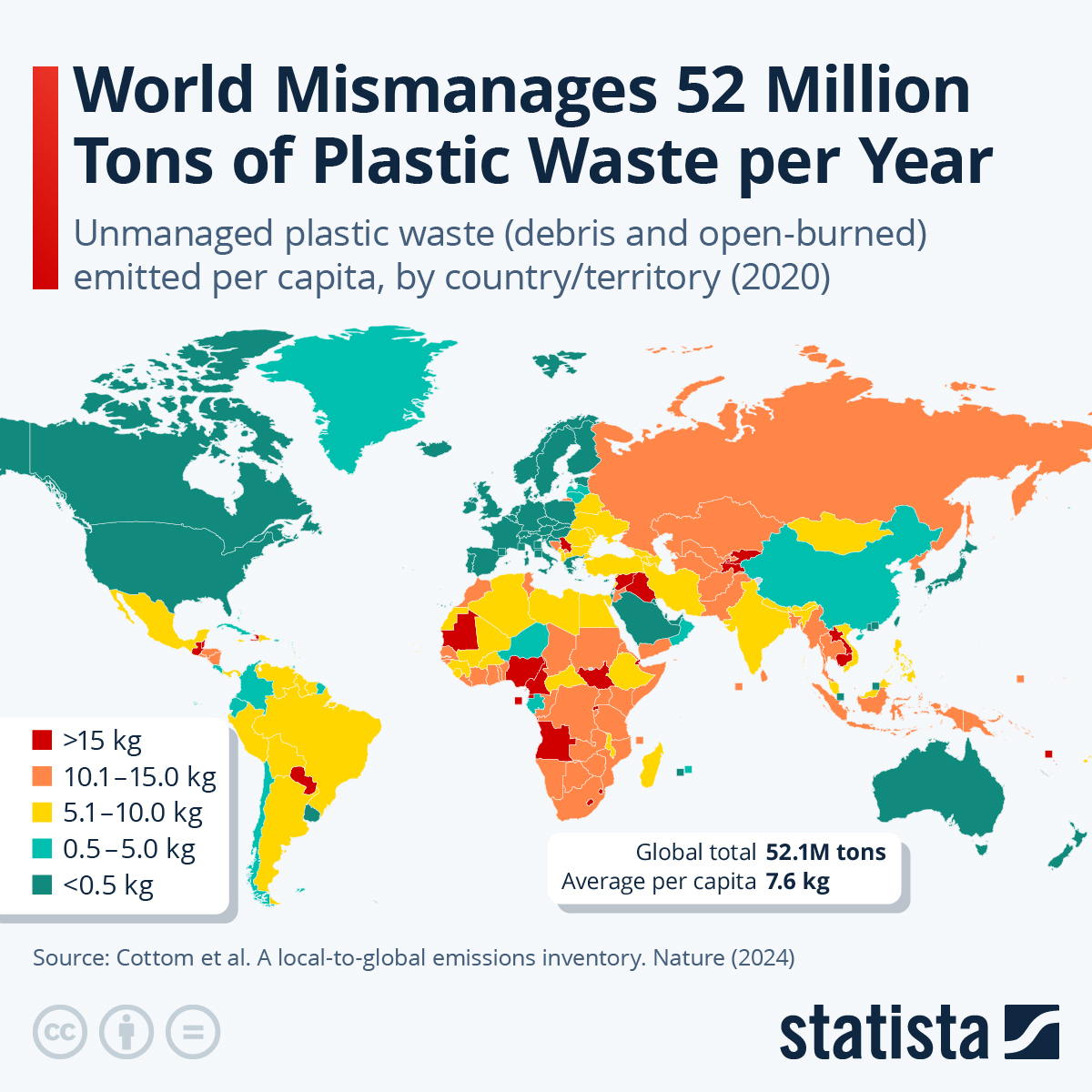
More than 52 million tons of plastic waste remain unmanaged every year around the world and developing countries bear the brunt of the crisis. This is according to a 2024 research article published in the academic journal Nature. This means that an estimated fifth of all municipal plastic waste in the world ends up in the environment or is burned in an uncontrolled manner.
Looking at the data on a per-capita basis, many nations in Sub-Saharan Africa, but also in Central America, the Pacific, Asia and the Middle East let large amount of plastic waste go unmanaged, causing degradation, health hazards and air pollution (in the event of uncontrolled burning). The study found that the lower levels of plastic pollution in the global North were mostly caused by littering, while in developing countries, waste not being collected was the biggest issue.
In absolute terms, India was the biggest emitter of plastic waste identified in the study, with high absolute volumes also set free in Sub-Saharan Africa and Southeast Asia. China, often named as the major emitter in older studies, ranked fourth for absolute volumes, reflecting the progress the country has made, according to the authors. The makers of the report based on their findings suggest a multi-sectoral approach to reducing plastic waste, including reducing plastic use, improving waste collection and better recycling systems.