The “de minimis” tariff exemption came to an end in the United States on August 29, meaning Americans can no longer import packages under $800 duty free. U.S. President Donald Trump attributed the decision to issues of fentanyl smuggling and competition from foreign businesses.
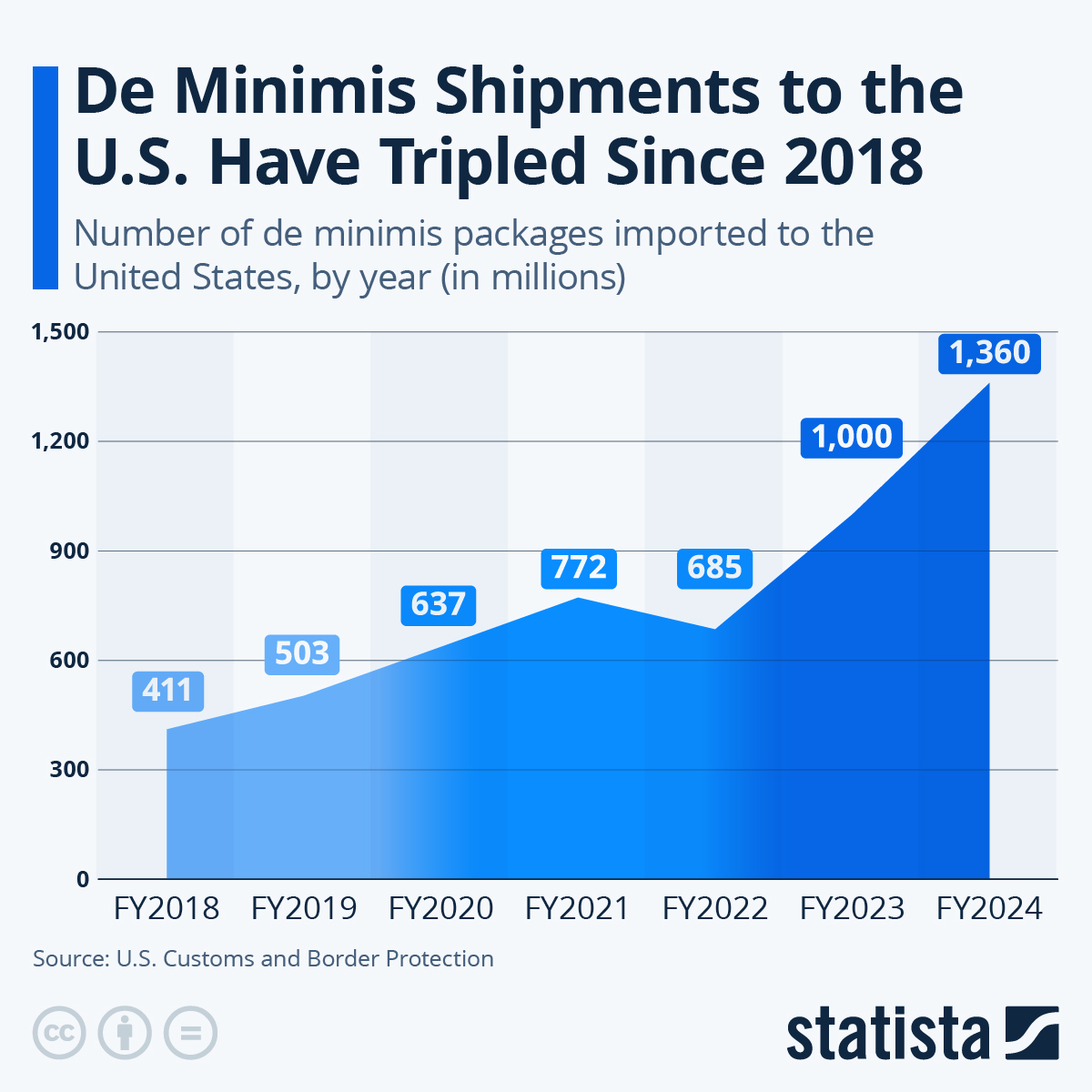
Data from the U.S. Customs and Border Protection shows that imports of items under the de minimis exemption have surged in recent years. In FY2018, roughly 411 million packages were imported to the United States under the rule. This had risen to $1.36 billion by FY2024 - more than triple. Last year, the total value of de minimis packages for the U.S. came to $64.8 billion.
The U.S. de minimis threshold was raised from $200 to $800 in 2016, becoming one of the highest in the world. On May 2, 2025, the exemption was first removed from goods imported from China and Hong Kong. The vast majority of de minimis shipments came from China in recent years, according to CBP data, as well as a growing number from Hong Kong. The rise in shipments is likely linked to the emergence of Chinese companies such as Temu and Shein, which have relied on the de minimis rule for their low-price business models. The Trump administration then expanded the removal of the exemption to all countries at the end of August.