The United States is experiencing record levels of homelessness. According to the National Alliance to End Homelessness, this surge is driven by the country’s affordability crisis - rooted in issues such as a shortage of affordable housing, weak rental assistance, stagnant incomes and inadequate social security safety nets - and has been exacerbated by the ending of Covid‑19 federal relief funds.
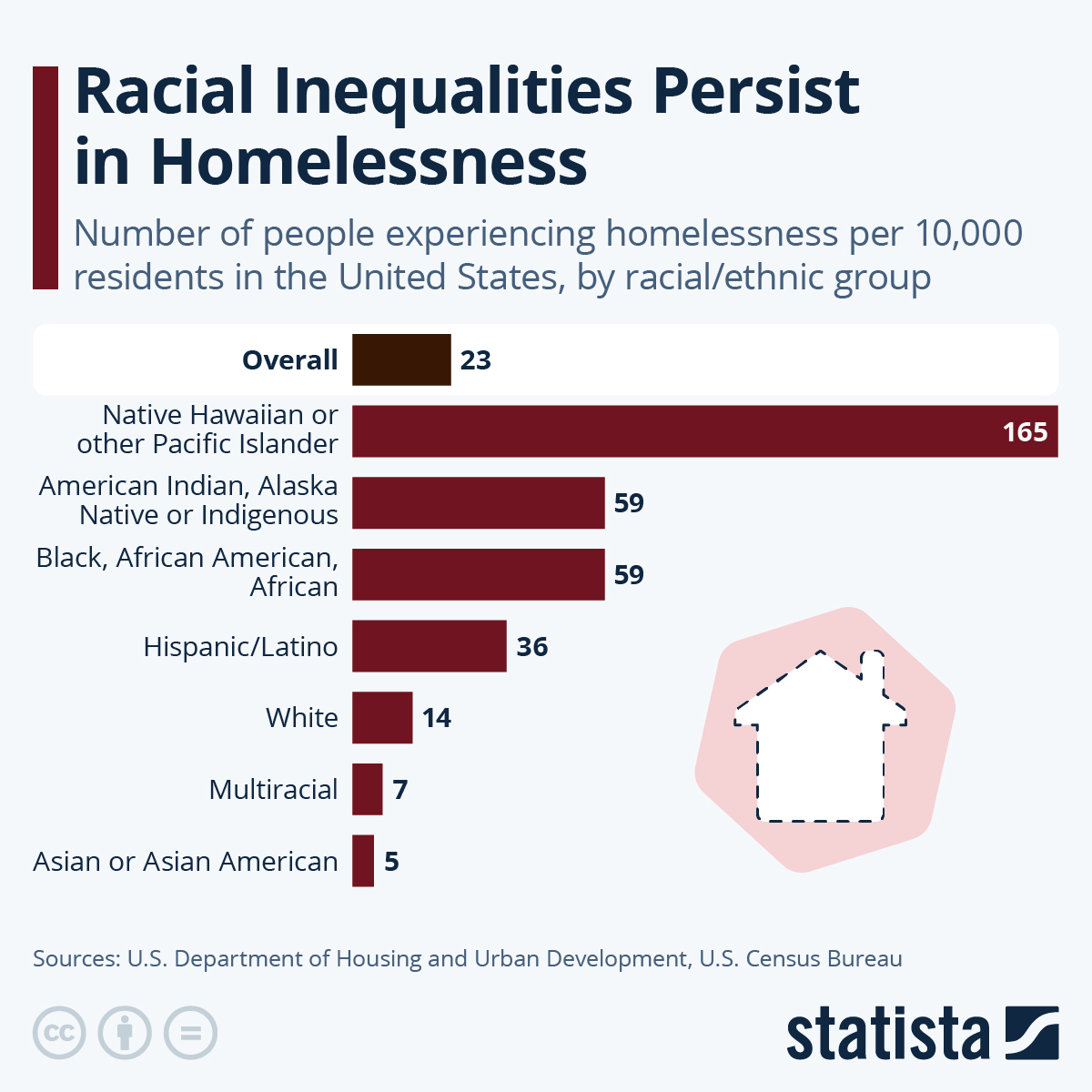
While housing insecurity affects many across the country, discriminatory policies, stigma and a lack of coordinated support services add even more barriers for marginalized groups. Drawing on U.S. Department of Housing and Urban Development data, the National Alliance to End Homelessness highlights stark racial disparities: in 2024, Native Hawaiian or Pacific Islander people were homeless at a rate of 165 per 10,000 - over seven times the national average of 23 per 10,000. American Indian, Alaska Native or Indigenous and Black, African American and African communities reported 59 per 10,000, Hispanic/Latino communities 36 per 10,000, while rates for white, multiracial and Asian American groups were much lower (14, 7, and 5 per 10,000, respectively).
Analysts also note that between 2023 and 2024, many new arrivals were faced with underfunded resettlement programs as well as policies that prevent asylum seekers from being able to work for nearly a year, which pushed them to turn to local homeless services.
The National Alliance to End Homelessness underscores that these dynamics exacerbate structural inequalities rooted in historical discrimination, spanning across housing, education, employment and wealth. The writers call for increased resources for the homeless response system to address these disparities, adding that it would “help build local economies and create more abundant communities for everyone.”