As global recorded music revenues have returned to sustained growth in recent years, largely driven by the rise of streaming, the geographic makeup of the industry is also evolving. While the world’s largest music markets have remained relatively stable at the top, notable shifts are happening just below the surface.
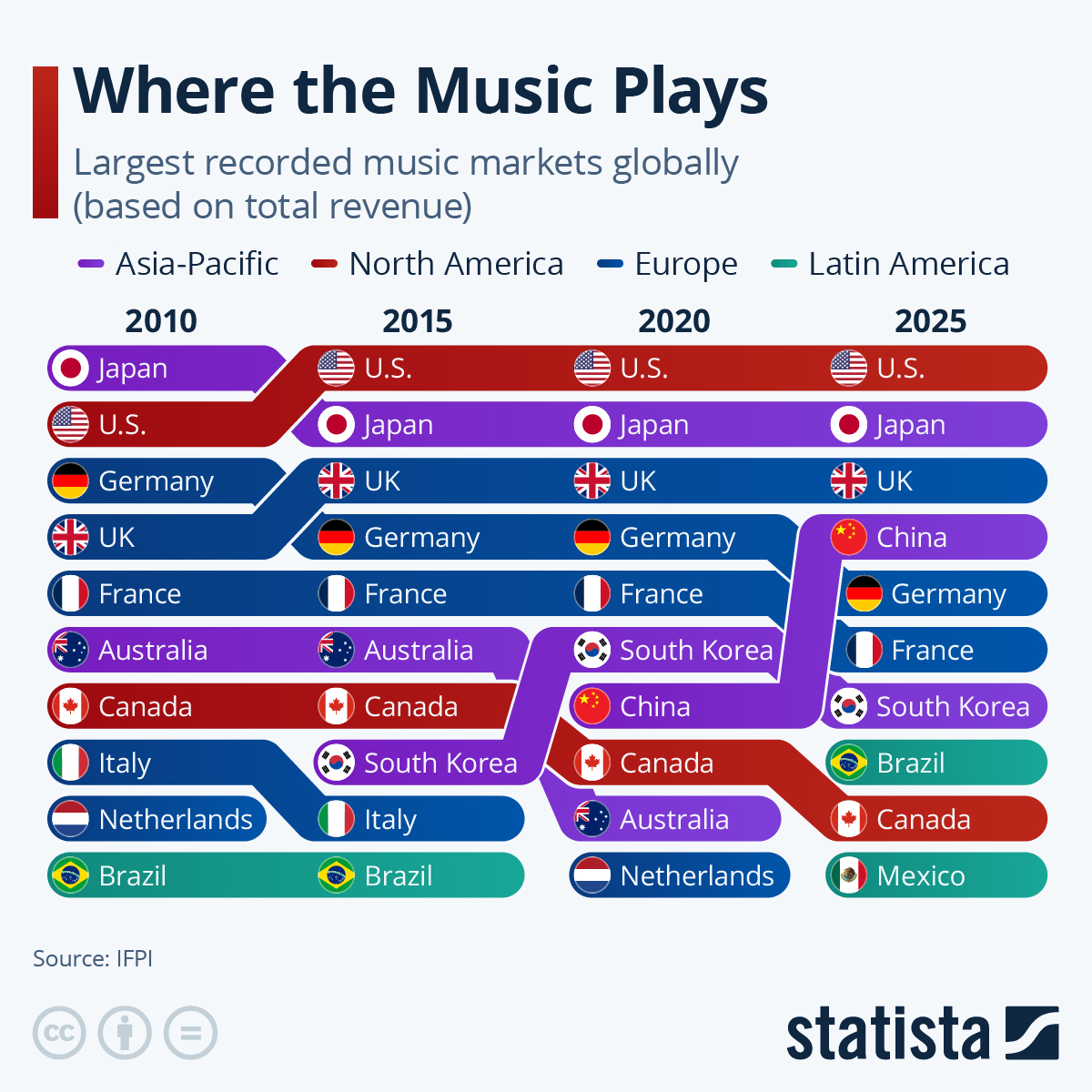
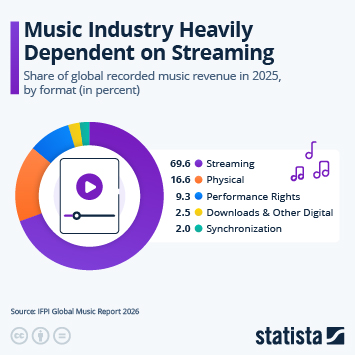
As our chart, based on IFPI's annual ranking, illustrates, the United States is the largest recorded music market in the world. In 2025, the country accounted for more than 3 in 10 paid streams globally, according to Luminate, making it by far the largest premium streaming market. In terms of total revenue, the U.S. is followed by Japan, which has held this position for the past four decades except for 2010, when it briefly dethroned the United States. As opposed to the U.S. and most other markets, the Japanese music market is still dominated by physical sales, which accounted for almost 60 percent of total revenues in the country last year. Streaming accounted for 40 percent of Japanese music revenues, compared to 70 percent globally and 71 percent in the U.S.
Behind the top 3, which are completed by the UK, the rise of Asia is becoming increasingly visible. South Korea and China in particular have climbed the rankings in recent years, reflecting both the global popularity of their music exports and the rapid expansion of domestic streaming ecosystems. Europe also maintains a strong presence, with countries like Germany and France consistently ranking among the top markets. In recent years, Latin America has been gaining ground, with Brazil and Mexico entering the top ten. According to Luminate, both countries trailed only the U.S. in terms of paid streams and premium streaming growth last year, explaining their rise towards the top.
Taken together, these trends underscore a broader shift in the global music landscape: while legacy markets remain dominant, growth is increasingly driven by emerging regions. As streaming continues to lower barriers to access and distribution, the industry is becoming more geographically diverse, reshaping where the music plays, and who is listening.