The Indian parliament last week passed a controversial bill aiming to limit who can registered as a transgender person in the country. While the 2014 Supreme Court decision and subsequent 2019 law applied the internationally recommended standard of self-identification, the new law stipulates that in order to be registered as the so-called third gender, persons must either be intersex or associated with traditional transgender communities that exist in India, for example hijras or kinnars.
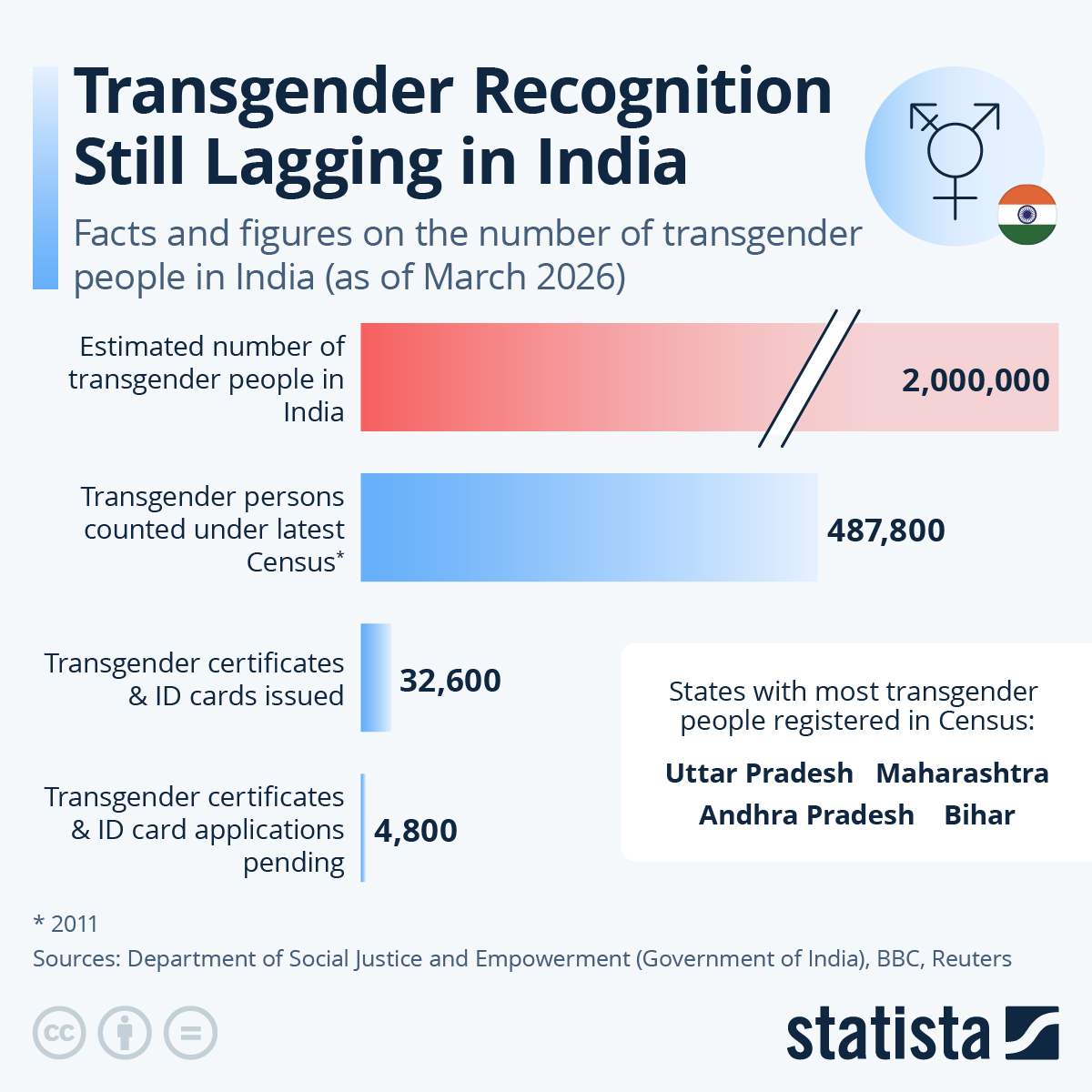
While experts believe there are around 2 million transgender people in India, the country's latest Census counted fewer than 500,000, showing how many transgender individuals are likely not being covered by the survey. Even fewer have applied and received a transgender certificate and ID card from the Indian Department of Social Justice and Empowerment – fewer than 40,000. Some estimates of the number of transgender people in India reach as high as 6 or 7 million, while others are as low as 1.5 million, with 2 million the most widely cited number.
The government has said that the new rules will make sure support goes to the right people and also help identify more marginalized transgender people, while transgender activists say that the narrow definition excludes a sleuth of different transgender and gender-fluid people and that a new mandatory examination to prove status or undergo gender-affirming surgeries "undermines dignity and autonomy".