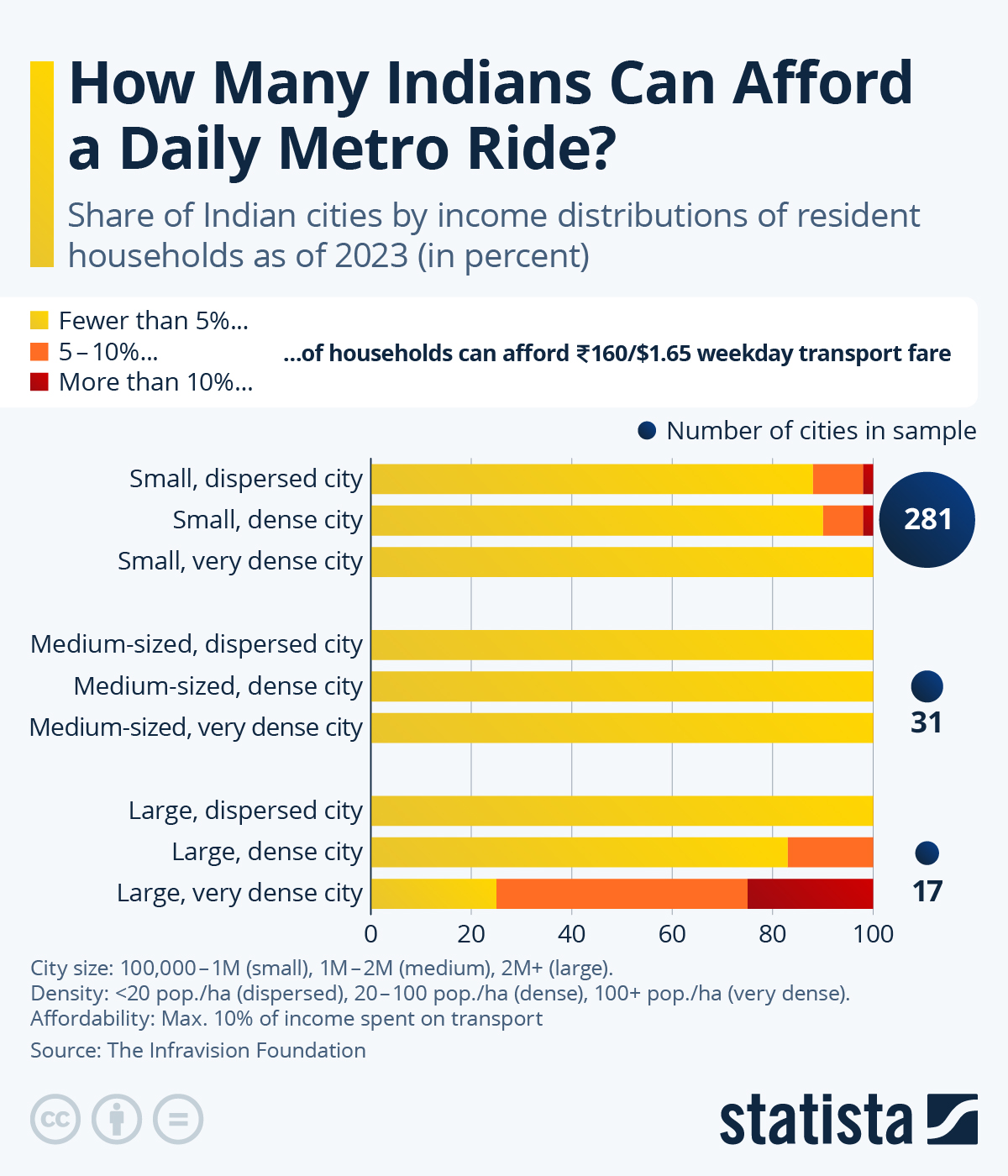
An analysis by the Infravision Foundation found that the affordability window for Indian metros is very small and that even seemingly moderate price points can be exceeding the means of many working-class city residents.
The 2023 report shows that even a moderate number of affluent urban Indians only exists in three of the country's largest cities as well as in small and dispersed cities, where metros don't make much sense to built.
The vast majority of Indian cities out of a sample of 329 was found to host fewer than 5 percent of residents who could realistically afford daily transportation costs of 160 rupees/$1.65 on the household level when only aiming to spend a maximum of 10 percent of household income on transit. This is why many Indian metro projects, especially newer ones in tier-2 and tier-3 cities, hit an affordability wall, which has been cited as one of the reasons many have lacked ridership. A single trip on the Delhi metro costs a maximum of cost 64 rupees, while the highest price is 80 rupees in Mumbai, with monthly passes not offering significant savings.
The 160 rupee budget also includes all household members, potential costs of getting to and from a station as well as transfers which are sometimes not included in the initial fare. Mumbai regional trains, known for their overcrowded conditions, cost only a maximum of 35 rupees for a single, longer trip and 500 for a monthly pass.
Despite a bigger group of potential customers, even the country's largest cities haven't achieved projected ridership, which is in connection with even these older systems still on the way to reaching maturity, poor last-mile connectivity and inter-connectivity as well as expected ridership chronically being overstated in planning reports.