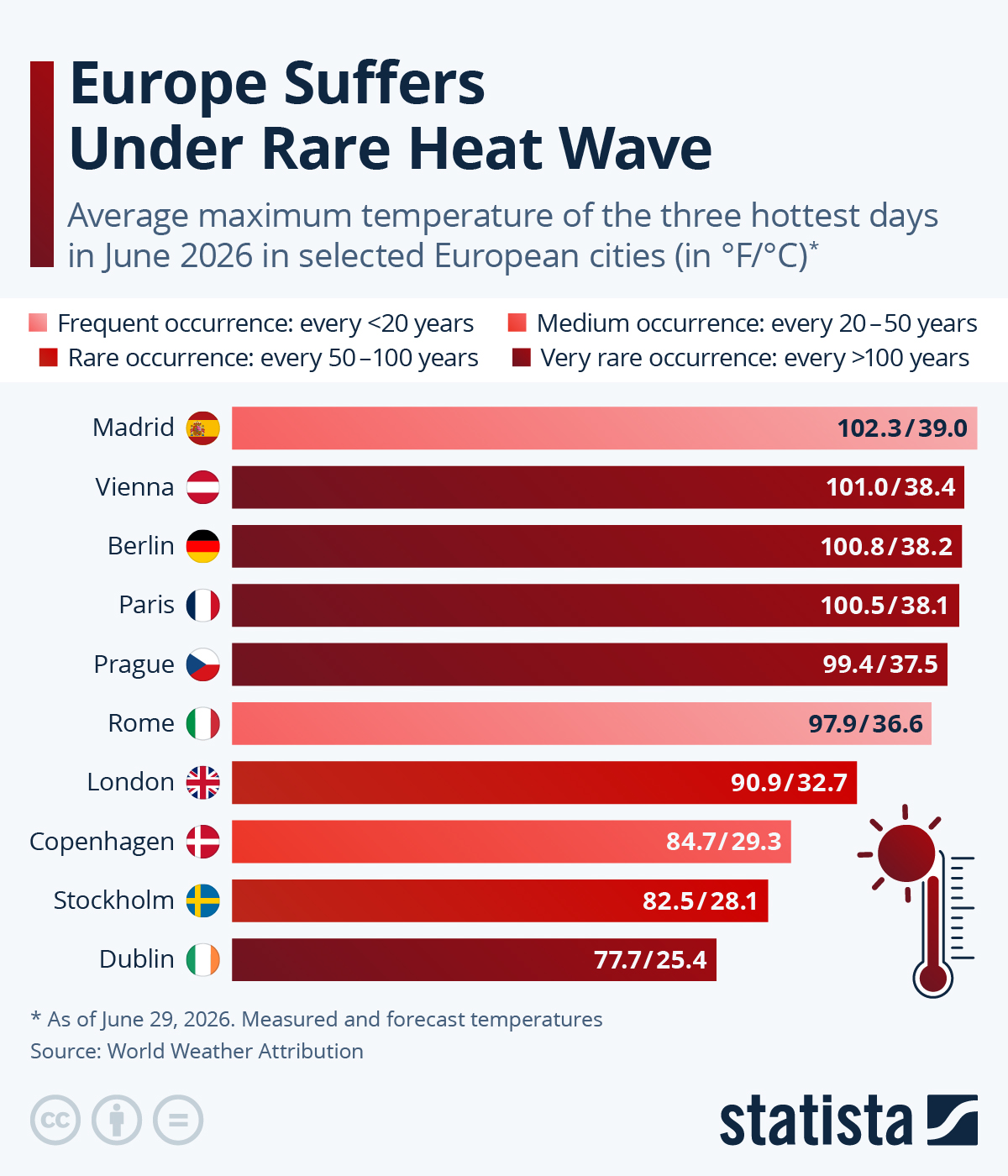
Just weeks after Western Europe experienced an “unusually early and intense” heat wave in late May, large parts of the continent have been gripped by another heat wave, this one even more severe than the first. Temperatures exceeded 40 degrees Celsius (104 degrees Fahrenheit) in many European cities, as all-time temperature records were broken across the continent.
According to World Weather Attribution, an initiative studying the impact of climate change on extreme weather events, the temperatures observed over the past 10 days would have been extreme at any time of the year, but for June they are even more unusual. As our chart shows, the three hottest days in numerous European capitals were so extraordinary for June, that the estimated return period of a similar heat wave exceeds 100 years. The same was true for nighttime temperatures, which made this heat wave so dangerous. “Nighttime is when the body is supposed to recover. When we sleep, our core temperature drops, our cardiovascular system rests, and the cumulative stress of a hot day begins to ease. When nights stay warm, that recovery does not happen. The body remains under strain around the clock,” Armel Castellan, Extreme Heat Services Technical Advisor of the WHO-WMO Climate and Health Joint Office explained.
According to WHO Director-General Tedros A. Ghebreyesus, more than 1,300 excess deaths linked to extreme heat have been recorded in Europe since June 21 – a grim reminder of the lack of preparedness for extreme heat in large parts of Europe. “Heatwaves like this are what we expect to see in a changing climate,” John Kennedy, head of climate information at WMO, said in a statement. “In the 50 years since the historic heatwave in 1976, Europe as a whole has warmed by around two degrees. It’s the fastest warming continents and extremes of temperature have increased too,” he said. To address the growing threat posed by extreme heat, Dr. Tedros encouraged policymakers across Europe to implement heat health action plans to protect health against the future effects of climate change.