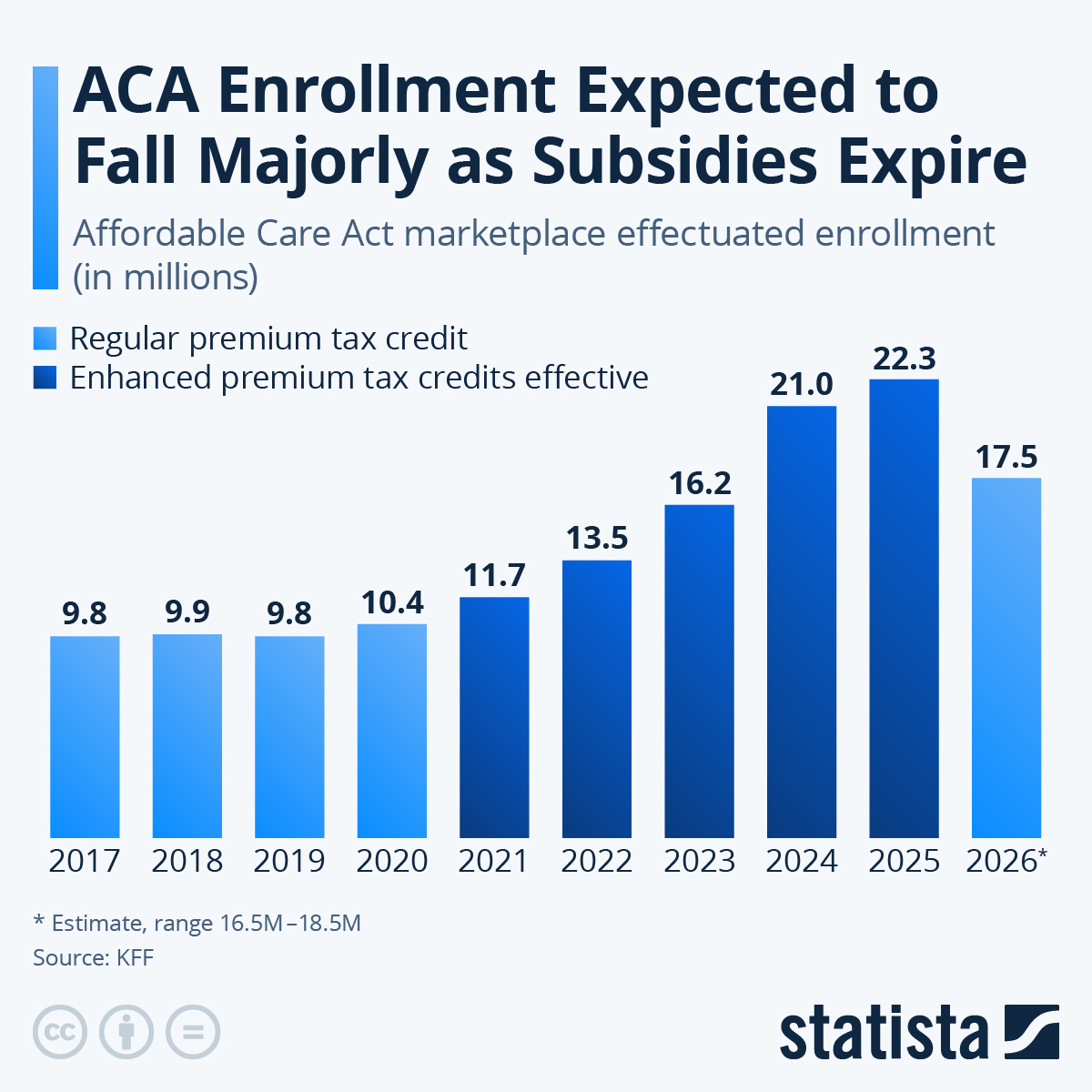
As some subsidies for health insurance plans purchased on U.S. states’ marketplaces under the Affordable Care Act expire, KFF is predicting an unprecedented drop in enrollment for ACA health care coverage this year. While in 2025, more than 22 million Americans were insured through ACA marketplaces, this is expected to fall to just 17.5 million this year.
During open enrollment at the beginning of 2026, sign-ups and renewals only fell by about a million, the organization said. However, as many enrollees fail to pay their now much higher premiums, experts estimate the real number of insured people will drop five million below last year’s level.
During the Biden administration, the federal government widened subsidies for ACA coverage. So-called enhanced premium tax credits meant that Americans with incomes above 400 percent of the federal poverty line could receive tax credits on their health plans for any cost exceeding 8.5 percent of their income. As of 2026, anyone earning more than 400 percent of the federal poverty line limit will once again pay the full price of their insurance – often thousands of additional dollars per year – and therefore fall off the often-cited subsidy cliff.
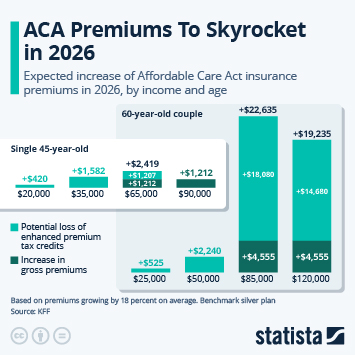
For people earning more than their state’s limit for Medicare coverage (100-138 percent of the FPL) but less than 400 percent of the FPL, income caps spelled out in premium tax credit rules are also rising slightly. On top of this, insurance plans have been subject to high inflation between this year and last year, making health insurance severely unaffordable for ACA marketplace users of different income levels. KFF last year calculated that for a 45-year-old single, additional annual cost could be in the range of $400 (for small incomes) to $2,400 (for those incomes right beyond the subsidy cliff). For a 60-year-old couple, price increases could be closer to $19,000 to $22,000 for those losing enhanced credits.
Additional data published by KFF shows that the number of ACA marketplace enrollees with incomes around 400-500 percent of the federal poverty level decreased by 44 percent in the 2026 enrollment period compared to one year earlier. The number of those enrolling with incomes above 500 percent of the FPL was down by 27 percent.