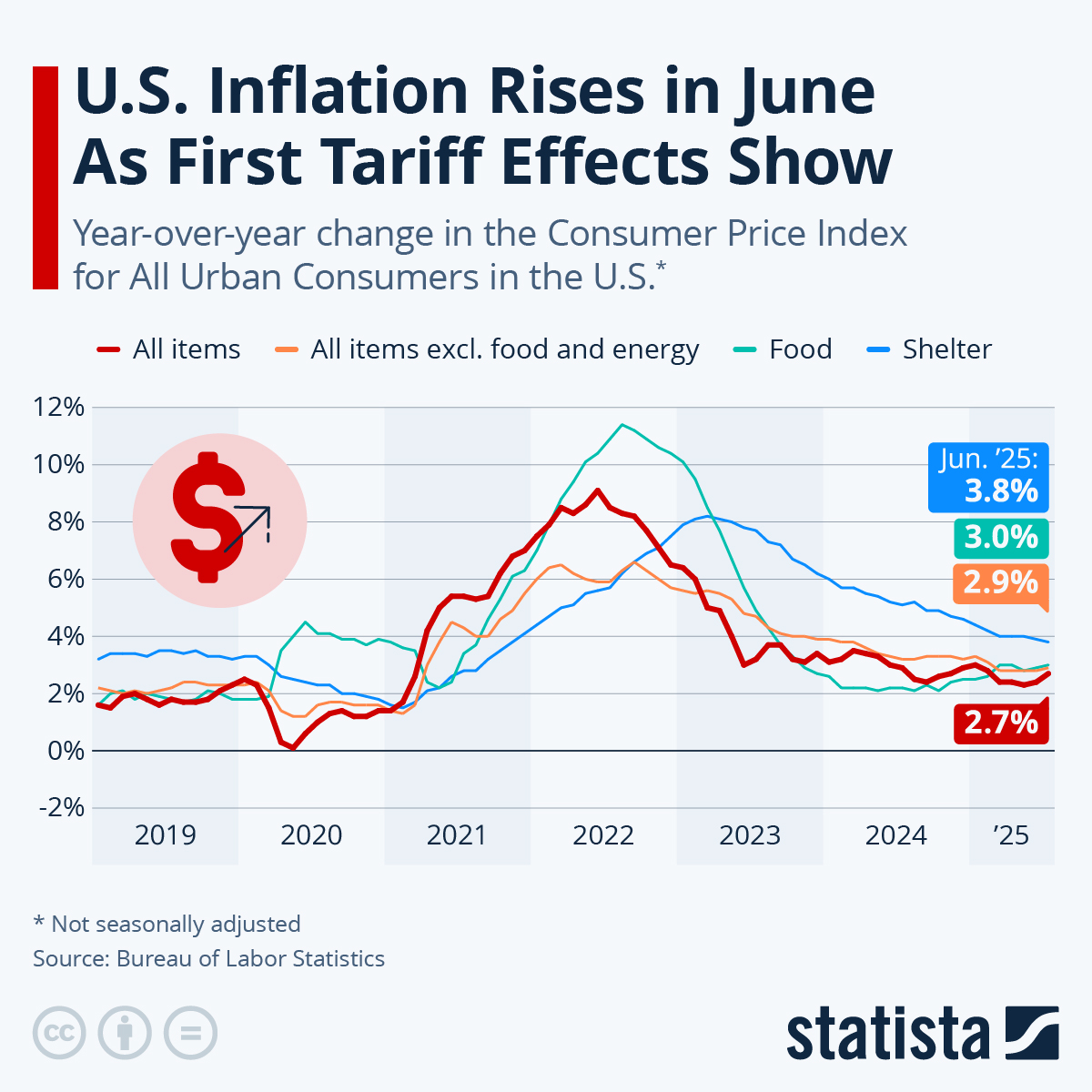
Consumer prices in the United States ticked up sharply in March, as the war in Iran sent energy prices surging. The all-items Consumer Price Index rose 0.9 percent from February to March, reflecting the largest monthly gain since June 2022, when the inflation crisis was at its worse. Headline inflation, i.e. the year-over-year change in the all-items index, climbed to 3.3 percent, the highest level in almost two years. Core inflation, which excludes food and energy prices, remained almost unchanged, rising from 2.5 percent in February to 2.6 percent in March, highlighting the outsized role that energy prices played in the latest inflation surge.
According to the Bureau of Labor Statistics, energy prices increased 10.9 percent in March compared to the previous month, led by a 21.2-percent jump in the price index for gasoline - the largest monthly gain since 1967. In fact, gasoline prices accounted for nearly three quarters of the monthly increase in the CPI, fueling hopes that inflation will return to previous levels once the conflict is resolved and/or global oil trade is unblocked. On a year-over-year basis, energy prices surged 12.5 percent, while the indexes for food and shelter increased moderately at 2.7 and 3.0 percent.
One concern with respect to the inflationary effects of the Iran war is that this month's reading doesn't reflect the indirect effects of high energy costs yet. It will take time for these costs to reverberate through supply chains, which will eventually drive up prices for food, transportation services and other items as well.