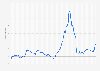
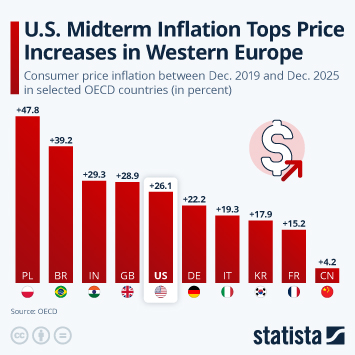
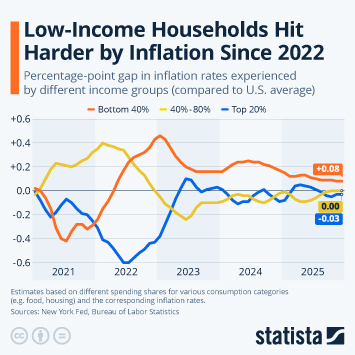
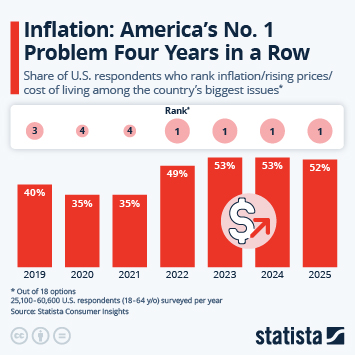
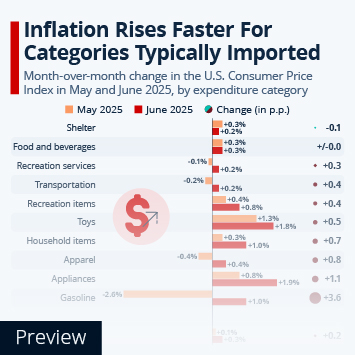
Perhaps more concerning than the recent uptick in inflation, which can mostly be attributed to surging energy prices due to the war in Iran, is the fact that long-term inflation expectations have also surged in recent months. Estimates by the Federal Reserve Bank of Cleveland, calculated using Treasury yields, inflation data, inflation swaps and survey-based measures of inflation expectations, put 5- and 10-year inflation expectations at 2.54 and 2.49 percent in June, respectively, far off the Fed’s 2-percent target.
The danger with elevated long-term inflation expectations is that they become “unanchored”, i.e. permanently move away from the target level, setting in motion a vicious circle that makes it much harder for central banks to control inflation. Expectations play a crucial role in inflation dynamics, as expectations of future inflation influence wage negotiations and price-setting processes today, which then feed into current inflation rates. When expectations of future inflation are high, prices and wages are likely to be set accordingly, creating a self-fulfilling prophecy.