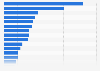
Significant progress has been made in the fight against malaria over the last two decades, according to a new report by the World Health Organization (WHO). In 2024, 80 countries (including the territory of French Guiana) remained endemic for the disease, down from 108 in 2000. The number of deaths have also declined since the turn of the century, with the WHO estimating that 610,000 people died from the disease in 2024, compared with 864,000 in 2000.
Recent years have brought further milestones. Cabo Verde and Egypt were certified as malaria-free in 2024, followed by Timor-Leste, Suriname and Georgia in 2025. To receive certification, countries must report zero indigenous cases for three consecutive years and formally apply to the WHO. Several other countries are in a similar position, with Saudi Arabia having recorded four consecutive years without indigenous cases, while Bhutan has reached three and Malaysia seven. However, none of these have yet submitted a certification application. While Malaysia does not have malaria cases of the human Plasmodium species, it does report having P. knowlesi, a type of zoonotic parasite that circulates between monkeys and is transmitted to humans via mosquitoes. Turkey has submitted its application and is awaiting approval.
Despite long-term gains, there is still a significant amount of work to be done. Malaria deaths rose by around 12,000 between 2023 and 2024, while estimated cases increased from 273 million to 282 million. Ethiopia (+2.9 million cases), Madagascar (+1.9 million) and Yemen (+378,000) together accounted for 58 percent of the global increase.
The WHO African Region continues to bear the heaviest burden, accounting for 95 percent of malaria deaths worldwide. Funding gaps and the growing threat of drug resistance remain key obstacles to further progress.