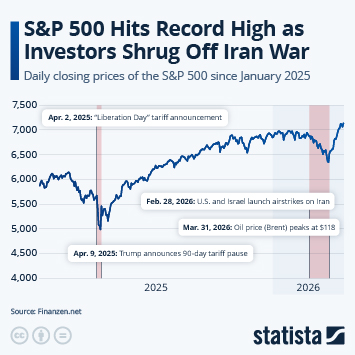
When Microsoft, Alphabet, Meta and Amazon announced their earnings for the first three months of 2026 this week, the most pressing question on many investors’ minds wasn’t about actual business performance. Instead, people were looking for reassurance that the AI hype lives on, focusing on one number that has become a popular gauge for AI appetite: planned capital expenditure. If that number continued to rise as it did for the past few years, bubble fears could be put aside for a couple of weeks. If it didn’t, markets would likely have a mid-sized meltdown, as AI optimism has single-handedly kept markets afloat in the face of the Iran war, surging oil prices and growing stagflation fears.
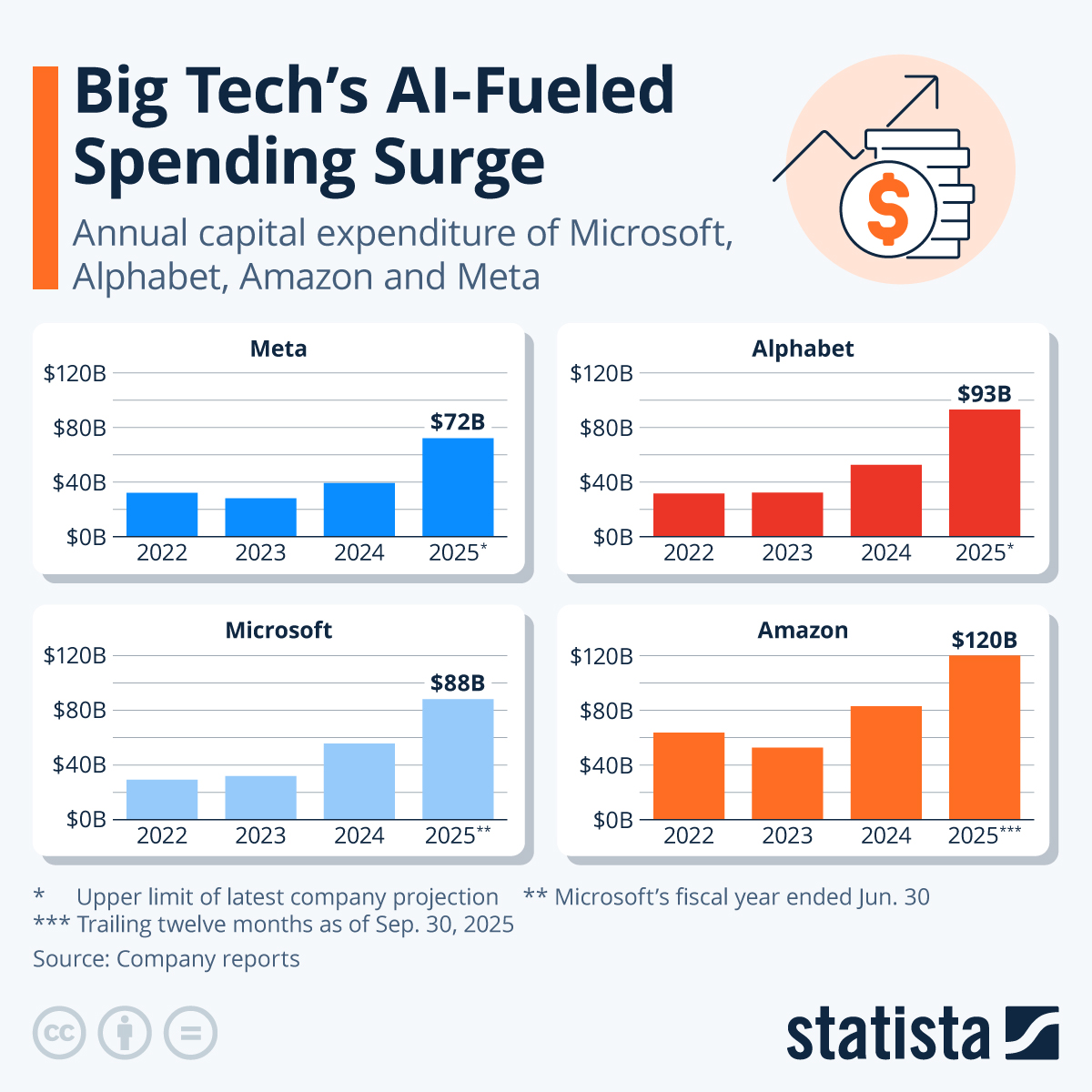
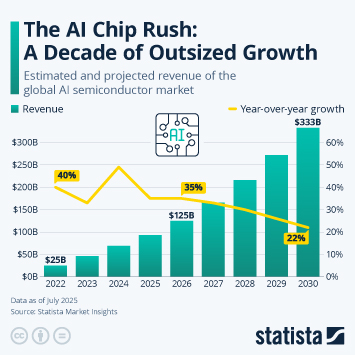
Thankfully, it didn’t come to that, as the four hyperscalers signaled that they’ll continue spending unprecedented amounts of money on the AI capabilities of their data centers. Microsoft, Alphabet and Meta once again raised their spending forecast for 2026, while Amazon stuck with its February projection of $200 billion. The four companies are now expecting to invest up to $725 billion this year, most of it on AI infrastructure, i.e. data centers, chips and networking equipment.
While some investors are spooked by the scale of spending, which compresses margins in the short term, the leaders of the companies involved are adamant that it’s the right way to go. “AI is a once-in-a-lifetime opportunity where the current growth is unprecedented and the future growth even bigger,” Amazon CEO Andy Jassy recently wrote in his annual letter to shareholders. “We’re not going to be conservative in how we play this – we’re investing to be the meaningful leader, and our future business, operating income, and FCF (free cash flow) will be much larger because of it.”
While the spending side looks bullish, there were also encouraging signs on the revenue side, signaling that all that spending will eventually translate to future growth. Microsoft reported that its AI business is on an annual revenue run rate of $37 billion, representing 123-percent year-over-year growth. Amazon saw the strongest AWS growth since 2022, when its cloud business was roughly half the current size, and finally, Alphabet saw its cloud revenue surge more than 60 percent, with its backlog nearly doubling from last quarter to $460 billion, indicating a lot more growth to come.