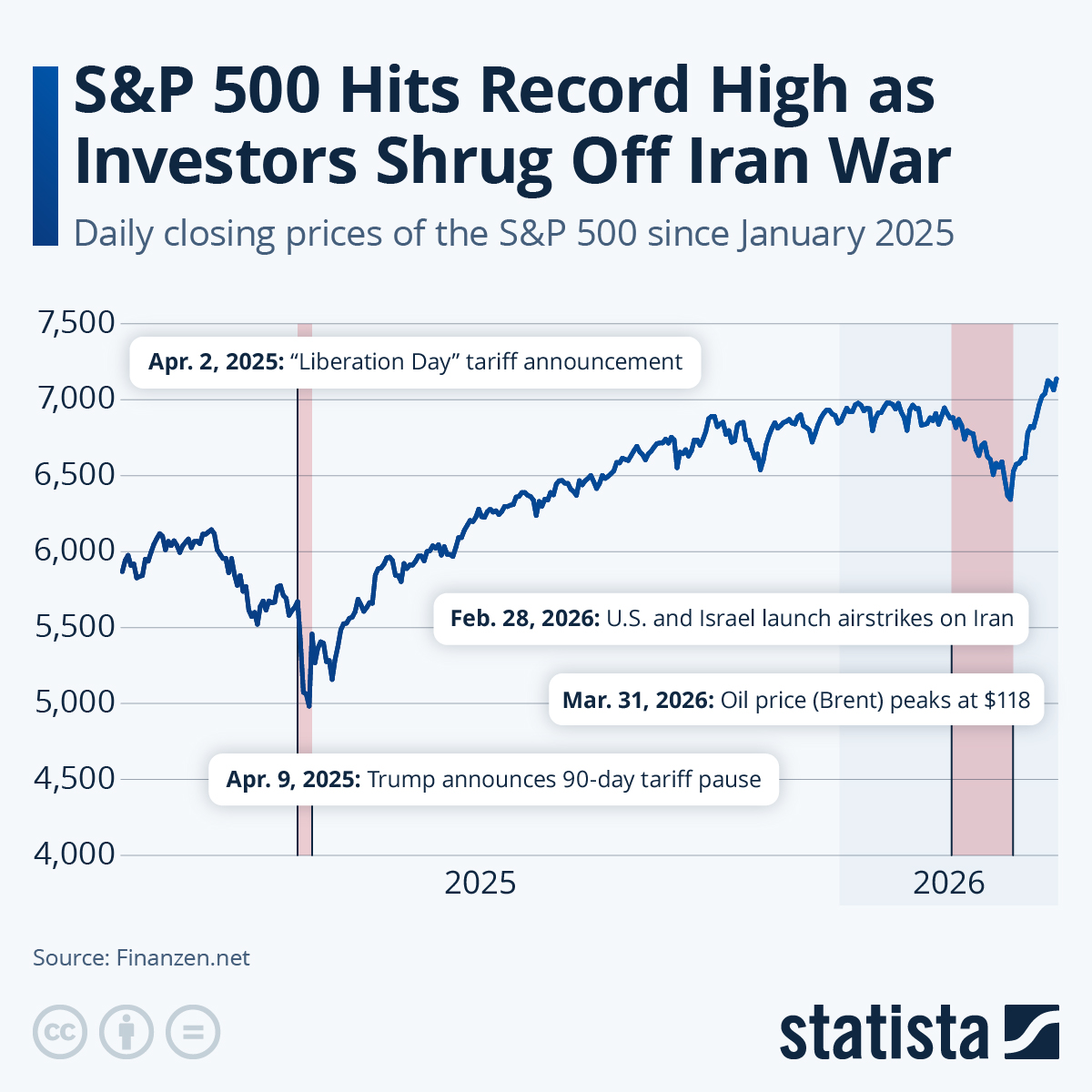
When the U.S. and Israel launched airstrikes on Iran on February 28, escalating lingering tensions over the country’s nuclear program into a full-blown war, markets reacted as expected. Surging oil prices stoked inflation fears and concerns over a protracted conflict added even more uncertainty to an already cloudy economic outlook.
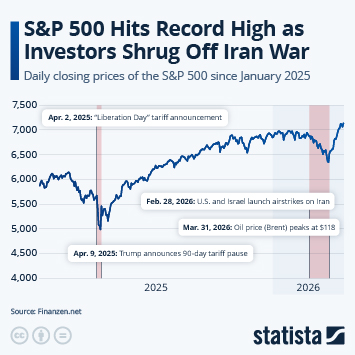
Between February 28 and March 30, the S&P 500 dropped almost 8 percent, briefly flirting with correction territory, i.e. a 10-percent slide from its latest peak. On March 31, the sentiment changed, however, when reports emerged that both Iran and the U.S. were looking for a way to quickly end the war. Markets rallied in hopes of a swift resolution of the conflict, ringing in a stock market rebound that stands in stark contrast with consumer sentiment.
By April 14, the S&P 500 had recovered its March losses, returning to the pre-war level and not stopping there. Strong corporate earnings, encouraging news about AI infrastructure demand and the ceasefire announced on April 8 all contributed to a new sense of optimism among investors, which carried the S&P 500 to new highs. On April 22, the index closed at 7137.9 points, up 13 percent from it March 30 low and almost 4 percent from the last trading day before the war with Iran began.
With negotiations between the U.S. and Iran not yielding any results yet and tensions around the Strait of Hormuz remaining high, it remains to be seen how long the latest rally will last. Next week will be a significant test for the market’s resilience, with Big Tech earnings and the first estimate of Q1 GDP growth on the agenda.